
When learning Chinese, beginners often memorize:
不好意思 = sorry
不客气 = you’re welcome
没关系 = it’s okay
These translations are useful—but they are not the whole story.
Chinese politeness expressions do not always match English word for word. The best expression depends on what just happened and what you want to communicate.
Let’s look at three expressions you will hear all the time. 👇
1. 不好意思 (bù hǎoyìsi)
It doesn’t just mean “sorry”
不好意思 is one of the most useful expressions in everyday Chinese.
Depending on the situation, it can mean:
-
excuse me
-
sorry
-
sorry to bother you
-
I feel embarrassed
-
I feel a little awkward
So instead of memorizing one English translation, pay attention to the situation.
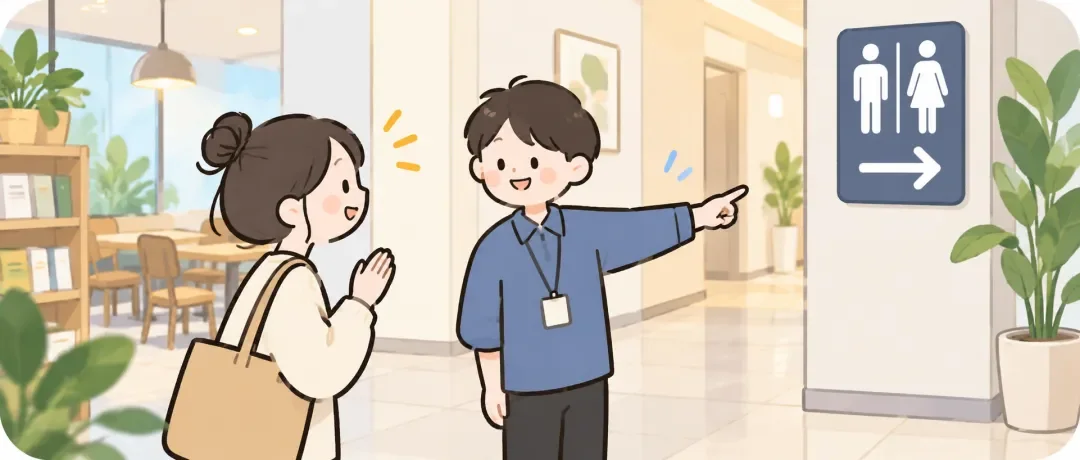
When you want to get someone’s attention
不好意思,请问洗手间在哪儿?
Excuse me, where is the restroom?
Here, 不好意思 is much closer to “Excuse me” than “I’m sorry.”
When you ask someone for help
不好意思,能帮我一下吗?
Excuse me, could you help me for a moment?
You are not necessarily apologizing.
You are politely showing that you know you are asking someone to give you their time or attention.
When you cause a small inconvenience
不好意思,我来晚了。
Sorry, I’m late.
For small everyday situations, 不好意思 often sounds natural and friendly.
When you feel embarrassed
你这么说,我都有点不好意思了。
You’re making me feel a little embarrassed.
Here, 不好意思 definitely does not mean “sorry.”
It describes the feeling of being embarrassed, shy, or slightly awkward.
💡 This is an important meaning that beginners often miss.

不好意思 vs 对不起
Both expressions can be used when apologizing, but they are not exactly the same.
不好意思 is especially common when you:
-
interrupt someone
-
ask for help
-
cause a small inconvenience
-
make a minor everyday mistake
对不起 (duìbuqǐ) is a clearer and more direct apology.
For example:
对不起,是我弄错了。
I’m sorry. I made a mistake.
In many situations involving a more serious mistake, 对不起 is more appropriate.
But there is no strict rule saying:
❌ small mistake = 不好意思
❌ serious mistake = 对不起
Context and tone still matter.

2. 不客气 (bú kèqi)
The classic reply to 谢谢
Someone says:
谢谢!
Thank you!
You can reply:
不客气!
You’re welcome!
This is one of the most standard responses to thanks.
谢谢你帮我。
Thanks for helping me.
不客气。
You’re welcome.
Simple and natural. 👍
But what does 客气 mean?
Understanding 客气 (kèqi) makes this expression much easier.
客气 can describe being polite, formal, or reserved with other people.
So when someone says:
不客气
the meaning is roughly:
There’s no need to be so polite with me.
That is why it naturally works as:
You’re welcome.
What about 别客气?
You may also hear:
有问题就问,别客气。
If you have any questions, just ask. Don’t hesitate.
Here, 别客气 does not mean “You’re welcome.”
It means something closer to:
👉 Don’t hesitate.
👉 No need to be so formal.
Another common situation:
多吃一点,别客气!
Have some more. Make yourself at home!
This is a good example of why Chinese politeness cannot always be translated word for word.

3. 没关系 (méi guānxi)
A common response to an apology
Someone says:
对不起,我迟到了。
Sorry, I’m late.
You can reply:
没关系。
It’s okay. / No problem.
没关系 tells the other person:
👉 What happened is not a problem.
👉 I’m not upset about it.
Another example:
不好意思,我拿错你的书了。
Sorry, I took your book by mistake.
没关系。
That’s okay.

A Common Beginner Mistake
Someone says:
谢谢!
Thank you!
And the learner answers:
❌ 没关系!
This is usually not the response you want.
Remember:
Someone thanks you:
👉 不客气。
You’re welcome.
Someone apologizes to you:
👉 没关系。
It’s okay.
That small difference will immediately make your Chinese sound more natural.
What about 没事?
In casual conversation, you may also hear:
没事。
It’s okay. / No worries.
For example:
不好意思,我来晚了。
Sorry, I’m late.
没事。
No worries.
没事 is very common in spoken Chinese, especially for small problems.
For beginners, you can remember:
没关系 → standard and safe
没事 → very common in casual conversation
🧠 The Easiest Way to Remember Them
Don’t start with the English translation.
Start with the situation.
You are interrupting someone, asking for help, or causing a small inconvenience:
👉 不好意思
“Excuse me.”
“Sorry to bother you.”
“Sorry.”
Someone thanks you:
👉 不客气
“You’re welcome.”
Someone apologizes to you:
👉 没关系
“It’s okay.”
“No problem.”
This is much more useful than memorizing three fixed English definitions.
A Natural Mini-Conversation
Imagine you are on a train.
A:不好意思,请问这个座位有人吗?
Excuse me, is anyone sitting here?
B:没有,你坐吧。
No. Go ahead.
A:谢谢!
Thanks!
B:不客气。
You’re welcome.
A little later…
A:不好意思,我不小心碰到你的包了。
Sorry, I accidentally bumped your bag.
B:没关系。
It’s okay.
Notice what happened:
不好意思 → the speaker causes a small inconvenience
不客气 → the other person responds to thanks
没关系 → the other person responds to an apology
Three expressions. Three different jobs.
Quick Review ✨
不好意思
Think:
“Excuse me / Sorry to bother you / Sorry / I feel embarrassed.”
Use it when you:
-
interrupt someone
-
ask a favor
-
cause a small inconvenience
-
make a minor apology
-
feel embarrassed
不客气
Think:
“You’re welcome.”
Most commonly used as a response to:
谢谢
And remember:
别客气
Bié kèqi.
can mean:
Don’t hesitate. / No need to be so formal.
没关系
Think:
“It’s okay / No problem.”
Most commonly used when someone has apologized or caused a small problem.
The Key Idea
One of the biggest mistakes beginners make is trying to give every Chinese expression one fixed English translation.
But real language does not work that way.
Instead of asking:
“What English word does this mean?”
Try asking:
“When would a Chinese speaker use this?”
Once you start learning Chinese through situations instead of translations, expressions like 不好意思, 不客气, and 没关系 become much easier to understand—and much easier to use naturally. 😊