刚 (gāng) vs 刚刚 (gānggāng) vs 刚才 (gāngcái): When Should You Use Each?
刚、刚刚与刚才
Compare 刚、刚刚 and 刚才 for recent events, and learn which can act as a time expression on its own.
Published
Chinese grammar, vocabulary and practical tools, alongside learning materials from an experienced Mandarin teacher.
Build understanding.
Then make it your own.
Understand the patterns. Make sentences that make sense.
Look up Chinese words, pinyin and English meanings.
Browse vocabulary by level, from HSK 1 to the combined HSK 7–9 list.
Read explanations and examples, organized by HSK 2.0 level.
刚、刚刚与刚才
Compare 刚、刚刚 and 刚才 for recent events, and learn which can act as a time expression on its own.
Published
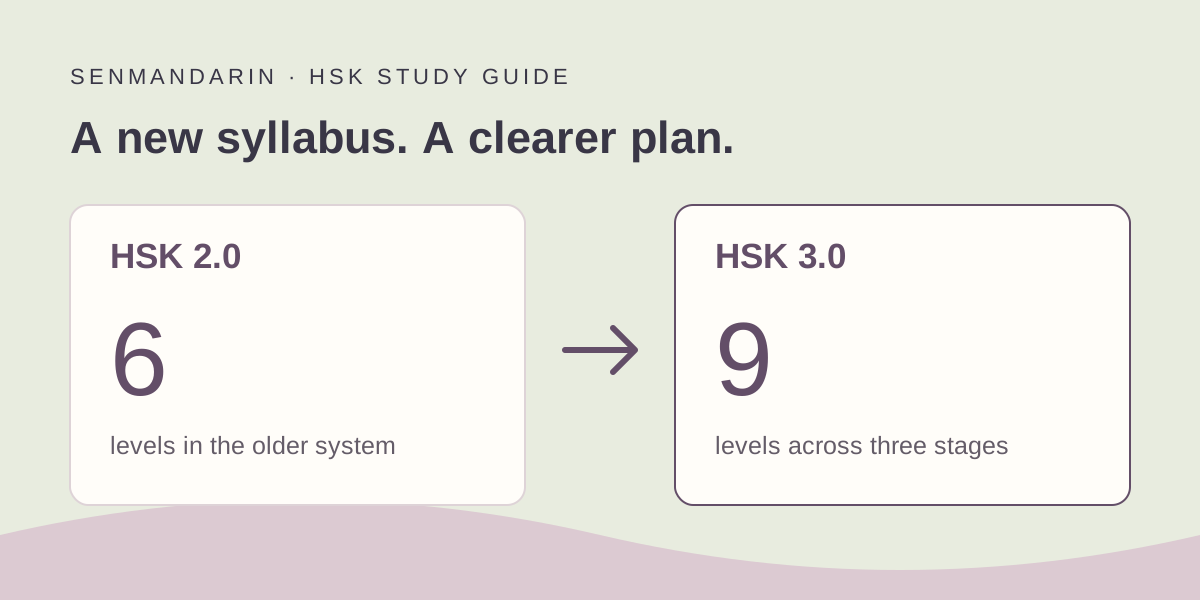
新版与旧版 HSK:考试变化与备考安排
Compare old and new HSK vocabulary, levels, handwriting and speaking. Understand the 2026 transition and choose materials for your actual test.
Published
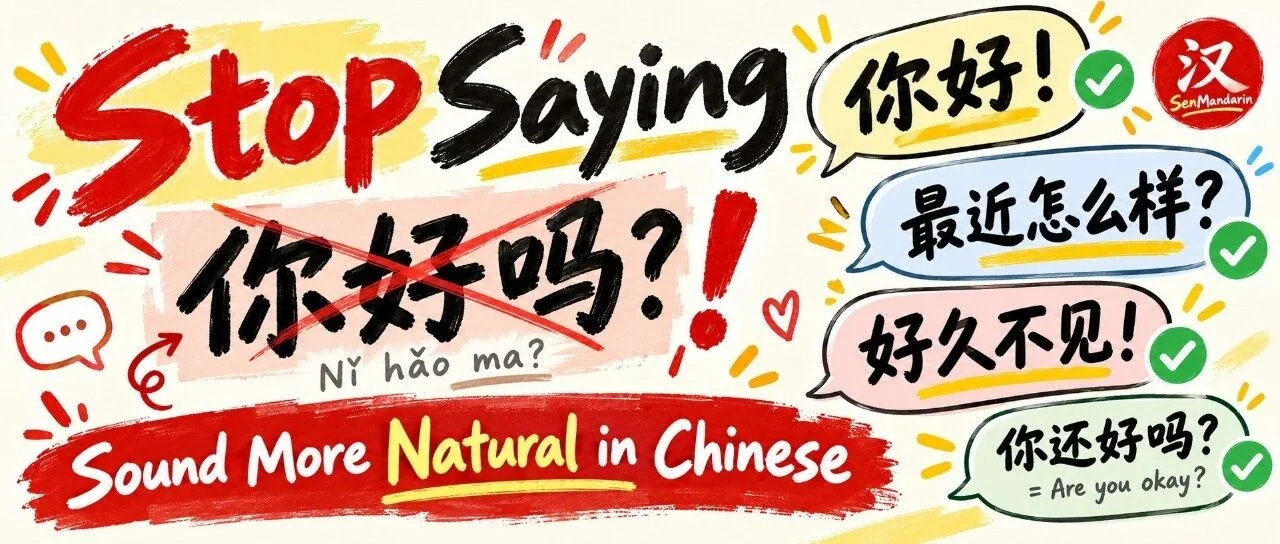
中文日常问候:不只用“你好吗”
Learn when 你好, 最近怎么样 and 你还好吗 fit a conversation, with Chinese examples, pinyin and natural English translations.
Published

I’m Jason (杨森), the creator of SenMandarin and editor of the SenMandarin WeChat public account. For more than six years, I’ve taught Chinese to learners from age 6 to 80, worked extensively in online Mandarin education, and created a wide range of learning materials.
Whether you’re finding your first words or finding your voice, let’s start with your goals.
Meet some of the learners who have studied Chinese with Jason. Hear about their lessons in their own voices.
English auto-captions are available in the video controls. They may contain recognition errors.
A learner shares their experience of studying Chinese with Jason.
Open video ↗ Student voice · 01A learner shares their experience of studying Chinese with Jason.
Open video ↗ Student voice · 16A learner shares their experience of studying Chinese with Jason.
Open video ↗ Student voice · 23Personalized online lessons, built around you.