
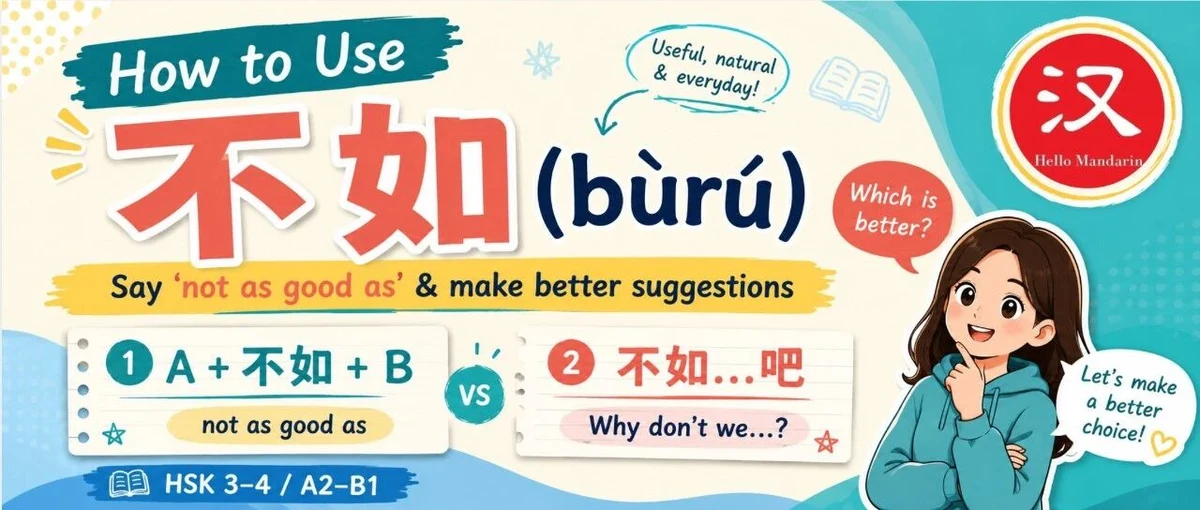
When you want to compare two things in Chinese and say that A is not as good as B, you can use 不如 bùrú.
It is a very useful word in daily Chinese because it helps you express comparison in a natural and simple way.
You can also use 不如 to give a suggestion, similar to saying:
“Why don’t we…?”
“It would be better to…”
“How about… instead?”
Let’s look at the two most common uses. 😊
1. 不如 = not as good as
The most basic meaning of 不如 is:
A is not as good as B.
Structure
A + 不如 + B
This structure is often used when we compare two people, things, choices, or situations.
Examples
这家餐厅不如那家。
This restaurant is not as good as that one.
我的中文不如他的中文。
My Chinese is not as good as his Chinese.
今天的天气不如昨天。
Today’s weather is not as good as yesterday’s.
In these sentences, the adjective is not necessary because the meaning is already clear:
A is worse / less good than B.
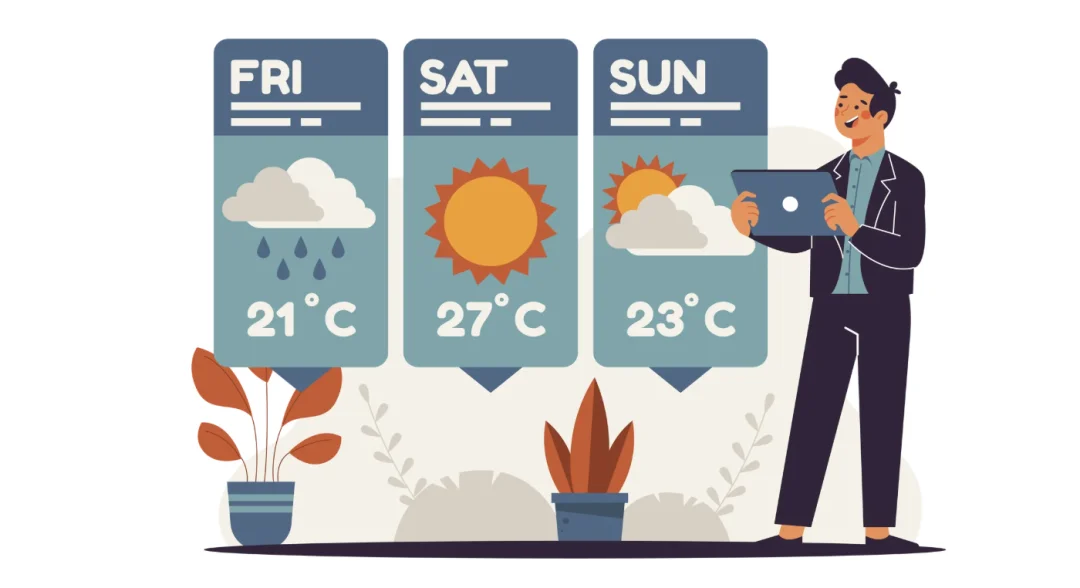
2. A + 不如 + B + adjective
Sometimes, you need to say in what way A is not as good as B.
In this case, you can add an adjective after B.
Structure
A + 不如 + B + adjective
Examples
这个房间不如那个房间大。
This room is not as big as that room.
坐公交车不如坐地铁快。
Taking the bus is not as fast as taking the subway.
这部电影不如那部电影有意思。
This movie is not as interesting as that movie.
网上学习不如面对面学习方便吗?
Is online learning not as convenient as face-to-face learning?
Here, the adjective tells us the specific comparison:
大 = big
快 = fast
有意思 = interesting
方便 = convenient
3. 不如 can also mean “it would be better to…”
In real conversations, 不如 is often used to give a suggestion.
It means:
It would be better to…
Why don’t we…?
How about… instead?
Structure
不如 + suggestion
Very often, Chinese speakers add 吧 ba at the end to make the suggestion sound softer and more natural.
Examples
我们不如坐地铁吧。
Why don’t we take the subway?
你不如先休息一下。
It would be better for you to rest first.
外面下雨了,我们不如在家吃饭吧。
It’s raining outside. Why don’t we eat at home?
如果你觉得太难,不如先学简单的部分。
If you think it is too difficult, it would be better to study the easier part first.
This use is very common in spoken Chinese.
4. 不如 vs 没有
Many learners also know 没有 méi yǒu for comparison.
Both can mean “not as… as…”, but they feel a little different.
没有 = objective comparison
A + 没有 + B + adjective
It is often used to compare facts or degrees.
我没有他高。
I am not as tall as him.
今天没有昨天冷。
Today is not as cold as yesterday.
不如 = comparison with judgment
不如 often sounds more like a judgment or opinion:
A is not as good, useful, suitable, interesting, fast, etc. as B.
这家餐厅不如那家好吃。
This restaurant is not as tasty as that one.
坐公交车不如坐地铁方便。
Taking the bus is not as convenient as taking the subway.
A simple way to remember:
没有 focuses more on degree.
不如 often focuses more on choice, quality, or judgment.
5. Common mistakes
Mistake 1: Forgetting the comparison target
❌ 这个不如。
Zhège bùrú.
This sentence is incomplete because we do not know:
not as good as what?
✅ 这个不如那个。
This one is not as good as that one.
Mistake 2: Using 不如 like 比
In Chinese, 比 and 不如 have different structures.
❌ 这个比那个不如好。
✅ 这个不如那个好。
This one is not as good as that one.
✅ 那个比这个好。
That one is better than this one.
They express similar ideas, but the sentence patterns are different.
6. More natural examples
学很多生词不如多用几个生词。
Learning many new words is not as useful as using a few of them more often.
看语法解释不如自己造句。
Reading grammar explanations is not as useful as making your own sentences.
一个人学习不如和老师一起练习。
Studying alone is not as good as practicing with a teacher.
如果你不知道怎么说,不如先用简单的句子。
If you don’t know how to say it, it would be better to use simple sentences first.
Quick Review
不如 bùrú has two very common uses:
1. Comparison
A + 不如 + B
Meaning:
A is not as good as B.
Example:
这本书不如那本书。
This book is not as good as that book.
2. Suggestion
不如 + suggestion + 吧
Meaning:
Why don’t we…? / It would be better to…
Example:
我们不如明天再去吧。
Why don’t we go tomorrow instead?
Final Tip
If you want to say “A is not as good as B,” use:
A + 不如 + B
If you want to make a soft suggestion, use:
不如……吧
So next time you want to compare two choices or give a better idea in Chinese, try using 不如 bùrú. It will make your Chinese sound more natural. 😊✨