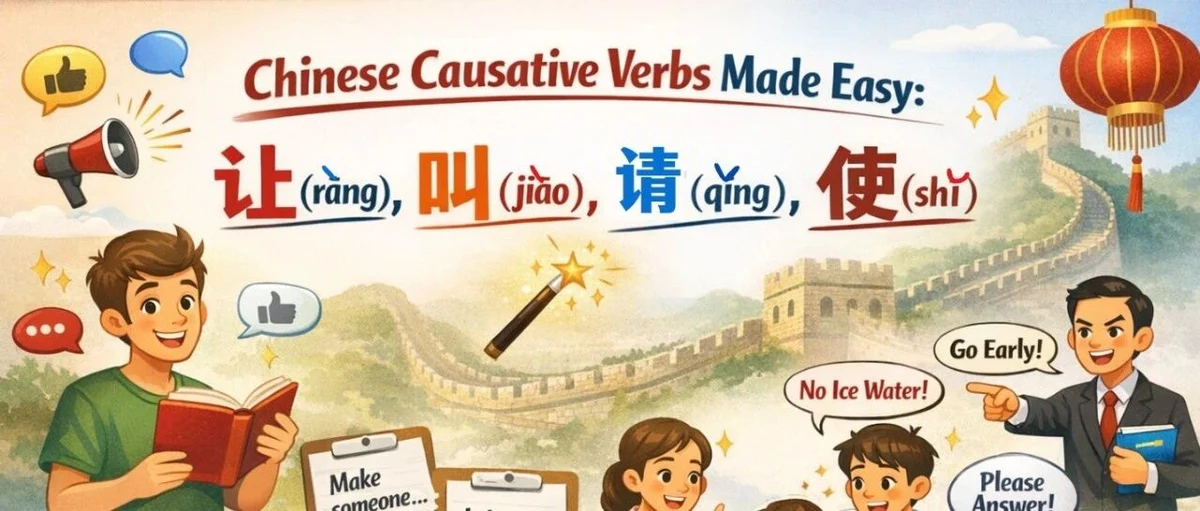
When learning Chinese, one very useful grammar point is the idea of causation—how to say that one person causes another person to do something, feel something, or become something.
In English, we often say things like:
make someone laugh
let someone go
ask someone to help
cause something to change
In Chinese, these ideas are often expressed with verbs such as 让 (ràng), 叫 (jiào), 请 (qǐng), and 使 (shǐ).
Once you understand how these words work, your Chinese will sound more natural, more expressive, and much closer to real communication. ✨
What Are Causative Verbs?
Causative verbs are verbs used to show that one person or thing causes another person or thing to do something or to be in a certain state.
In Chinese, the most common causative verbs include:
让 (ràng) – the most common and flexible one in daily Chinese
叫 (jiào) – often used in spoken Chinese, especially for telling or asking someone to do something
请 (qǐng) – polite, often meaning “ask” or “invite” someone to do something
使 (shǐ) – more formal, often used in written Chinese
These verbs are very important because they help learners express not only actions, but also influence, permission, requests, and results.
Basic Sentence Pattern
The most common structure is:
Subject + Causative Verb + Person/Thing + Predicate
The predicate can be:
a verb phrase
an adjective phrase
or sometimes a clause
Here are some simple examples:
老师让我们复习课文。
The teacher made us review the text.
这件事使我很开心。
This matter made me very happy.
妈妈叫我早点睡觉。
My mother told me to go to bed early.
老师请我回答问题。
The teacher asked me to answer the question.
1. 让 (ràng): The Most Common Causative Verb
让 (ràng) is the most common causative verb in modern Chinese. It is widely used in everyday speech and writing.
It can express two major meanings:
one person causes another person to do something
one person allows another person to do something
Because of this, 让 can sometimes mean both “make” and “let,” depending on the context.
A. 让 = make / cause
这首歌让我想家。
This song makes me miss home.
老板让他明天早点来。
The boss told him to come earlier tomorrow.
这个消息让大家很兴奋。
This news made everyone excited.
B. 让 = let / allow
妈妈不让我喝冰水。
My mother does not let me drink iced water.
老师让我们先回家。
The teacher let us go home first.
Key Point
For many learners, this can feel confusing at first. In English, “make” and “let” are very different. But in Chinese, 让 can cover both meanings. The exact meaning depends on the situation and the context.
2. 叫 (jiào): Common in Spoken Chinese
When used as a causative verb, 叫 (jiào) often means “to tell,” “to ask,” or “to make” someone do something. It is especially common in spoken Chinese.
Compared with 让, 叫 often sounds more direct and conversational.
妈妈叫我去买菜。
My mother told me to go buy vegetables.
老师叫他读课文。
The teacher asked him to read the text.
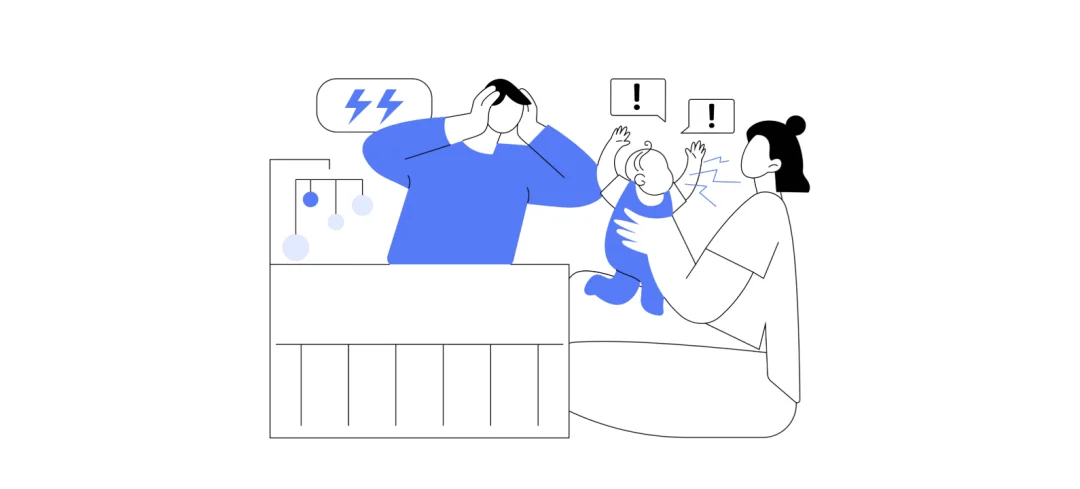
别叫孩子哭了。
Don’t make the child cry.
Teaching Note
Students should remember that 叫 has many meanings in Chinese. It can also mean “to be called” or “to call out.” So when teaching this word, it is helpful to remind learners that its meaning changes according to the sentence pattern.
For example:
我叫王明。
My name is Wang Ming.
Here, 叫 does not mean “make” or “ask.” It simply means “am called.”
3. 请 (qǐng): Polite Request, Not Strong Force
请 (qǐng) is often included in discussions of causative structures, but it is slightly different from typical causative verbs like 让 or 使.
Instead of strongly meaning “make,” 请 usually means:
to ask someone politely
to invite someone to do something
So semantically, it is closer to “ask” or “invite” than “make.”
老师请我回答这个问题。
The teacher asked me to answer this question.
我请你再说一遍。
I ask you to say it again.
我们请他来参加活动。
We invited him to come and join the activity.
Key Point
If you want to teach this clearly to foreign learners, it is better to say:
请 can appear in a similar sentence pattern, but it usually expresses a polite request or invitation rather than direct causation.
That distinction is important and helps students avoid misunderstanding.
4. 使 (shǐ): Formal and Written
使 (shǐ) is more formal than 让. It appears more often in written Chinese, formal speech, essays, reports, and literary contexts.
It often means “to make,” “to cause,” or “to result in.”
这次经历使我成长了很多。
This experience made me grow a lot.
科技的发展使生活更方便了。
The development of technology has made life more convenient.
这个决定使大家都很失望。
This decision made everyone disappointed.

Teaching Note
For beginners, 让 is much more useful in daily communication.
For more advanced learners, 使 is worth learning because it appears frequently in formal reading and writing.
让 vs. 使: Friendly vs. Formal
Both 让 and 使 can mean “make” or “cause,” but they are not used in exactly the same way.
让
More common in spoken Chinese
More natural in everyday conversation
Can also mean “let/allow”
使
More formal and written
Often used in abstract or serious contexts
Usually focuses on result or influence
Compare these two:
这件事让我很生气。
This thing made me very angry.
这件事使我非常生气。
This thing made me extremely angry.

Both are grammatically correct, but the first sounds more natural in conversation, while the second sounds more formal and written.
Common Predicate Types After Causative Verbs
After a causative verb, the predicate can take different forms.
A. Verb Phrase
爸爸让我去开门。
Dad told me to go open the door.
B. Adjective Phrase
这个故事让我很感动。
This story moved me a lot.
C. Clause or Longer Expression
这场雨使我们不能出去。
This rain made it impossible for us to go out.
A Very Useful Grammar Reminder
In causative sentences, the person after the causative verb is often the receiver of the influence.
For example:
老师让我们写作业。
The teacher is the one causing the action.
我们 are the ones who receive that instruction and perform the action.
This helps students understand sentence logic more clearly.
Common Learner Mistakes
Here are a few mistakes learners often make when using causative verbs.
1. Mixing up “make” and “ask politely”
Some students think 请 is exactly the same as 让, but it is not.
让 often means to cause or allow.
请 usually means to politely ask or invite.
2. Overusing 使 in daily conversation
Although 使 is correct, it can sound too formal in normal daily speech. In most everyday situations, 让 is the safer and more natural choice.
3. Forgetting that 叫 has multiple meanings
Students often know 叫 as “to be called,” but forget that it can also mean “tell someone to do something.”
Quick Comparison
Here is the easiest way to remember them:
让 = everyday, flexible, very common
叫 = spoken, direct, conversational
请 = polite request or invitation
使 = formal, written, abstract
Final Examples for Review
Let’s look at a few more natural examples:
这部电影让我哭了。
This movie made me cry.
妈妈叫我别玩手机了。
My mother told me to stop playing with my phone.
我请你帮我看看这句话。
I ask you to help me look at this sentence.
这个变化使我们的工作更顺利了。
This change made our work smoother.

Final Takeaway
If you want to sound natural in Chinese, causative verbs are essential. They help you express influence, instructions, permission, and results in a very natural way.
Start with 让, because it is the most common and practical.
Then learn 叫 for spoken Chinese, 请 for polite requests, and 使 for formal written Chinese.
Once you master these verbs, you will be able to express much more than simple actions—you will be able to show how actions, feelings, and situations affect other people. 🌟