
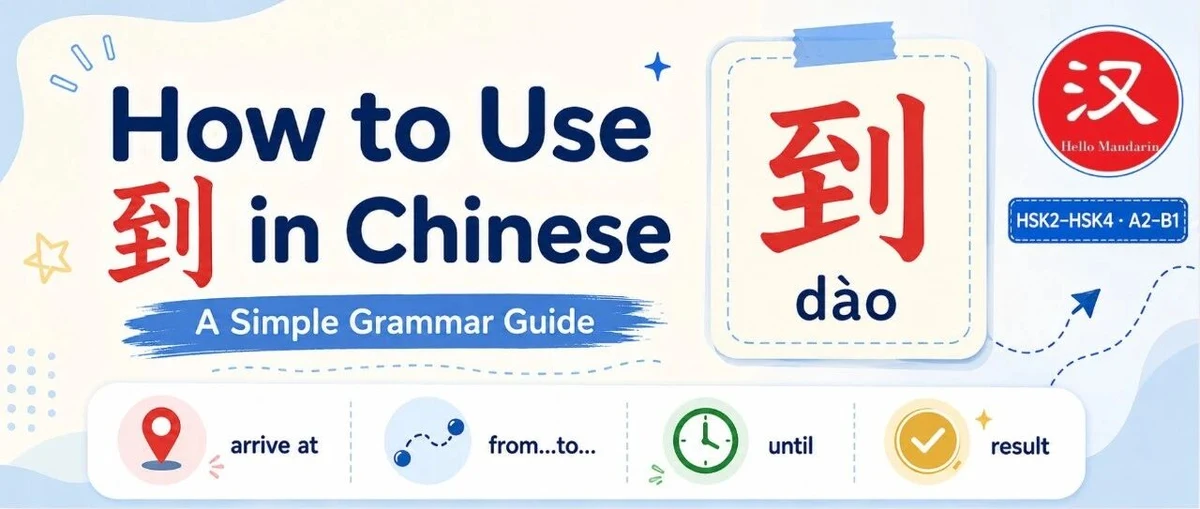
到 (dào) is a very common word in Chinese. Many learners first understand it as “to”, but in real Chinese, 到 has several important uses.
It can mean:
to arrive at
to go to
from…to…
until
to successfully reach a result
So, when you see 到, don’t translate it only as “to.”
You need to look at the sentence and understand its real function. 🌿
Let’s learn the most useful ways to use 到 in daily Chinese.
1. 到 = to arrive at / to get to
When 到 is used as a verb, it means to arrive at or to get to a place.
Structure
Subject + 到 + Place + 了
This structure is often used when someone has already arrived somewhere.
Examples
我到学校了。
I have arrived at school.
他已经到北京了。
He has already arrived in Beijing.
你什么时候到家?
When will you get home?
📌 In this use, 到 focuses on arriving at a place.
You can also use 到 for future arrival.
我明天到上海。
I will arrive in Shanghai tomorrow.

2. 到 + place + 来 / 去 = come / go to a place
You can also use 到 together with 来 (lái) or 去 (qù).
Structure
到 + Place + 来
= to come to a place
到 + Place + 去
= to go to a place
Examples
请到我家来。
Please come to my place.
我们明天到上海去。
We will go to Shanghai tomorrow.
你可以到办公室来找我。
You can come to the office to see me.

📌 来 shows movement toward the speaker or the place being talked about.
📌 去 shows movement away from the speaker or toward another place.
3. 从……到…… = from…to…
从……到…… means from…to….
It can be used with time, places, or even a process.
A. From one time to another
Structure
从 + Time 1 + 到 + Time 2
Examples
我从早上九点到下午五点上班。
I work from 9 a.m. to 5 p.m.
他从星期一到星期五都很忙。
He is busy from Monday to Friday.
这家店从早上八点到晚上十点营业。
This shop is open from 8 a.m. to 10 p.m.
📌 Here, 到 shows the ending point of a time period.
B. From one place to another
Structure
从 + Place 1 + 到 + Place 2
Examples
从我家到学校很近。
It is close from my home to school.
我们从北京到上海坐高铁。
We take the high-speed train from Beijing to Shanghai.
从这里到地铁站要走十分钟。
It takes ten minutes to walk from here to the subway station.
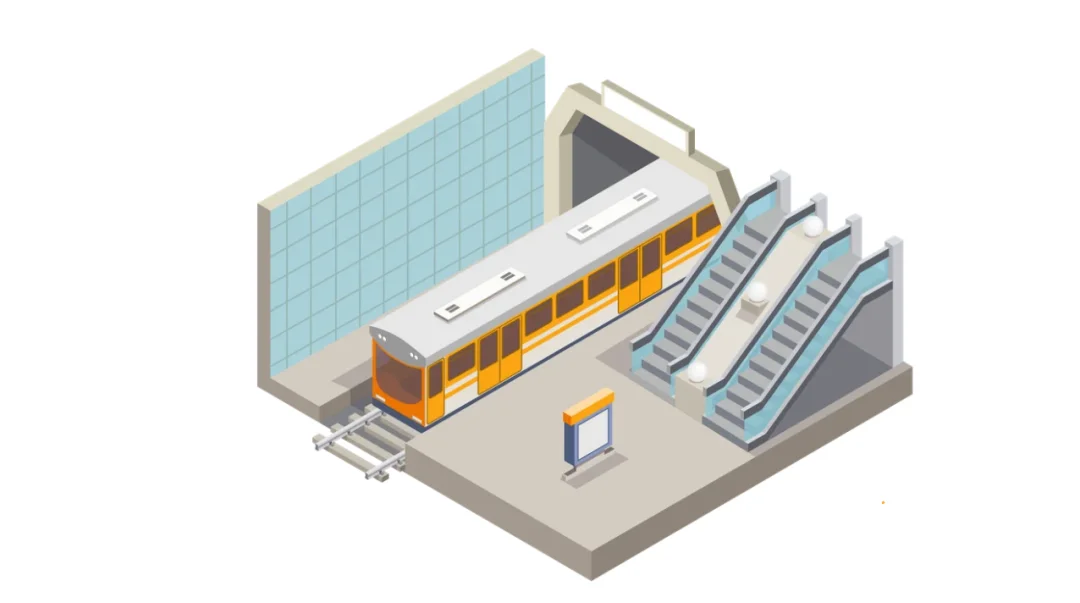
📌 Here, 到 shows the ending point of movement.
4. Verb + 到 + time = do something until a certain time
When 到 is used after a verb, it can mean until.
In this structure, 到 shows the ending point of an action.
Structure
Verb + 到 + Time / Event
Examples
我学到晚上十点。
I studied until 10 p.m.
他睡到中午才起床。
He slept until noon before getting up.
我们聊到很晚。
We talked until very late.

You can add 一直 (yìzhí) to emphasize that the action continued for a long time.
我一直学到晚上十点。
I kept studying until 10 p.m.
📌 一直 means the action continued without stopping or for a long time.
5. 直到……才…… = not until…
直到 (zhídào) means until or not until.
When it is used with 才 (cái), it often shows that something happened later than expected.
Structure
直到 + Time / Event + Subject + 才 + Action
You can also put the subject before 直到:
Subject + 直到 + Time / Event + 才 + Action
Examples
直到晚上十点,他才回家。
He didn’t go home until 10 p.m.
我直到今天才知道这件事。
I didn’t know about this until today.
她直到考试前一天才开始复习。
She didn’t start reviewing until the day before the exam.
📌 才 is very important here.
It shows that the action happened late or only after that time.
6. 直到……都没 / 都不…… = still did not…
You can also use 直到……都没 / 都不…… to say that something still did not happen by a certain time.
Structure
直到 + Time / Event + Subject + 都没 / 都不 + Action
Examples
直到晚上十二点,他都没回来。
He still had not come back by midnight.
直到老师解释完,我都不明白。
Even after the teacher finished explaining, I still didn’t understand.
直到现在,她都没给我回消息。
She still hasn’t replied to my message even now.

📌 没 is usually used for actions that have not happened.
📌 不 is usually used for states, habits, or willingness.
7. Verb + 到 = successfully reach a result
In Chinese, 到 can also be used as a result complement.
This means the action has successfully reached its result.
Structure
Subject + Verb + 到 + Object + 了
or
Subject + Verb + 到 + 了 + Object
Examples
我买到票了。
I managed to buy the ticket.
他找到工作了。
He found a job.
我听到你的声音了。
I heard your voice.
你看到那个人了吗?
Did you see that person?
📌 Here, 到 does not simply mean “to.”
It shows that the action was successful or the result was reached.
For example:
看 = to look
看到 = to see
找 = to look for
找到 = to find
买 = to buy / try to buy
买到 = to manage to buy
8. Negative form: 没 + Verb + 到
To say that the result was not achieved, use 没 + Verb + 到.
Structure
Subject + 没 + Verb + 到 + Object
Examples
我没买到票。
I didn’t manage to buy the ticket.
他没找到钥匙。
He didn’t find the key.
我没听到你说什么。
I didn’t hear what you said.
我看了很久,但是没看到他。
I looked for a long time, but I didn’t see him.
📌 Be careful:
我看了。
I looked.
我看到了。
I saw it.
The second sentence shows that the result was successful.
Quick Review 🌟
到 + place
= arrive at / get to a place
到 + place + 来 / 去
= come / go to a place
从……到……
= from…to…
Verb + 到 + time
= do something until a certain time
直到……才……
= not until…
直到……都没 / 都不……
= still did not…
Verb + 到
= successfully reach a result
没 + Verb + 到
= did not successfully reach the result
Final Tip
When you see 到, don’t translate it only as “to.”
A better way is to ask yourself:
Is it about a place?
Is it about time?
Is it about a result?
If you can answer these three questions, you will understand 到 (dào) much more clearly. 😊