
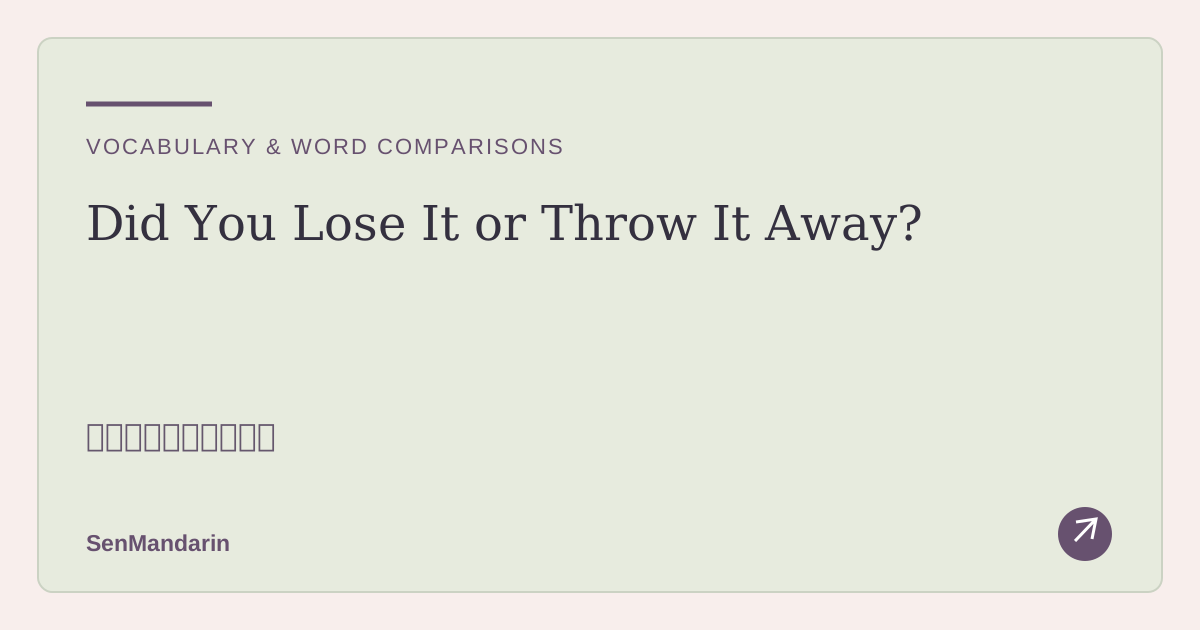
Have you ever said this in Chinese?
我把手机扔了。
Wǒ bǎ shǒujī rēng le.
You wanted to say:
I lost my phone.
But your Chinese friend may understand:
I threw my phone away. 😳📱💨
The reason is simple: 丢 (diū) and 扔 (rēng) can both relate to getting rid of something, but they are not always interchangeable.
Let’s learn the difference. 👇
1️⃣ 丢 (diū): to lose or get rid of something
The meaning of 丢 is broader than 扔.
It can express:
👉 losing something
👉 leaving something behind
👉 getting rid of something
A. 丢 = to lose 😰
This is one of the most common meanings of 丢.
我把钥匙丢了。
I lost my keys.
他的手机又丢了。
He lost his phone again.
我的钱包差点儿丢了。
I almost lost my wallet.
📌 Here, 丢 means that something is lost or missing.
In this meaning, you cannot replace 丢 with 扔.
Compare:
✅ 我把手机丢了。
I lost my phone.
⚠️ 我把手机扔了。
I threw my phone away.
One word changes the whole story! 😂
2️⃣ 丢下 (diūxià): to leave someone or something behind
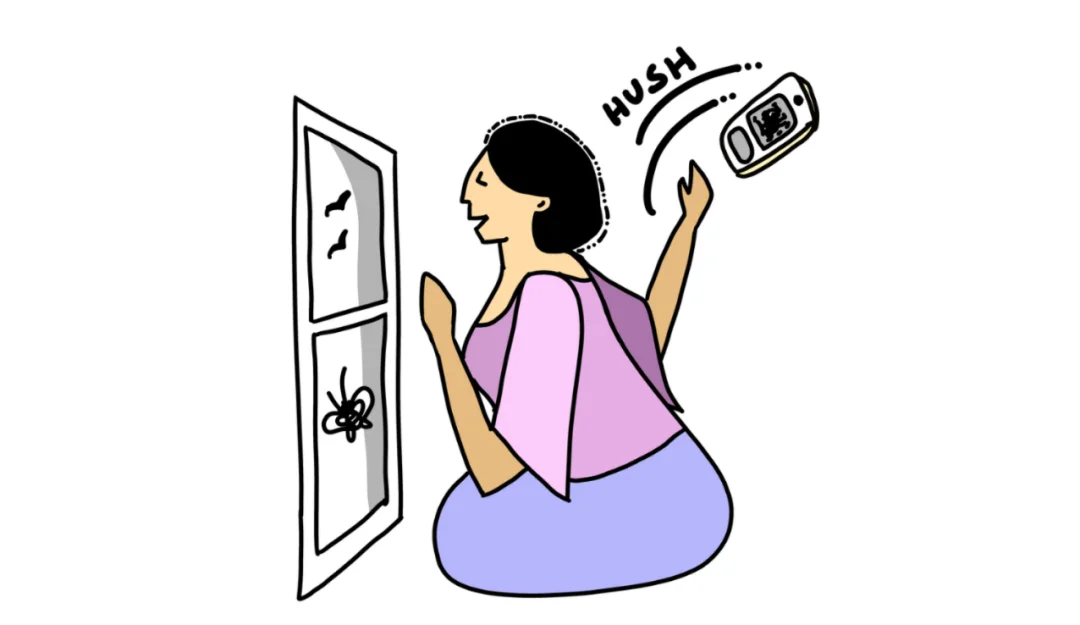
When 丢 is used in the structure 丢下, it often means to leave someone or something behind.
别把我一个人丢下!
Don’t leave me here alone!
他丢下手里的工作,急急忙忙地走了。
He dropped what he was doing and left in a hurry.
💡 Here, 丢下 does not describe a throwing action.
It focuses on leaving someone, something, or a task behind.

3️⃣ 丢掉 (diūdiào): to get rid of or lose something
丢掉 can mean to discard something.
这个盒子没用了,丢掉吧。
This box is no longer useful. Throw it away.
这些旧东西可以丢掉了。
These old things can be thrown away now.
But 丢掉 can also be used with things that are not physical objects.
For example:
别丢掉这么好的机会。
Don’t lose such a good opportunity.
他因为迟到太多次,丢了工作。
He lost his job because he was late too many times.

⭐ This is an important difference:
丢 can be used with both physical objects and some abstract things.
For example:
-
丢手机 — lose a phone
-
丢工作 — lose a job
-
丢掉机会 — lose an opportunity
扔 normally cannot be used this way.
4️⃣ 扔 (rēng): to throw or toss 🏀
The core meaning of 扔 is a physical action: throwing or tossing something.
Imagine this:
🙋 → 🏀 → ➡️
That is 扔.
他把球扔给了我。
He threw the ball to me.
别往地上扔东西!
Don’t throw things on the ground!
他把石头扔进了河里。
He threw the stone into the river.
📌 In these examples, 扔 emphasizes a clear physical movement.
5️⃣ 扔掉 (rēngdiào): to throw something away 🗑️
扔 can also mean to throw something away or discard it.
A common structure is:
📌 把 + Object + 扔掉
For example:
请把这个空瓶子扔掉。
Please throw away this empty bottle.
这些旧衣服别扔,我还要。
Don’t throw away these old clothes. I still want them.
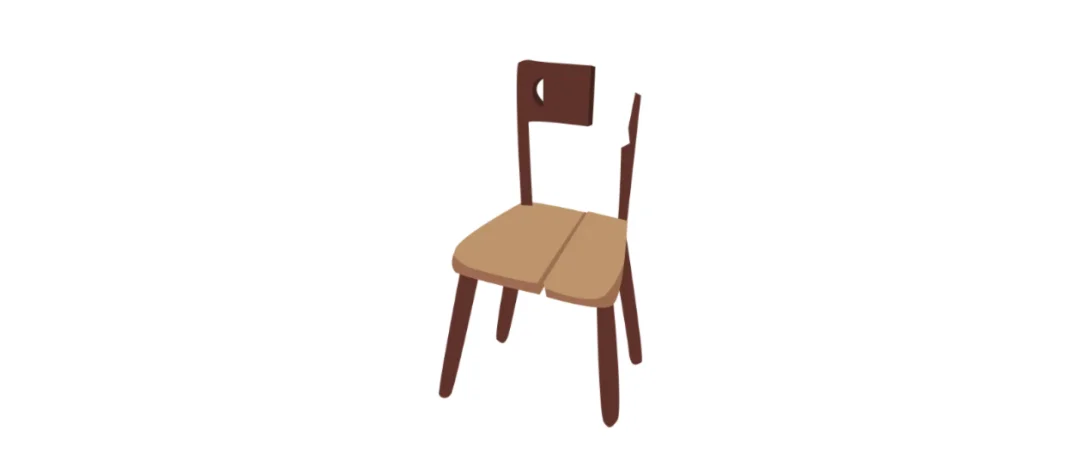
我把坏掉的椅子扔掉了。
I threw away the broken chair.
Here, the action is intentional: the speaker chooses to get rid of something.
6️⃣ When can 丢 and 扔 both be used?
When talking about discarding unwanted things, 丢 and 扔 can sometimes both be used.
For example:
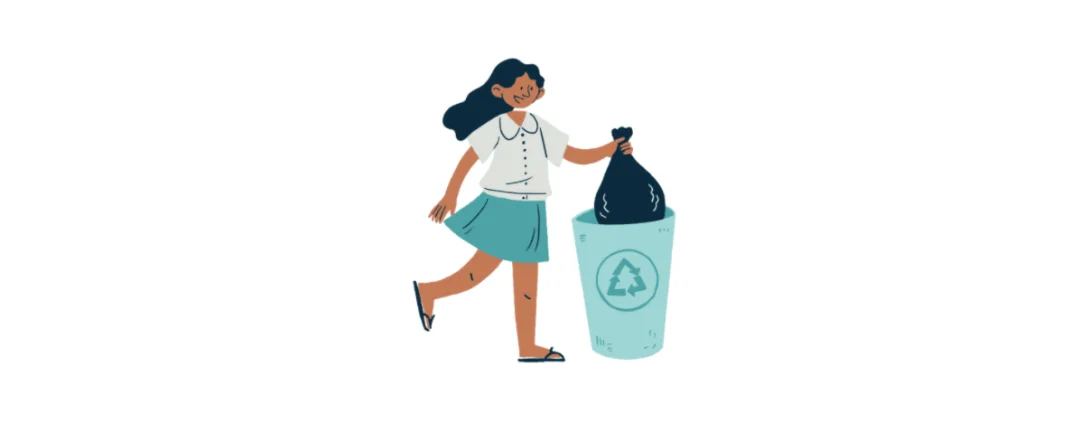
把垃圾丢掉。
Throw the garbage away.
把垃圾扔掉。
Throw the garbage away.
Both are natural.
The difference is mainly in focus:
🔹 丢 focuses more broadly on no longer keeping something or getting rid of it.
🔹 扔 more strongly suggests the physical action of throwing or tossing.
In everyday conversation, however, the difference may be very small when the speaker simply means “throw something away.”
7️⃣ The Most Important Difference ⭐
Here is the key contrast:
😰 Accidental loss → 丢
我把钱包丢了。
I lost my wallet.
🏀 Physical throwing → 扔
他把球扔出去了。
He threw the ball out.
🗑️ Getting rid of something → 丢 or 扔
这个不要了,丢掉吧。
We don’t need this anymore. Throw it away.
这个不要了,扔掉吧。
We don’t need this anymore. Throw it away.

8️⃣ Common Learner Mistake ⚠️
Suppose you want to say:
I lost my phone.
Say:
✅ 我把手机丢了。
Wǒ bǎ shǒujī diū le.
Be careful with:
⚠️ 我把手机扔了。
Wǒ bǎ shǒujī rēng le.
This suggests that you intentionally threw your phone or threw it away.
So remember:
📱❓ 丢手机 = lose a phone
📱💨 扔手机 = throw a phone
The difference matters! 😄
🧠 Quick Memory Trick
丢 = Lost or no longer kept 😰🗑️
Think about:
-
losing something
-
leaving something behind
-
losing an opportunity or job
-
getting rid of something
Examples:
丢钥匙 — lose your keys
丢工作 — lose your job
丢掉机会 — lose an opportunity
扔 = Throw or toss 🏀➡️
Think about a physical throwing action.
Examples:
扔球 — throw a ball
扔石头 — throw a stone
扔掉瓶子 — throw away a bottle
✨ Final Summary
The easiest way to understand the difference is:
丢 has a broader meaning. It can describe losing something, leaving something behind, or getting rid of something.
扔 focuses more strongly on the physical action of throwing or tossing something, and it can also mean throwing something away.
Remember:
📱 Lost it? → 丢
🏀 Threw it? → 扔
🗑️ Getting rid of it? → 丢 or 扔
Once you remember this basic contrast, choosing between 丢 and 扔 will become much easier. ✨