
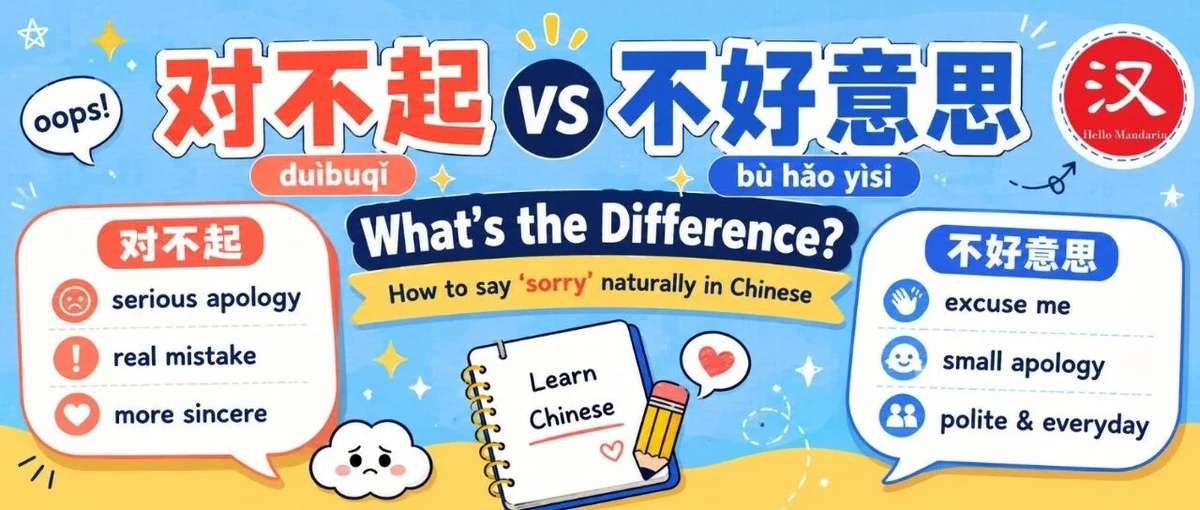
In Chinese, both 对不起 and 不好意思 can be translated as “sorry.”
But they are not exactly the same.
The simple difference is:
对不起 = a serious and sincere apology
不好意思 = a softer expression for small apologies, polite interruptions, requests, or feeling embarrassed
Let’s learn how to use them naturally. 😊
1. 对不起 (duìbuqǐ): A Serious “Sorry”
对不起 is used when you really feel sorry because you did something wrong.
It sounds more serious and sincere than 不好意思.
You can use 对不起 when:
You made a mistake.
You hurt someone’s feelings.
You caused trouble.
You want to make a sincere apology.
Examples
对不起,我迟到了。
Sorry, I’m late.
对不起,我忘了你的生日。
Sorry, I forgot your birthday.
对不起,我不是故意的。
Sorry, I didn’t do it on purpose.
对不起,给你添麻烦了。
Sorry for causing you trouble.
Useful Pattern
对不起 + reason
对不起,我今天不能去了。
Sorry, I can’t go today.
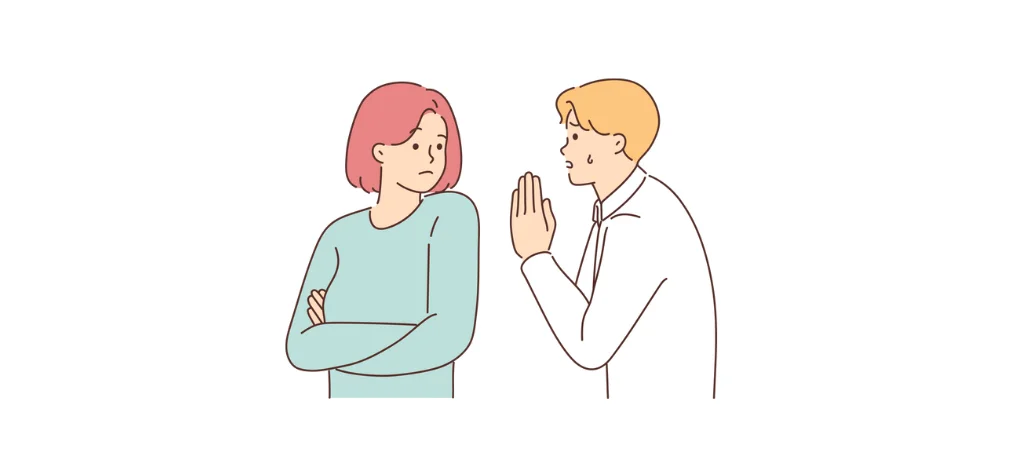
2. 不好意思 (bù hǎo yìsi): A Softer and More Polite Expression
不好意思 is very common in daily Chinese.
It can mean:
Sorry
Excuse me
I feel embarrassed
Sorry to bother you
Compared with 对不起, 不好意思 sounds softer, more polite, and more common in everyday situations.
You can use 不好意思 when:
You ask for help politely.
You interrupt someone.
You cause a small inconvenience.
You feel a little embarrassed.
You want to sound friendly and polite.
Examples
不好意思,我可以问你一个问题吗?
Excuse me, may I ask you a question?
不好意思,请问地铁站在哪儿?
Excuse me, where is the subway station?
不好意思,我刚才没听清。
Sorry, I didn’t hear clearly just now.
不好意思,打扰一下。
Excuse me, sorry to bother you.
Useful Pattern
不好意思 + polite request
不好意思,可以帮我一下吗?
Excuse me, could you help me for a moment?
3. The Main Difference
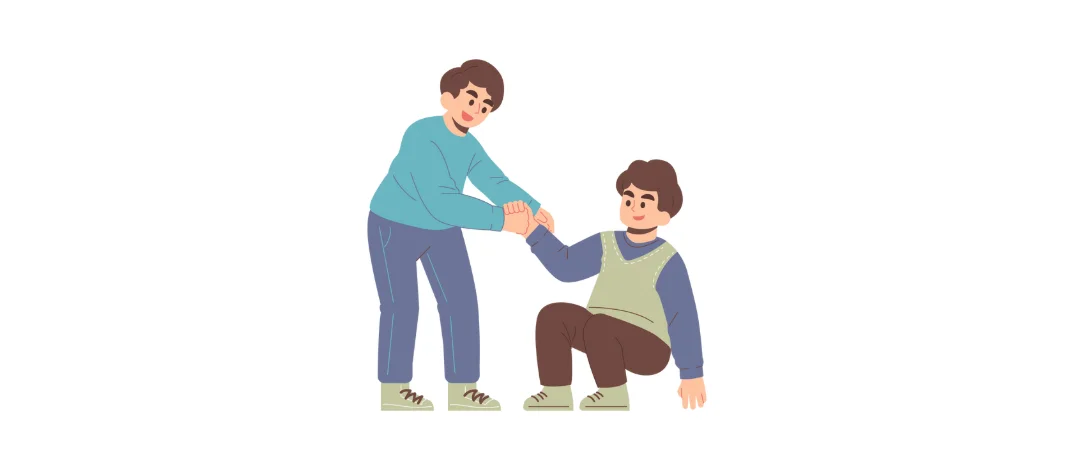
Use 对不起 when the apology is more serious.
Use 不好意思 when the situation is lighter, more polite, or more about “excuse me.”
Look at these two examples:
对不起,我弄坏了你的手机。
Sorry, I broke your phone.
This is serious, so 对不起 is better.
不好意思,我可以坐这里吗?
Excuse me, may I sit here?
This is just a polite request, so 不好意思 is more natural.
4. Can We Use Both Together?
Yes, sometimes Chinese speakers use both together, especially when they want to sound extra polite or sincere.
A more natural example is:
不好意思,真的对不起。
I’m really sorry.
But for most learners, it is better to choose one based on the situation.
For small things, use 不好意思.
For serious mistakes, use 对不起.
5. Common Mistake
Some learners use 对不起 in every situation.
For example:
对不起,厕所在哪儿?
Sorry, where is the bathroom?
This is not grammatically wrong, but it sounds too serious for a simple question.
A more natural way is:
不好意思,请问厕所在哪儿?
Excuse me, where is the bathroom?
When asking strangers a polite question, 不好意思 is often more natural.
6. Be Careful
If the mistake is serious, using only 不好意思 may sound not sincere enough.
For example, if you break someone’s phone, saying only:
不好意思。
Sorry.
may sound too light.
A better way is:
对不起,我不是故意的。
Sorry, I didn’t do it on purpose.
So remember:
Small situation → 不好意思
Serious mistake → 对不起

7. Mini Dialogue
A: 不好意思,请问这里有人吗?
Excuse me, is this seat taken?
B: 没有,你可以坐。
No, you can sit here.
A: 谢谢!
Thank you!
Quick Summary
对不起 (duìbuqǐ)
Use it for a real apology.
It sounds more serious and sincere.
Example:
对不起,我错了。
Sorry, I was wrong.
不好意思 (bù hǎo yìsi)
Use it for small mistakes, polite requests, interruptions, or embarrassment.
It sounds softer and more natural in daily situations.
Example:
不好意思,我想问一下。
Excuse me, I’d like to ask something.

Final Tip
If you are asking for help, interrupting someone, or being polite, use 不好意思.
If you really made a mistake and want to apologize sincerely, use 对不起.
A simple way to remember:
Small situation → 不好意思
Serious mistake → 对不起
Learn this difference, and your Chinese will sound much more natural. 🌿
😊