
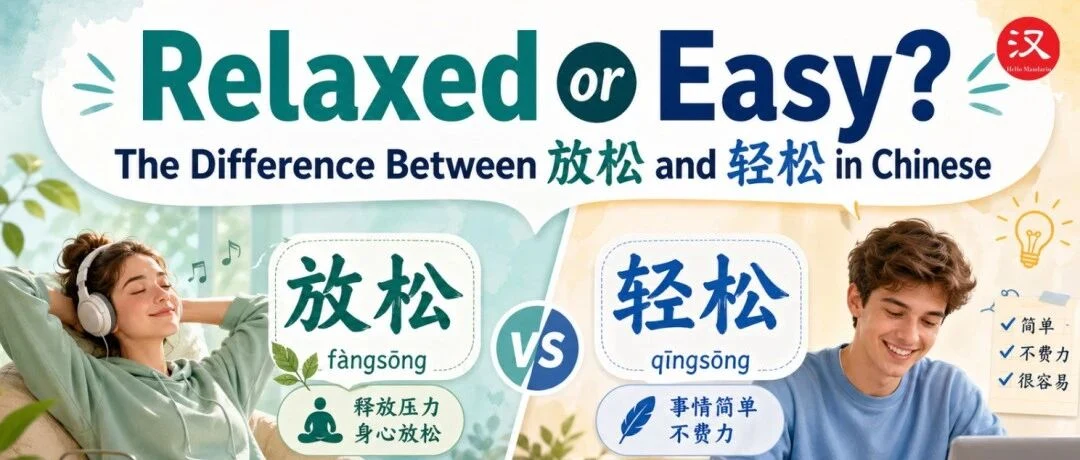
Many Chinese learners know that 放松 (fàngsōng) and 轻松 (qīngsōng) are both related to the idea of “relaxing,” but they are not the same word.
In real Chinese, they are used in different ways. If you mix them up, your sentence may still be understandable, but it can sound unnatural.
In this article, we will look at the real difference between 放松 and 轻松, how to use them naturally, and which common mistakes learners should avoid. 🌿
1. The Core Difference
The simplest way to understand them is this:
放松 (fàngsōng) focuses on the action or process of relaxing.
It often means to relax, to loosen up, or to release tension.
轻松 (qīngsōng) focuses on the feeling, state, or quality of being relaxed, easy, or not stressful.
It often means relaxed, easy, effortless, or stress-free.
So you can remember them like this:
放松 is often about what you do.
轻松 is often about how you feel or how something is.
2. What Does 放松 Mean?
放松 (fàngsōng) is commonly used as a verb. It means to relax your body, your mind, or your emotions.
It is often used in expressions like:
放松一下
to relax a little
让自己放松
to let yourself relax
放松心情
to relax your mind / mood
放松身体
to relax your body
When you use 放松, there is usually an idea of releasing pressure or tension.
Examples with 放松
1. 我想周末好好放松一下。
Wǒ xiǎng zhōumò hǎohǎo fàngsōng yíxià.
I want to really relax this weekend.
2. 听音乐能让我很放松。
Tīng yīnyuè néng ràng wǒ hěn fàngsōng.
Listening to music can make me feel very relaxed.
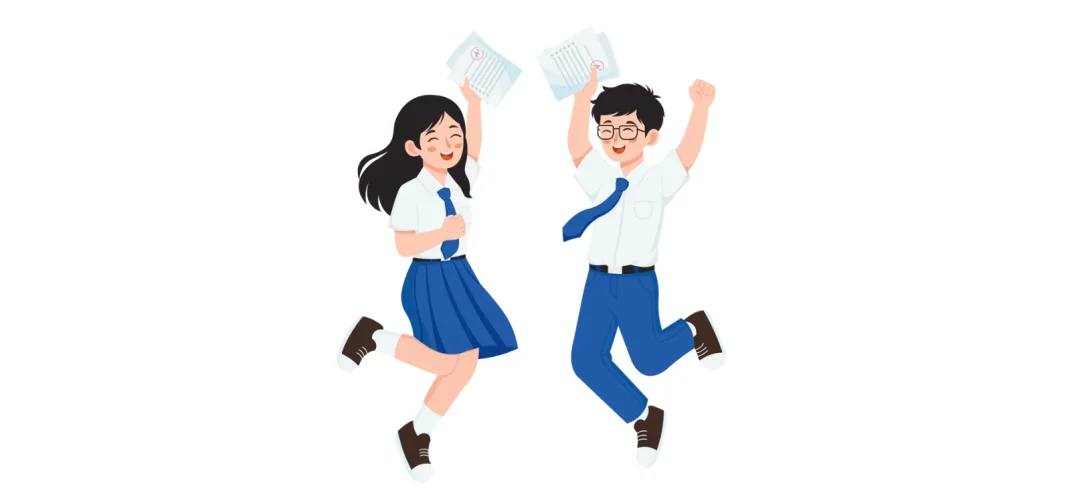
3. 考试以后,大家都去公园放松了。
Kǎoshì yǐhòu, dàjiā dōu qù gōngyuán fàngsōng le.
After the exam, everyone went to the park to relax.
3. What Does 轻松 Mean?
轻松 (qīngsōng) is usually an adjective. It describes a feeling, a state, an atmosphere, or a task.
It can mean:
relaxed
easy
not difficult
not stressful
comfortable and free from pressure
So 轻松 is not only about emotions. It can also describe work, study, conversation, atmosphere, or a task that is easy to handle.
Examples with 轻松
1. 做完作业以后,我觉得很轻松。
Zuòwán zuòyè yǐhòu, wǒ juéde hěn qīngsōng.
After finishing my homework, I felt very relaxed.
2. 这份工作没有我想的那么难,还算轻松。
Zhè fèn gōngzuò méiyǒu wǒ xiǎng de nàme nán, hái suàn qīngsōng.
This job is not as hard as I thought. It is fairly easy.
3. 老师希望课堂气氛更轻松一点。
Lǎoshī xīwàng kètáng qìfēn gèng qīngsōng yìdiǎn.
The teacher hopes the classroom atmosphere can be a little more relaxed.
4. The Most Important Difference
A very useful way to remember this is:
放松 = to relax / to release tension
轻松 = relaxed / easy / stress-free
Look at this contrast:
我想放松一下。
I want to relax a little.
This sentence talks about an action.
今天的工作很轻松。
Today’s work is easy / not stressful.
This sentence talks about a quality or state.
5. Can They Both Describe People?
Yes, but the meaning is slightly different.
If you say someone is 放松, it often emphasizes that the person is physically or mentally relaxed, especially after stress or tension.
If you say someone feels 轻松, it often emphasizes that the person feels relieved, free from pressure, or at ease.
Compare these examples:
1. 做完报告以后,他终于放松了。
Zuòwán bàogào yǐhòu, tā zhōngyú fàngsōng le.
After finishing the report, he finally relaxed.
This focuses more on the release of tension.
2. 做完报告以后,他觉得很轻松。
Zuòwán bàogào yǐhòu, tā juéde hěn qīngsōng.
After finishing the report, he felt very relieved and relaxed.
This focuses more on the feeling after the pressure is gone. ✨
6. Common Collocations
To sound more natural, learners should remember common word combinations.
Common collocations with 放松:
放松一下
relax a little
放松心情
relax one’s mind / mood
放松身体
relax one’s body
让自己放松
let oneself relax
学会放松
learn to relax
Common collocations with 轻松:
很轻松
very relaxed / very easy
比较轻松
relatively easy / relatively relaxed
轻松的生活
a relaxed life
轻松的气氛
a relaxed atmosphere
轻松的话题
a light and easy topic
轻松地完成
to complete something easily
7. Common Mistakes Learners Make
Mistake 1: Using 放松 to describe an easy task
❌ 这个作业很放松。
This sounds unnatural.
✅ 这个作业很轻松。
This homework is easy.
Why?
Because homework is not something that “relaxes.” Here, you want to describe the task as easy or not demanding, so 轻松 is the correct word.
Mistake 2: Using 轻松 when you mean “relax for a while”
Learners often want to say “I want to relax a bit.”
The safest and most natural expression is:
✅ 我想放松一下。
I want to relax a little.
In casual Chinese, you may sometimes hear 轻松一下, but for learners, 放松一下 is clearer, more standard, and more natural in this meaning.
Mistake 3: Ignoring the grammar difference
This is the key grammar point:
放松 is commonly used like a verb.
轻松 is commonly used like an adjective.
That is why these sentences are natural:
✅ 我想放松一下。
I want to relax a little.
✅ 今天的课很轻松。
Today’s class was easy / relaxed.
✅ 听音乐让我很放松。
Listening to music makes me feel relaxed.
✅ 考完试以后,我感觉很轻松。
After finishing the exam, I felt very relieved.
8. More Natural Examples
1. 我下班后喜欢散步,这样可以放松心情。
Wǒ xiàbān hòu xǐhuān sànbù, zhèyàng kěyǐ fàngsōng xīnqíng.
After work, I like taking a walk because it helps me relax.
2. 今天的考试比我想的轻松。
Jīntiān de kǎoshì bǐ wǒ xiǎng de qīngsōng.
Today’s exam was easier than I expected.
3. 洗个热水澡会让人很放松。
Xǐ ge rèshuǐzǎo huì ràng rén hěn fàngsōng.
Taking a hot shower can make people feel very relaxed.
4. 我喜欢这种轻松的聊天方式。
Wǒ xǐhuān zhè zhǒng qīngsōng de liáotiān fāngshì.
I like this relaxed way of chatting.
5. 别太紧张,先放松一下。
Bié tài jǐnzhāng, xiān fàngsōng yíxià.
Don’t be too nervous. Relax a little first.
6. 这本书不难,读起来很轻松。
Zhè běn shū bù nán, dú qǐlái hěn qīngsōng.
This book is not difficult. It is easy to read.
9. Quick Memory Tip
Here is an easy way to remember the difference:
放松 → release tension / relax yourself
轻松 → easy, relaxed, or stress-free
Or even more simply:
放松 = relax
轻松 = relaxed / easy
10. Final Summary
Although 放松 and 轻松 are related, they are not interchangeable.
放松 usually describes the act or process of relaxing, especially releasing tension from your body, mind, or emotions.
轻松 usually describes a state, feeling, atmosphere, or task that is relaxed, easy, or not stressful.
So next time, ask yourself:
Am I talking about the action of relaxing?
Use 放松.
Am I describing a relaxed or easy feeling, task, or situation?
Use 轻松.
Once you understand this difference, your Chinese will sound much more natural and precise. 😊