
When learning Chinese, many students get confused by 过 (guo) and 了 (le).
Both words can be connected to the past, so they are often translated into English in similar ways. Because of that, learners often ask:
Why do we say 我去过北京 but also 我去了北京?
Do both mean “I went to Beijing”?
Can 过 and 了 replace each other?
The answer is: not really.
Although both can refer to past actions, they do different grammatical jobs.
了 usually shows that an action happened or was completed.
过 usually shows that someone has had the experience of doing something before.
This is the key difference.
In this article, we will clearly explain how 过 and 了 work, how they are different, and how to use them naturally in real Chinese. ✨
1. The Core Difference
Let’s begin with the simplest idea:
了 = an action happened / was completed
过 = someone has had that experience before
So:
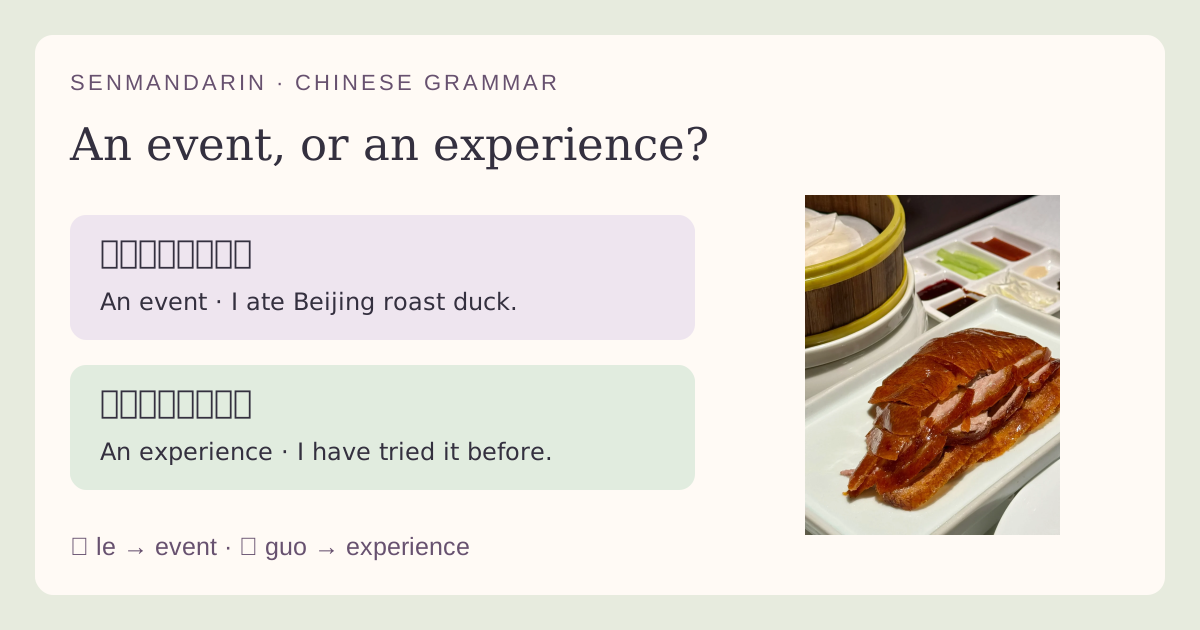
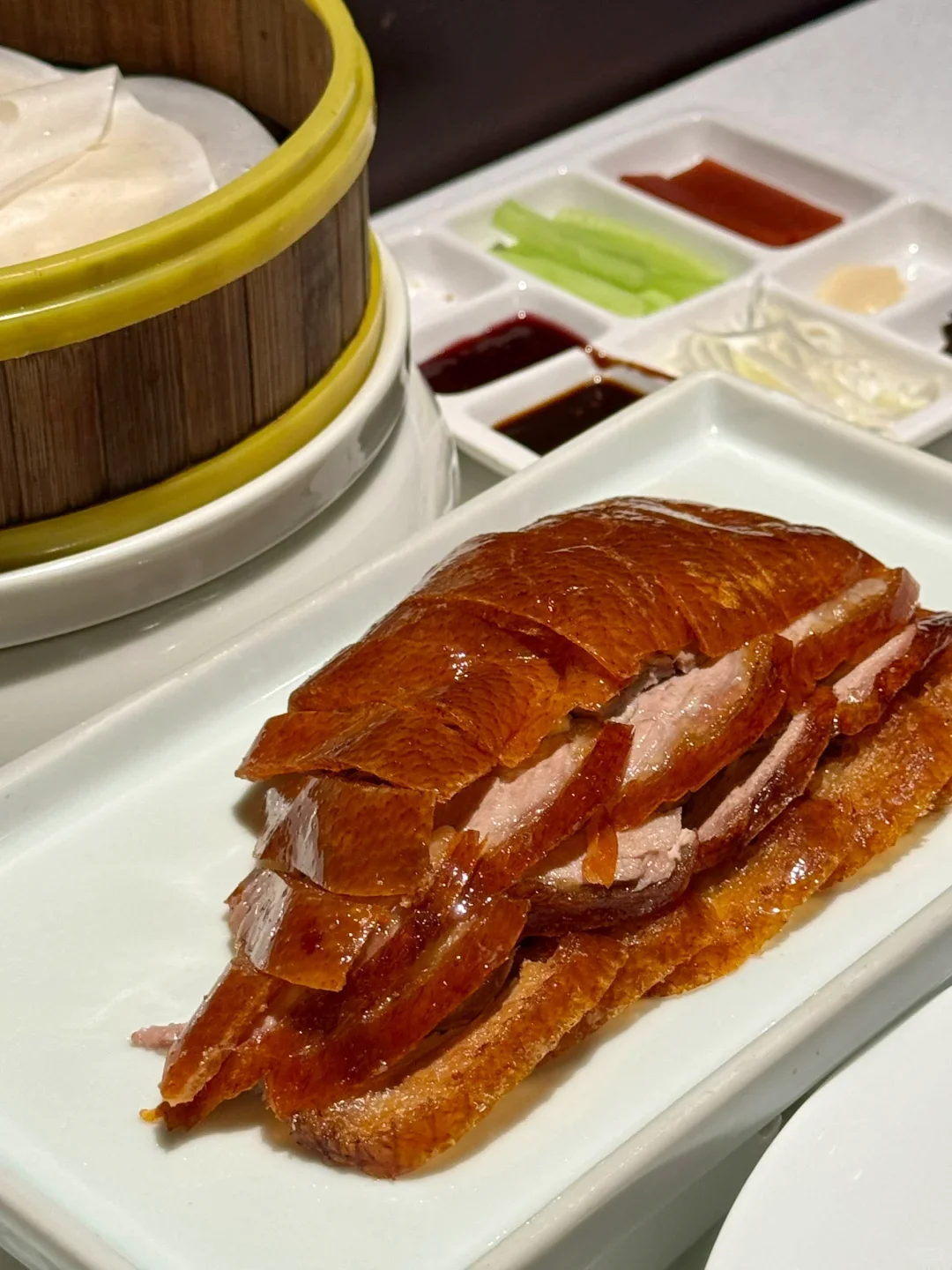
我吃了北京烤鸭。
English: I ate Beijing roast duck.
This sentence tells us that the action happened.
But:
我吃过北京烤鸭。
English: I have eaten Beijing roast duck before.
This sentence tells us that the speaker has had the experience before.
That is the most important difference. ✅
2. How to Use 了 (le)
When 了 is placed after a verb, it usually shows that an action is completed, realized, or actually happened.
This is often called the perfective 了.
Basic pattern
Subject + Verb + 了 + Object
Examples
我买了一本书。
English: I bought a book.
他吃了晚饭。
English: He ate dinner.
我们昨天看了那部电影。
English: We watched that movie yesterday.
What does 了 focus on?
It focuses on the fact that the action took place or was completed.
For example:
我去了上海。
English: I went to Shanghai.
This means the trip happened. The focus is on the event.

3. How to Use 过 (guo)
When 过 is placed after a verb, it usually shows that the speaker has had the experience of doing something at least once before.
This is often called the experiential marker.
Basic pattern
Subject + Verb + 过 + Object
Examples
我去过上海。
English: I have been to Shanghai before.
她看过这部电影。
English: She has seen this movie before.
我学过一点儿法语。
English: I have studied a little French before.
What does 过 focus on?
It focuses on life experience, not just one finished event.
For example:
你吃过四川火锅吗?
English: Have you ever eaten Sichuan hotpot?
The question is not asking about one specific meal.
It is asking whether you have ever had that experience.
4. 了 vs 过: The Main Contrast
Now let’s compare them directly.
Example 1
我去了北京。
English: I went to Beijing.
This tells us that the trip happened.
我去过北京。
English: I have been to Beijing before.
This tells us that Beijing is part of the speaker’s past experience.
So:
去了 = the event happened
去过 = I have had that experience before
Example 2
他看了这本书。
English: He read this book.
This refers to a completed action.
他看过这本书。
English: He has read this book before.
This refers to his previous experience.
5. A Very Important Point: 过 Does Not Simply Mean “Past”
Many learners think:
“If something happened in the past, I can use 过.”
That is not correct.
过 does not mean “past” in a general sense.
It means past experience.
So if you simply want to say that something happened yesterday, 了 is often the better choice.
For example:
我昨天买了一件衣服。
English: I bought a piece of clothing yesterday.
This is natural.
But if you say:
我昨天买过一件衣服。
This sounds odd in many contexts, because the focus is now on experience, not on the event itself.
If your goal is just to report what happened yesterday, use 了.
6. Can 过 Be Used with Time Words?
Yes, but the meaning is still about experience.
This is an important point, because some learners are told too simply that 过 cannot be used with time words. That is not always true.
For example:
我小时候学过钢琴。
English: I learned piano when I was little. / I studied piano as a child.
This is natural, because the sentence still talks about a past experience.
Another example:
我去年去过一次北京。
English: I went to Beijing once last year.
This is also possible, because the meaning is still experiential.
So the real rule is this:
过 can be used with time expressions, but the focus must still be on having had the experience, not simply on reporting a completed event.

7. Negative Forms
This is another part that often confuses learners.
Negative with 了
When talking about completed past actions, Chinese usually uses 没(有), not 不.
我没买书。
English: I didn’t buy a book.
他昨天没去学校。
English: He didn’t go to school yesterday.
Notice that in negative sentences, the 了 usually disappears.
Not natural:
我没买了书。 ❌
Natural:
我没买书。 ✅
Negative with 过
For experience, the negative form is also 没(有) + Verb + 过
我没去过北京。
English: I have never been to Beijing.
她没吃过北京烤鸭。
English: She has never eaten Beijing roast duck.
This structure is very common and very important.
8. Questions with 过
过 is often used in questions about experience.
Common pattern
Subject + Verb + 过 + Object + 吗?
Examples
你看过这部电影吗?
English: Have you seen this movie before?
你去过中国吗?
English: Have you ever been to China?
你用过这个软件吗?
English: Have you used this software before?
These are very natural everyday Chinese sentences.

9. A Quick Note About Sentence-final 了
There is another 了 in Chinese: the one that appears at the end of a sentence.
This article is mainly about verb + 了 versus verb + 过, but students should know that sentence-final 了 often shows a new situation or change of state.
For example:
下雨了。
English: It’s raining now. / It has started raining.
我饿了。
English: I’m hungry now.
This 了 is not the same as 过.
So when students compare 过 and 了, they are usually comparing verb + 过 with verb + 了, not sentence-final 了.
This distinction is very important. 🌟
10. Common Mistakes Learners Make ⚠️
Mistake 1: Using 过 when you only want to say an action happened
Not natural in many contexts:
昨天我去过学校。
This may sound strange if you simply mean “I went to school yesterday.”
More natural:
昨天我去了学校。
English: I went to school yesterday.
Use 了 when you are mainly reporting an event.
Mistake 2: Using 了 when asking about experience
Not natural:
你去了中国吗?
This usually sounds like: “Did you go to China?” in reference to a particular event or plan.
But if you mean “Have you ever been to China?”, the better choice is:
你去过中国吗?
English: Have you ever been to China?
Mistake 3: Thinking 过 means the action still continues now
Usually, 过 talks about a past experience that is not continuing right now.
For example:
我学过法语。
English: I have studied French before.
This does not mean you are still studying French now.
It only means that this experience happened at some point in the past.
If you want to show that something is still continuing, you usually need another structure.
Mistake 4: Mixing up completion and experience
Look at this pair:
我吃了这个菜。
English: I ate this dish.
我吃过这个菜。
English: I have eaten this dish before.
The first is about one completed action.
The second is about having that experience.
They are close, but not the same.

11. A Quick Memory Trick 🧠
Here is a very easy way to remember:
If you are saying:
“It happened.”
→ use 了
If you are saying:
“I’ve had this experience before.”
→ use 过
So ask yourself:
Am I talking about an event?
→ use 了
Am I talking about an experience?
→ use 过
This simple question will help you choose correctly most of the time.
12. Mini Comparison Practice
Read these examples carefully:
我看了那部电影。
English: I watched that movie.
我看过那部电影。
English: I have seen that movie before.
他去了上海。
English: He went to Shanghai.
他去过上海。
English: He has been to Shanghai before.
我学了两年汉语。
English: I studied Chinese for two years.
我学过汉语。
English: I have studied Chinese before.
Notice how 了 talks more about the action or period, while 过 talks about the experience.
13. Final Summary
Although both 过 and 了 can be connected with past actions, they are not the same.
了 usually shows that an action happened or was completed.
过 usually shows that someone has had the experience before.
So:
了 = event / completion
过 = experience
That is the key difference. ✅
Final Tip
Do not translate both words simply as “past tense.”
Chinese does not work like English tense systems.
Instead, think about the meaning:
Are you telling someone that an action happened?
Use 了.
Are you telling someone that you have had that experience before?
Use 过.
Once you understand this, your Chinese will become much more natural. 🌷
🌟