
If you look up 了解 (liǎojiě) and 理解 (lǐjiě) in a dictionary, you may see “understand” for both.
So what’s the difference?
Here’s a useful shortcut:
👉 了解 = know about / be familiar with
👉 理解 = understand the meaning, reason, or feelings
They sometimes overlap, but their focus is different.
1. 了解 (liǎojiě): How Much Do You Know About It?
了解 usually focuses on your knowledge or familiarity with a person, place, situation, topic, or thing.
Think:
How much do I know about it?
我很了解这座城市。
Wǒ hěn liǎojiě zhè zuò chéngshì.
I know this city very well.
你了解中国茶文化吗?
Nǐ liǎojiě Zhōngguó chá wénhuà ma?
Are you familiar with Chinese tea culture?
我不太了解这家公司。
Wǒ bú tài liǎojiě zhè jiā gōngsī.
I don’t know much about this company.
In these sentences, 了解 is mainly about having information or being familiar with something.

2. 理解 (lǐjiě): Does It Make Sense to You?
理解 focuses more on understanding the meaning, logic, reason, situation, or feelings behind something.
Think:
Can I make sense of it?
or
Can I see why someone thinks or feels that way?
我理解你的意思。
Wǒ lǐjiě nǐ de yìsi.
I understand what you mean.
我不理解他为什么这么做。
Wǒ bù lǐjiě tā wèishénme zhème zuò.
I don’t understand why he did this.
我能理解你的心情。
Wǒ néng lǐjiě nǐ de xīnqíng.
I can understand how you feel.
Here, simply having information is not enough. You understand the meaning, reason, or feelings involved.

The Most Important Comparison 👀
Look at these two sentences:
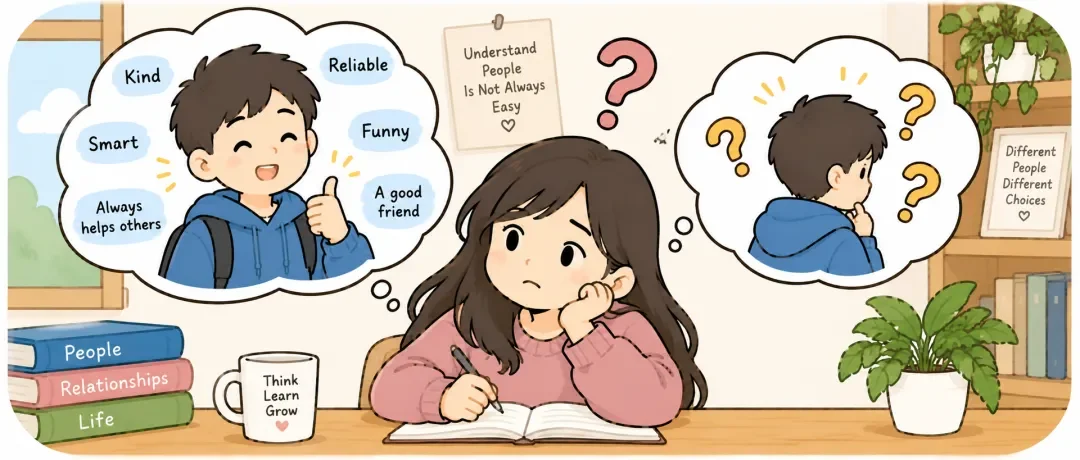
我了解他。
Wǒ liǎojiě tā.
I know him well.
This means you know his personality, habits, background, or situation.
But:
我理解他。
Wǒ lǐjiě tā.
I understand him.
This means you understand his thoughts, feelings, reasons, or actions.
Now put the two words together:
我很了解他,但是我不理解他为什么这么做。
Wǒ hěn liǎojiě tā, dànshì wǒ bù lǐjiě tā wèishénme zhème zuò.
I know him very well, but I don’t understand why he did this.
This is one of the easiest ways to remember the difference:
You can 了解 someone without always 理解 them. 😄
Another Useful Comparison
我对这个问题不太了解。
Wǒ duì zhège wèntí bú tài liǎojiě.
I don’t know much about this issue.
Maybe you don’t have enough information about it yet.
But:
我不理解这个问题。
Wǒ bù lǐjiě zhège wèntí.
I don’t understand this problem.
Maybe you already have the information, but it still doesn’t make sense to you.

So, as a general learning shortcut:
不了解 → I don’t know enough about it.
不理解 → I can’t make sense of it.
A Very Common Pattern with 了解
You will often hear:
对 + something + 了解
For example:
你对中国文化了解多少?
Nǐ duì Zhōngguó wénhuà liǎojiě duōshao?
How much do you know about Chinese culture?
我对这里不太了解。
Wǒ duì zhèlǐ bú tài liǎojiě.
I don’t know this area very well.
You can also say:
我对这里了解得不多。
Wǒ duì zhèlǐ liǎojiě de bù duō.
I don’t know much about this place.
This pattern is very common in everyday Chinese.

了解一下: A Phrase You’ll Hear All the Time
了解 can also describe the process of getting information or learning more about something.
That’s why 了解一下 (liǎojiě yíxià) is extremely common.
我想了解一下课程安排。
Wǒ xiǎng liǎojiě yíxià kèchéng ānpái.
I’d like to learn more about the course schedule.
我想了解一下这门课程。
Wǒ xiǎng liǎojiě yíxià zhè mén kèchéng.
I’d like to learn more about this course.
我们先了解一下情况。
Wǒmen xiān liǎojiě yíxià qíngkuàng.
Let’s first find out more about the situation.
So 了解 doesn’t only mean “already know something.”
It can also mean to find out or learn more about something.

Common Uses of 了解
You will often see:
了解情况
find out about / know the situation
了解文化
learn about / be familiar with a culture
了解一个人
know someone well
互相了解
get to know each other

Common Uses of 理解
You will often see:
理解意思
understand the meaning
理解内容
understand the content
理解别人
understand other people
理解你的感受
understand how you feel
And one very common expression is:
谢谢你的理解。
Xièxie nǐ de lǐjiě.
Thank you for your understanding.
Here, 理解 means “understanding” as a noun.

You may often see this expression in messages, notices, emails, and customer service situations.
Quick Test ✏️
Which word should you use?
1.
I don’t know much about Chinese history.
我不太___中国历史。
✅ 了解
我不太了解中国历史。
Wǒ bú tài liǎojiě Zhōngguó lìshǐ.
I don’t know much about Chinese history.
2.
I understand why you’re worried.
我___你为什么担心。
✅ 理解
我理解你为什么担心。
Wǒ lǐjiě nǐ wèishénme dānxīn.
I understand why you’re worried.
3.
I want to learn more about this course.
我想___一下这门课程。
✅ 了解
我想了解一下这门课程。
Wǒ xiǎng liǎojiě yíxià zhè mén kèchéng.
I’d like to learn more about this course.
One Easy Way to Remember 🧠
When choosing between 了解 and 理解, ask yourself:
Am I talking about knowledge or familiarity?
→ 了解
Am I talking about meaning, reasons, or feelings?
→ 理解
A simple memory trick:
了解 → information & familiarity
理解 → meaning, reasons & feelings
And remember this sentence:
我了解他,但我不一定理解他。
Wǒ liǎojiě tā, dàn wǒ bù yídìng lǐjiě tā.
I know him well, but I don’t necessarily understand him.
If you can feel the difference in this sentence, you’ve understood the key difference between 了解 and 理解. 😊