
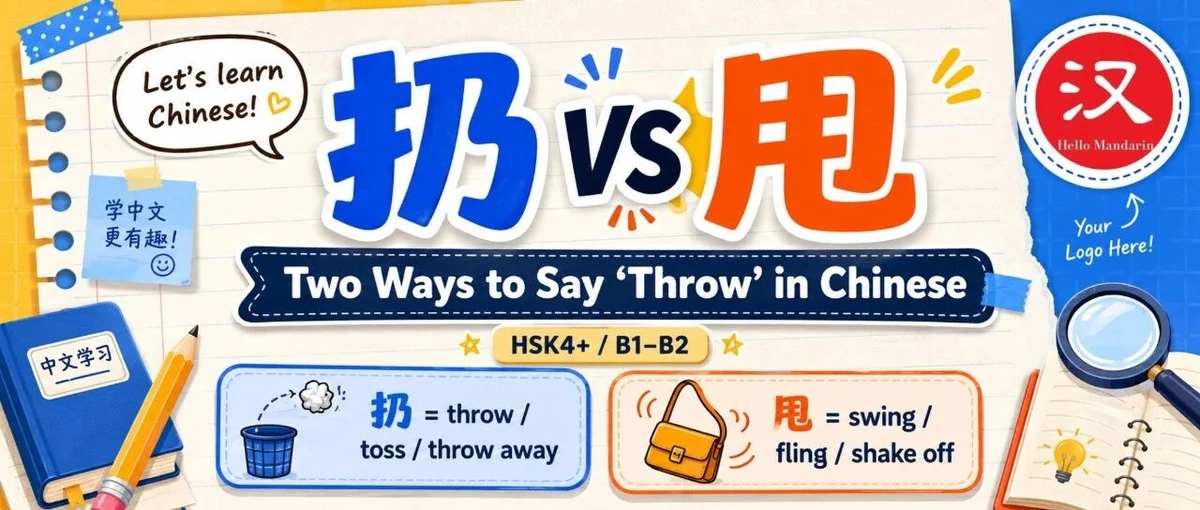
In Chinese, 扔 and 甩 can both describe an action similar to “throw.”
But they are not the same.
The simple difference is:
扔 means to throw, toss, or throw something away.
甩 means to swing, fling, shake off, or throw something with a quick, forceful movement.
Let’s learn the difference clearly. 😊
1. 扔 rēng — to throw / toss / throw away
扔 is a common verb.
It usually means to throw something, toss something, or throw something away.
The focus is on this action:
You have something → you let it go → it moves away from you.
Basic Structure
Subject + 扔 + Object
or
Subject + 把 + Object + 扔 + Place / Direction
Examples
他把球扔给我。
He threw the ball to me.
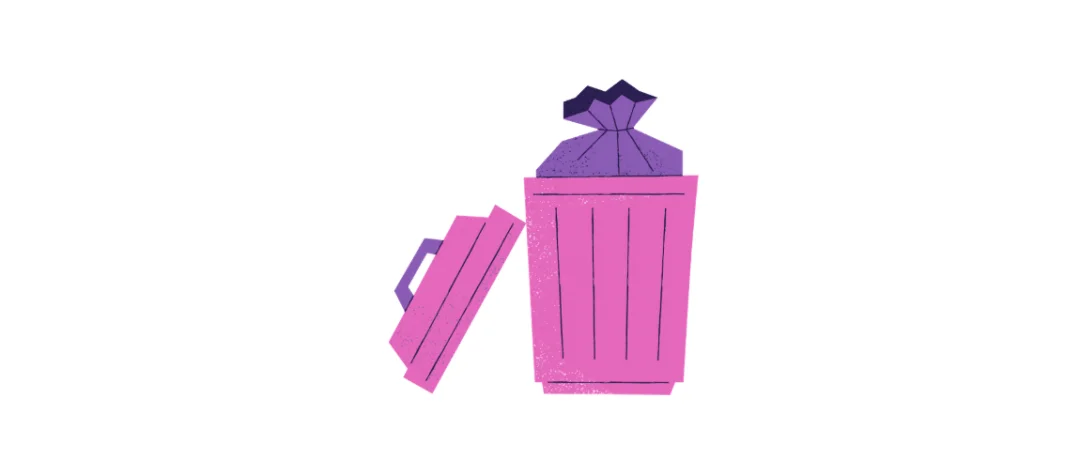
请把垃圾扔进垃圾桶。
Please throw the trash into the trash can.
不要乱扔东西。
Don’t throw things around.
她把旧衣服扔了。
She threw away the old clothes.
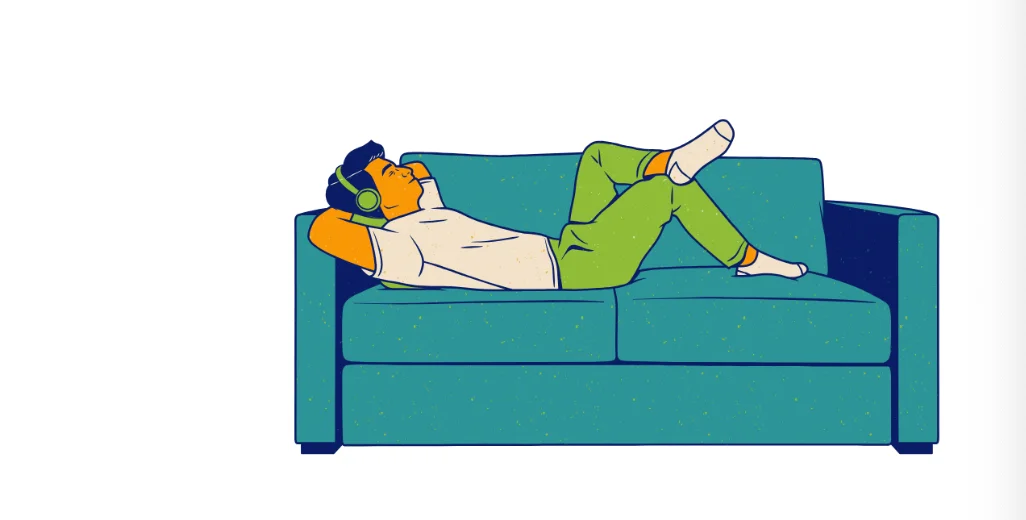
他生气地把手机扔在沙发上。
He angrily threw his phone onto the sofa.
Teacher’s Note
扔 is usually used with concrete objects.
Common objects after 扔:
垃圾 lājī — trash
球 qiú — ball
东西 dōngxi — things
衣服 yīfu — clothes
手机 shǒujī — phone
When you mean “throw away,” Chinese often says:
扔掉 rēngdiào
to throw away
Examples:
这个盒子没用了,可以扔掉。
This box is useless now. You can throw it away.
别把票扔掉,一会儿还要用。
Don’t throw away the ticket. We still need it later.
2. 甩 shuǎi — to swing / fling / shake off
甩 describes a quick, strong movement.
It often involves swinging your hand, head, hair, arm, body, or an object.
The focus is not just “throwing.”
The focus is the movement: fast, forceful, and often in a swinging motion.
Basic Structure
Subject + 甩 + Object
or
Subject + 把 + Object + 甩 + Direction / Result
Examples
她甩了甩头发。
She flipped / shook her hair.
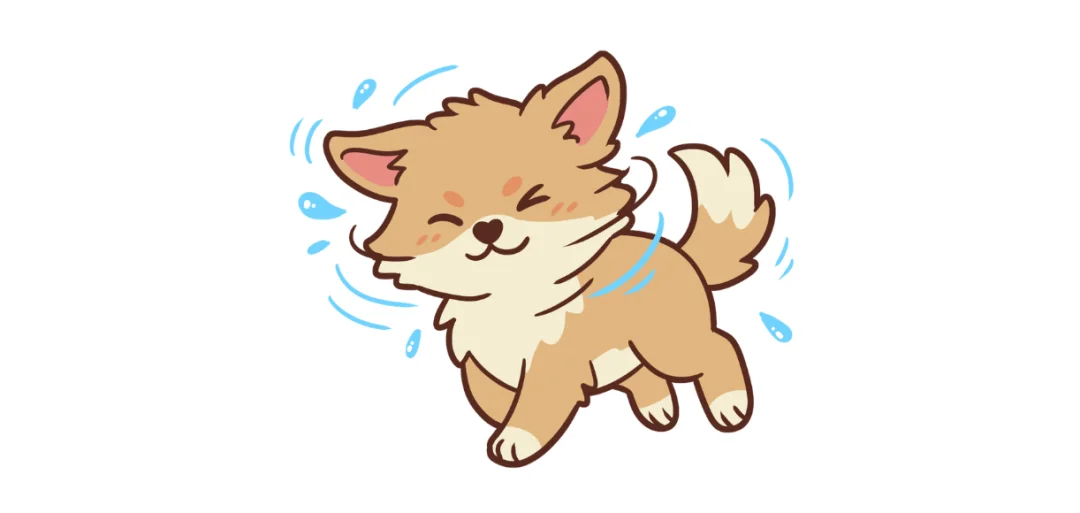
狗甩了甩身上的水。
The dog shook the water off its body.
他甩开了我的手。
He shook off my hand.
他用力把门甩上了。
He slammed the door shut.
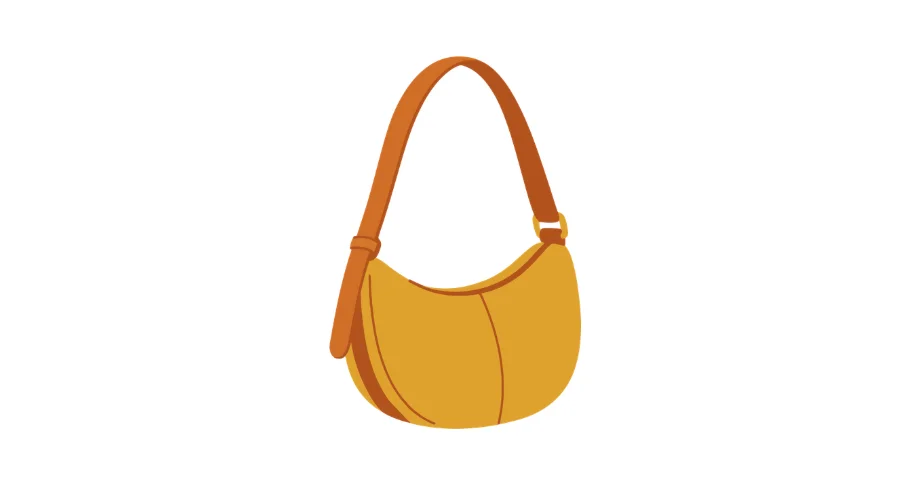
她把包甩到肩上。
She swung the bag onto her shoulder.
Teacher’s Note
甩 often appears with body parts or things that move with force.
Common expressions:
甩头发
to flip / shake one’s hair
甩手
to swing / shake one’s hand
甩开
to shake off / break free from
甩掉
to shake off / get rid of
甩干
to spin-dry / shake dry
3. The Core Difference
扔 = throw or throw away
Use 扔 when you throw an object from your hand, throw something somewhere, or throw something away.
Examples:
扔垃圾
throw away trash
扔球
throw a ball
扔东西
throw things
扔进垃圾桶
throw into the trash can
甩 = swing, fling, shake off
Use 甩 when the movement is quick, strong, and often like a swing.
Examples:
甩头发
flip one’s hair
甩手
swing / shake one’s hand
甩开他的手
shake off his hand
甩掉水
shake off water
4. Can We Use Both?
Sometimes, both words can describe a physical action, but the feeling is different.
Example 1
他把包扔在床上。
He threw the bag onto the bed.
This sentence focuses on throwing the bag onto the bed.
他把包甩到肩上。
He swung the bag onto his shoulder.
This sentence focuses on a quick swinging movement.
Example 2
他把球扔给我。
He threw the ball to me.
This is a normal throwing action.
他用力把绳子甩了出去。
He flung the rope out with force.
This emphasizes a strong swinging motion.
5. Extended Meanings of 甩
甩 has some useful extended meanings.
These meanings are common in real Chinese.
甩掉 shuǎidiào — to get rid of / shake off
他终于甩掉了坏习惯。
He finally got rid of the bad habit.
她想甩掉过去的烦恼。
She wants to get rid of her past worries.
他努力训练,终于甩掉了身后的对手。
He trained hard and finally shook off the opponent behind him.
甩开 shuǎikāi — to shake off / pull away from
她甩开他的手,自己走了。
She shook off his hand and left by herself.
运动员最后一圈甩开了其他人。
The athlete pulled away from the others in the last lap.
被甩 bèi shuǎi — to be dumped
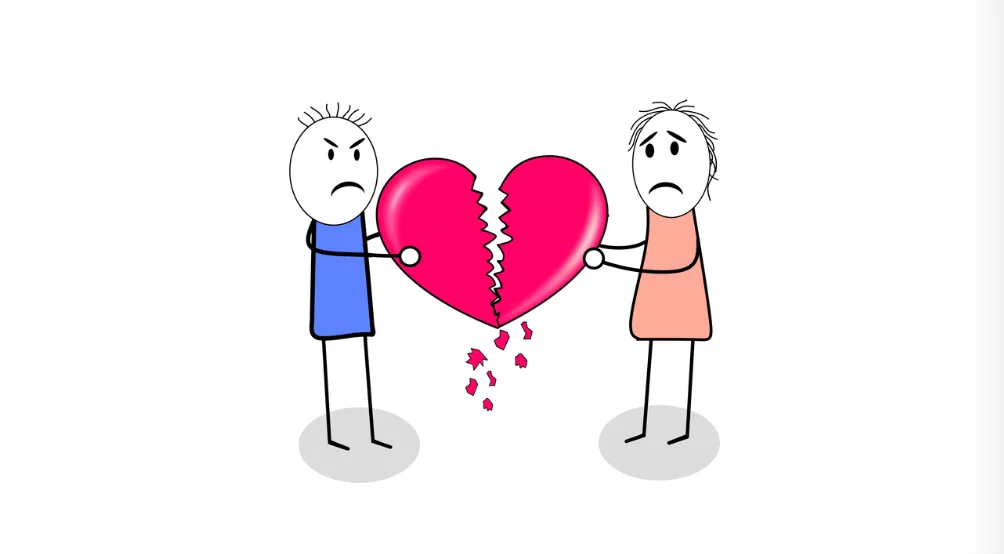
In informal Chinese, 甩 can also mean “to dump someone” in a relationship.
他被女朋友甩了。
He was dumped by his girlfriend.
她不想继续这段感情,所以把他甩了。
She did not want to continue the relationship, so she dumped him.
This meaning is casual and emotional, so use it carefully.

6. Common Mistakes
Mistake 1: Saying 甩垃圾
Less natural:
请把垃圾甩进垃圾桶。
Qǐng bǎ lājī shuǎi jìn lājītǒng.
Better:
请把垃圾扔进垃圾桶。
Please throw the trash into the trash can.
Why?
Throwing trash away is a normal “throw away” action. Use 扔.
Mistake 2: Saying 扔头发
Incorrect / unnatural:
她扔了扔头发。
Tā rēng le rēng tóufa.
Better:
她甩了甩头发。
She flipped / shook her hair.
Why?
Hair is not something you throw away here.
It moves with the head in a quick swinging motion, so use 甩.
Mistake 3: Using 扔 for “dump someone”
Wrong:
他被女朋友扔了。
Tā bèi nǚpéngyou rēng le.
Correct:
他被女朋友甩了。
He was dumped by his girlfriend.
Why?
In relationship slang, “dump someone” is 甩, not 扔.
7. Useful Sentence Patterns
Pattern 1: 把 + object + 扔 + place
把垃圾扔进垃圾桶。
Throw the trash into the trash can.
他把钥匙扔在桌子上。
He tossed the keys onto the table.
Pattern 2: 甩了甩 + body part / object
她甩了甩头发。
She flipped her hair.
他甩了甩手。
He shook his hand.
马甩了甩尾巴。
The horse flicked its tail.
Pattern 3: 甩开 / 甩掉 + object
他甩开我的手。
He shook off my hand.
她想甩掉这些烦恼。
She wants to get rid of these worries.
他终于甩掉了坏习惯。
He finally got rid of the bad habit.

8. Quick Summary
Use 扔 when the action is a normal throw, toss, or throw-away action.
Common collocations:
扔垃圾 — throw away trash
扔球 — throw a ball
扔东西 — throw things
扔掉旧衣服 — throw away old clothes
扔进垃圾桶 — throw into the trash can
Use 甩 when the action is a quick, forceful swinging movement, or when it means “shake off,” “get rid of,” or “dump someone.”
Common collocations:
甩头发 — flip one’s hair
甩手 — swing / shake one’s hand
甩开 — shake off
甩掉 — get rid of
被甩了 — be dumped
A simple way to remember:
扔 = throw something away or to a place
甩 = swing, fling, or shake something off
9. Mini Practice
Choose 扔 or 甩.
-
请把垃圾 ______ 进垃圾桶。
Please throw the trash into the trash can.
-
她 ______ 了 ______ 头发,然后走了。
She flipped her hair and then left.
-
他把球 ______ 给我。
He threw the ball to me.
-
狗把身上的水 ______ 掉了。
The dog shook the water off its body.
-
他被女朋友 ______ 了。
He was dumped by his girlfriend.
Answers
-
扔
Because trash is thrown into a trash can.
-
甩
The full sentence is: 她甩了甩头发。
Because hair moves with a quick swinging motion. -
扔
Because throwing a ball is a normal throwing action.
-
甩
Because the dog shakes water off its body.
-
甩
Because “to dump someone” in a relationship is 甩.
Final Tip
When you are not sure which word to use, ask yourself:
Am I throwing something away or throwing it to a place?
Use 扔.
Am I describing a quick swinging motion, shaking something off, or dumping someone?
Use 甩.
Once you understand the movement, the difference between 扔 and 甩 becomes much easier. 🌿