
You probably already know the Chinese character 哦.
But here’s the interesting part: 哦 doesn’t always sound the same.
Listen carefully:
哦?
Ó? ↗
Oh? / Really?
哦!
Ò! ↘
Oh, I see!
别忘了哦~
Bié wàng le o~
Don’t forget, okay?
Same character — 哦 — but very different feelings. 😯
That’s because with 哦, pronunciation, intonation, and context all matter.
And one important thing before we start:
ó ↗ / ò ↘ / o is a useful way to understand common spoken Mandarin, but it is not an absolute rule. Pronunciation can change depending on the speaker, region, and context.
Now let’s look at the three common situations.
01 哦 (ó): “Oh?”
In a common Mainland Mandarin pronunciation, ó often shows surprise or questioning.
It can feel similar to:
“Oh?”
“Really?”
哦?你也去吗?
Oh? You’re going too?
哦?你不知道吗?
Oh? You didn’t know?
💡 The voice often feels like it is going up, as if you are asking for more information.
Easy feeling:
ó ↗ = “Oh?” / “Really?”

02 哦 (ò): “Oh, I See.”
In common Mainland Mandarin, ò often shows that you have just understood or realized something.
Think:
“Oh, I see.”
“Ah, got it.”
哦,我明白了。
Oh, I see.
哦,原来你住这儿。
Oh, so you live here.
Easy feeling:
ò ↘ = “Oh, I see.”
🔑 So a useful way to remember the difference is:
ó ↗ → “Oh?”
ò ↘ → “Oh, I see.”
But remember: this is a useful pattern, not a fixed rule.
Real pronunciation may vary depending on the speaker, region, emotion, and situation.
So in real conversations, listen to the whole sentence — not just the tone mark.
03 Sentence-Final 哦 (o): A Little Extra Feeling
You will also often hear 哦 at the end of a sentence.
Here, it may be pronounced lightly, closer to o.
It usually doesn’t need to be translated as a separate English word.
Instead, it can make a reminder or suggestion feel less direct, or draw the listener’s attention.
别忘了哦。
Don’t forget, okay?
记得带伞哦。
Remember to bring an umbrella, okay?
明天早点来哦。
Come a little earlier tomorrow, okay?
Now compare:
别忘了。
Don’t forget.
别忘了哦。
Don’t forget, okay? 😊
The basic message is similar, but 哦 changes the speaker’s attitude and the feeling of the sentence.
Depending on the context, it can sound:
friendly 😊
gentle
playful
insistent
or even like a small warning
So don’t automatically translate every sentence-final 哦 as “okay.”
Sometimes English doesn’t need to translate it at all.

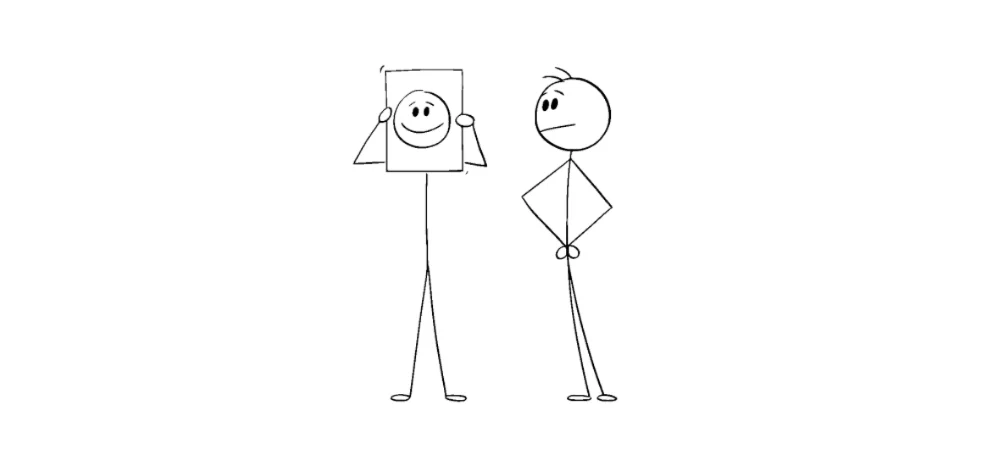
04 Be Careful with 哦 in Text Messages 📱
Here’s something textbooks don’t always tell you:
If someone sends you a long message and you reply with only:
哦。
…it can sometimes feel a little flat or distant. 😐
It may give the feeling of:
“Oh.”
“Okay.”
“I see.”
But that doesn’t mean 哦 is always unfriendly.
Context matters.
For example, compare:
哦。
and
哦哦,知道了!
Oh, okay! Got it!
The second one will often feel more engaged and lively in casual conversation.
So when you see 哦 in a Chinese message, don’t look only at the character.
Look at:
the context + punctuation + the whole conversation
📱 A tiny 。, !, ~, or repeated 哦哦 can change the feeling too.

The Easy Way to Remember 🔑
哦? — ó ↗
→ surprise / questioning
→ “Oh?” / “Really?”
哦! — ò ↘
→ realization / understanding
→ “Oh, I see.”
……哦 — o
→ changes the tone of the sentence
→ often makes a reminder or suggestion feel less direct
One Character, Different Feelings
The most important thing to remember is:
Don’t memorize 哦 as one English word.
Sometimes it feels like:
“Oh?”
Sometimes:
“Oh, I see.”
And sometimes it doesn’t need an English translation at all.
With small words like 哦, natural Chinese is not only about vocabulary.
Pronunciation + intonation + context all matter.
So next time you hear 哦, listen to how the person says it — not just the character you see.
That little 哦 can tell you a lot. 😉