
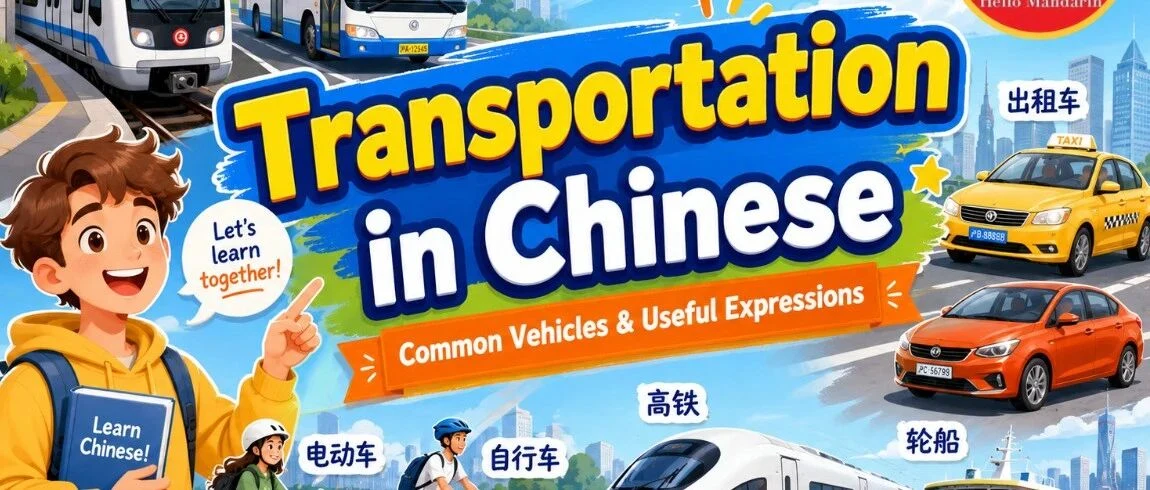
Transportation words are very useful in daily Chinese.
Whether you live in China, travel in China, or talk about your daily routine, you will often need to say things like:
I take the subway.
I ride an e-bike.
I drive to work.
I take a taxi to the airport.
In this article, let’s learn the most common transportation words in Chinese and how to use them naturally. 🚕✨
1. The Most Important Verbs
Before learning the vocabulary, remember these three verbs:
坐
zuò
to take / to ride as a passenger
Use 坐 when you are a passenger, especially inside a vehicle.
Examples:
坐地铁
to take the subway
坐公交车
to take the bus
坐飞机
to take a plane
坐高铁
to take the high-speed train
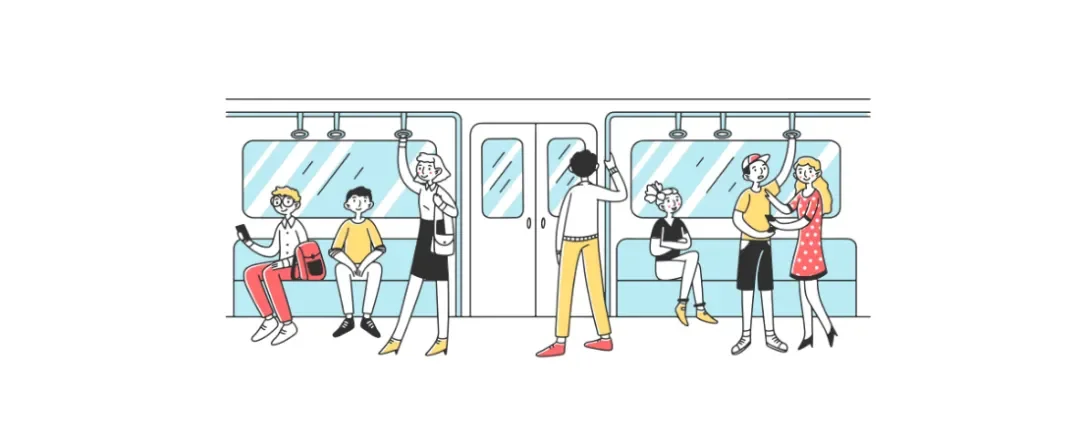
Example sentence:
我每天坐地铁去上班。
I take the subway to work every day.
骑
qí
to ride
Use 骑 for bicycles, e-bikes, motorcycles, and similar vehicles.
Examples:
骑自行车
to ride a bicycle
骑电动车
to ride an e-bike / electric scooter
骑摩托车
to ride a motorcycle
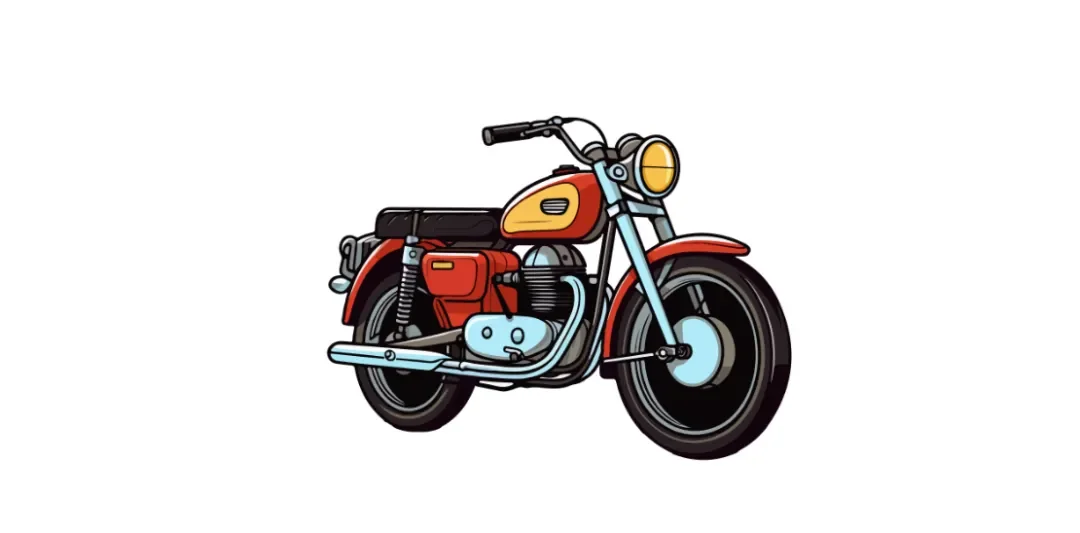
Example sentence:
他骑自行车去学校。
He rides a bicycle to school.
开
kāi
to drive
Use 开 when you drive a car or another vehicle.
Examples:
开车
to drive
开汽车
to drive a car
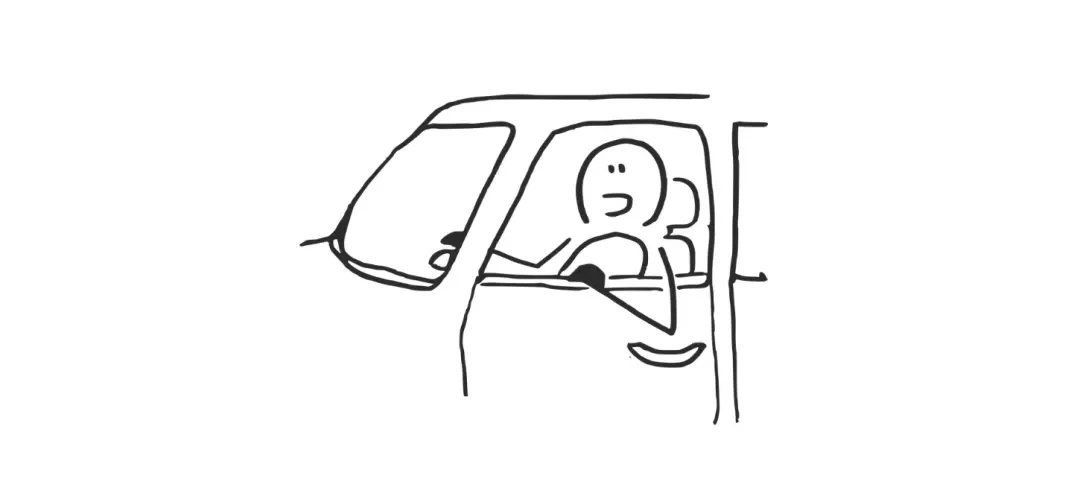
Example sentence:
我开车去超市。
I drive to the supermarket.
2. Common Transportation Words in Chinese
🚇 地铁
dìtiě
subway / metro
地铁 is very common in big cities. It is fast and convenient, especially during rush hour.
Examples:
我坐地铁去学校。
I take the subway to school.
最近的地铁站在哪里?
Where is the nearest subway station?

Useful word:
地铁站
subway station / metro station
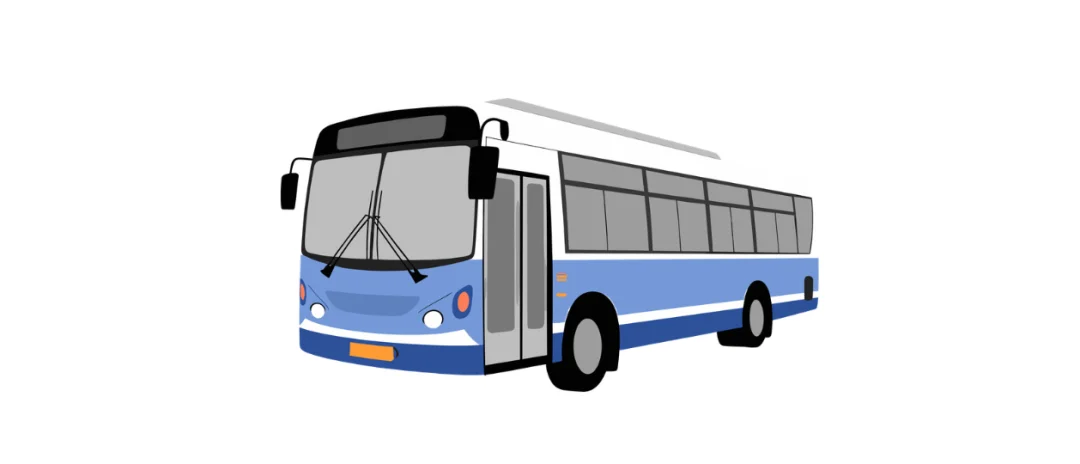
🚌 公交车 / 公共汽车
gōngjiāochē / gōnggòng qìchē
bus
公交车 is more common in daily conversation.
公共汽车 is correct too, but it sounds more formal.
In spoken Chinese, people may also say 公交 for short.
Examples:
我每天坐公交车去公司。
I take the bus to the company every day.
这辆公交车到火车站吗?
Does this bus go to the train station?
Useful words:
公交站
bus stop
公交卡
bus card / public transport card
🚗 汽车 / 车
qìchē / chē
car / vehicle
汽车 means “car” or “automobile.”
In daily conversation, people usually say 车.

Examples:
他有一辆汽车。
He has a car.
我的车在外面。
My car is outside.
车 is a very flexible word. Depending on the context, it can mean a car, a vehicle, or sometimes even a train or bus.
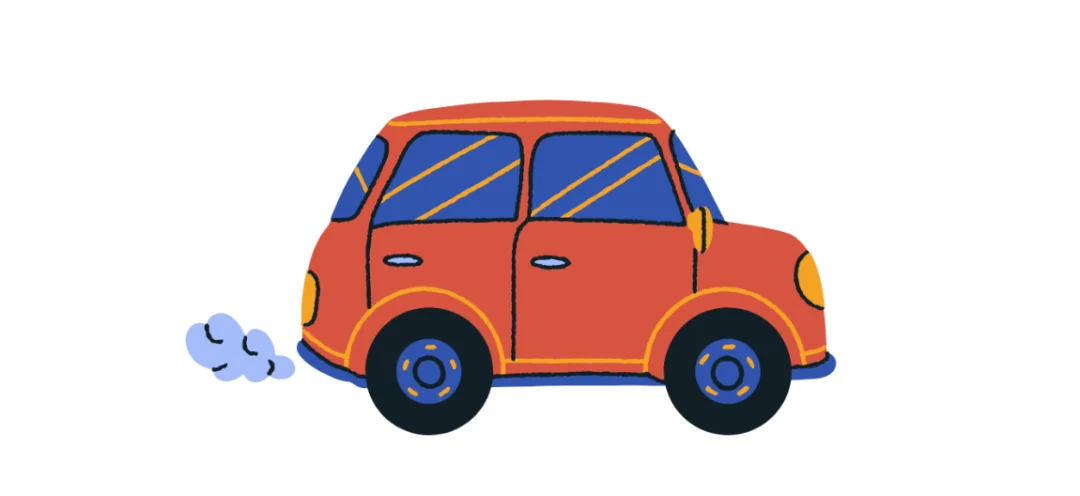
⛽ 油车
yóuchē
gasoline car / fuel car
油车 usually means a car that uses gasoline or fuel.
It is often used when comparing gasoline cars with electric cars.
Examples:
油车的油费比较高。
Gasoline cars have relatively high fuel costs.
他以前开油车,现在开电动汽车。
He used to drive a gasoline car. Now he drives an electric car.
Useful word:
油费
fuel cost
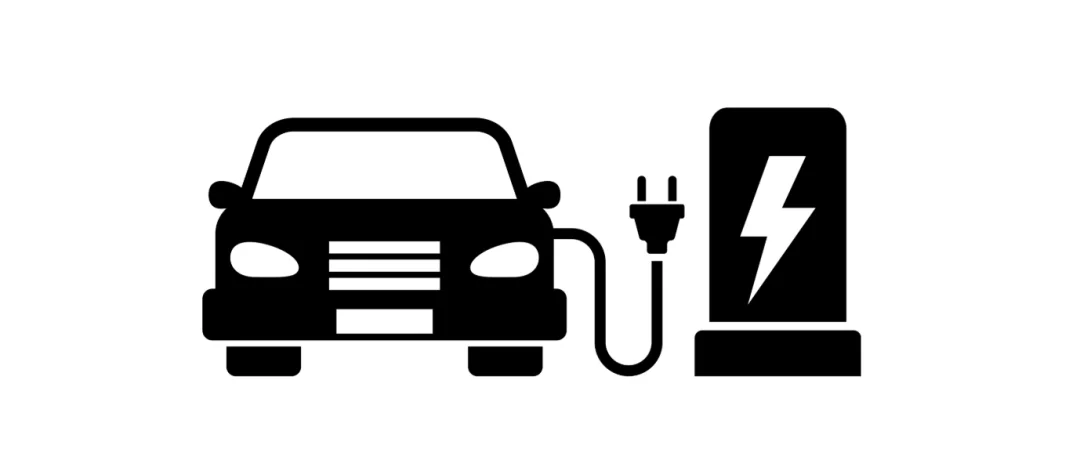
🔋 电动汽车
diàndòng qìchē
electric car / EV
If you want to say “electric car,” the clearest word is 电动汽车.
Be careful:
In daily Chinese, 电动车 often does not mean “electric car.”
It usually means an electric bike or electric scooter.
Examples:
现在很多人买电动汽车。
Many people buy electric cars now.
这辆电动汽车很安静。
This electric car is very quiet.
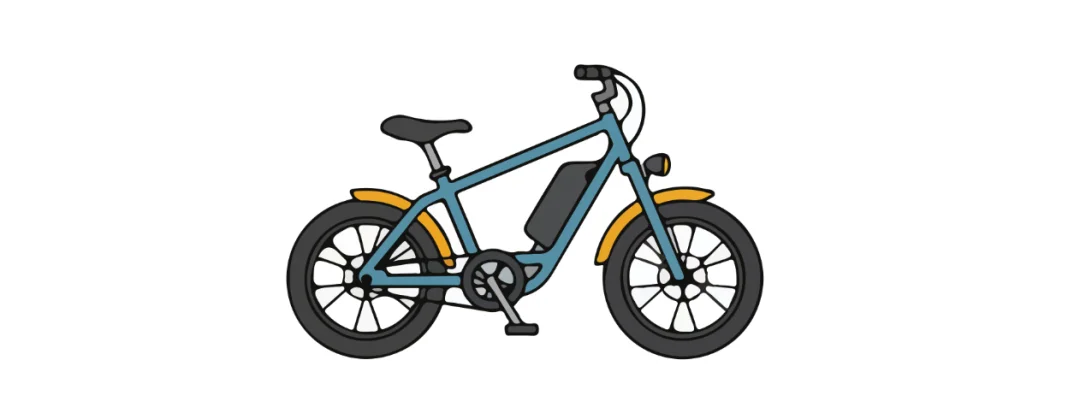
🛵 电动车 / 电瓶车
diàndòngchē / diànpíngchē
e-bike / electric scooter
In China, 电动车 usually refers to a two-wheeled electric vehicle, like an e-bike or electric scooter.
电瓶车 is also common in daily speech.
It is more colloquial, and in some regions people use it more often than 电动车.
Examples:
她骑电动车去买菜。
She rides an e-bike to buy groceries.
路上有很多电瓶车。
There are many e-bikes on the road.
Important note:
电动车
usually: e-bike / electric scooter
电动汽车
electric car / EV
This difference is very important for learners. ✅
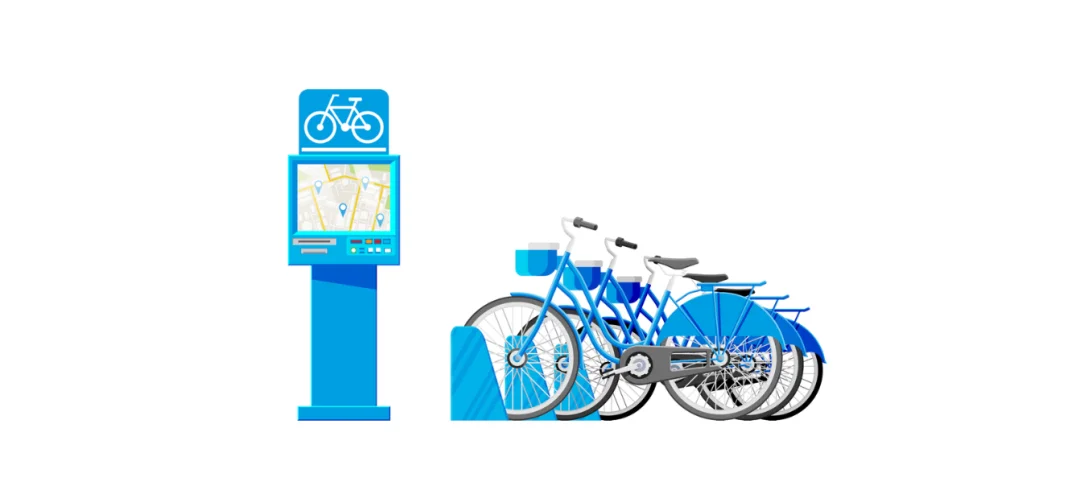
🚲 自行车
zìxíngchē
bicycle
For bicycles, we use 骑.

Examples:
我喜欢骑自行车。
I like riding a bicycle.
他骑自行车去学校。
He rides a bicycle to school.
Useful word:
共享单车
shared bike / bike-sharing bicycle
Example:
我扫了一辆共享单车。
I scanned a shared bike.
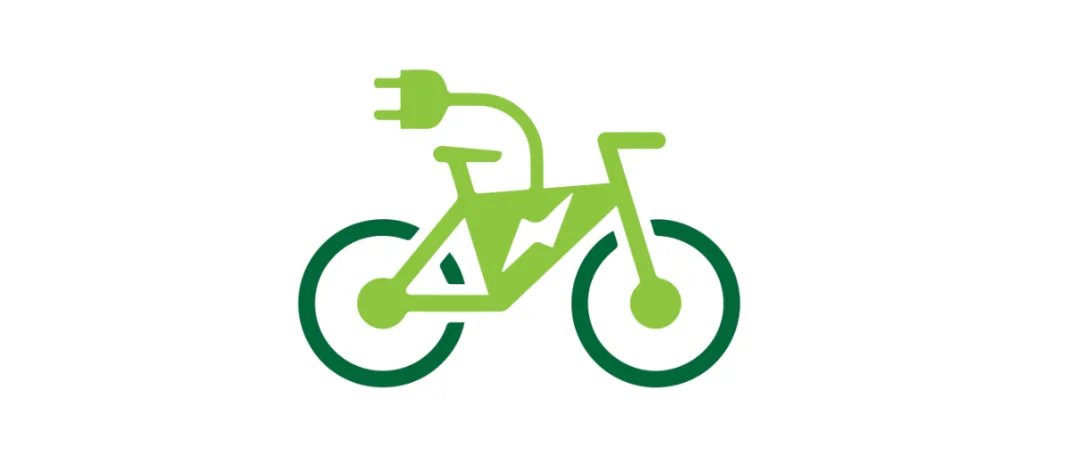
🚲⚡ 电动自行车
diàndòng zìxíngchē
electric bicycle / e-bike
电动自行车 is a more formal and specific word for “electric bicycle.”
In daily speech, people often just say 电动车.
Examples:
这是一辆电动自行车。
This is an electric bicycle.
他买了一辆新的电动自行车。
He bought a new electric bicycle.
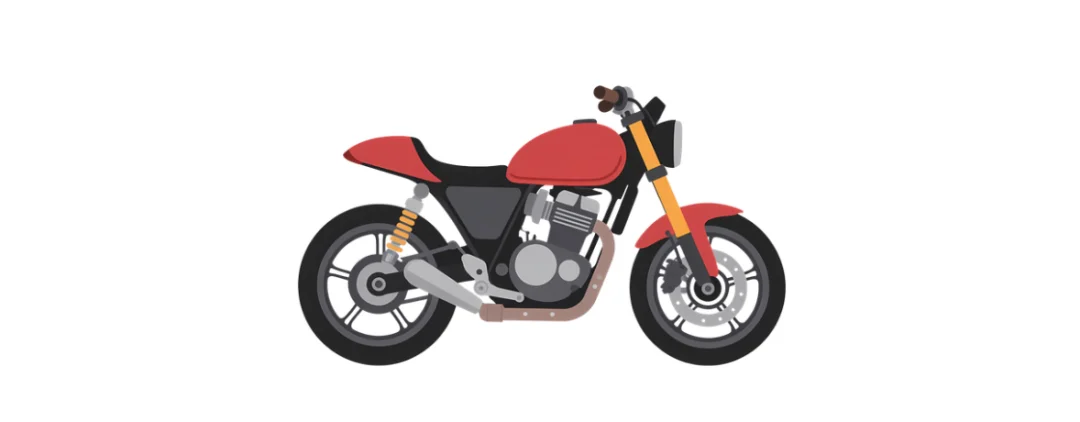
🏍️ 摩托车
mótuōchē
motorcycle
For motorcycles, we also use 骑.
Examples:
他会骑摩托车。
He can ride a motorcycle.
这辆摩托车很快。
This motorcycle is fast.
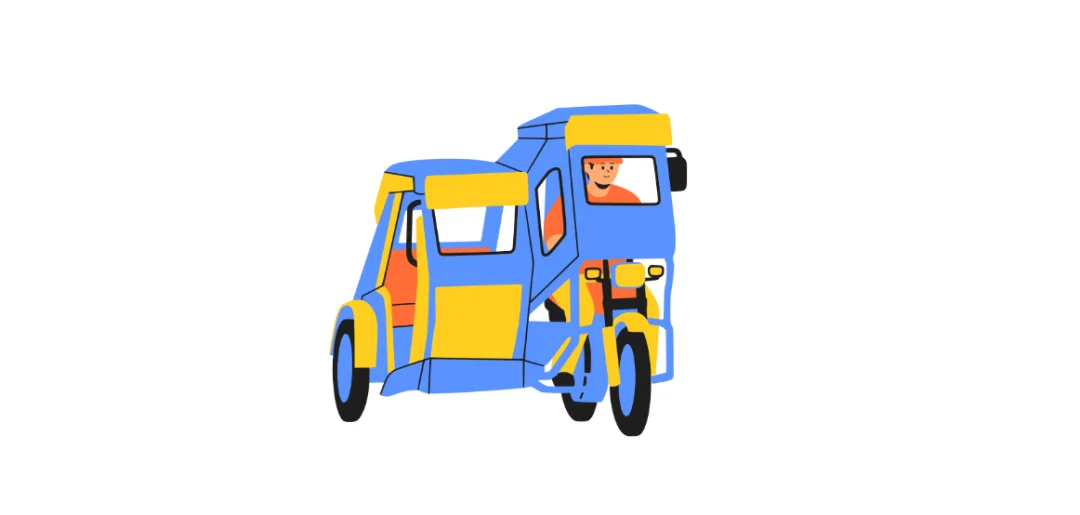
🛺 三轮车
sānlúnchē
tricycle / three-wheeled vehicle
三轮车 means a vehicle with three wheels.
It can be a human-powered tricycle, an electric tricycle, or a small three-wheeled vehicle used for transport.
Examples:
路边有一辆三轮车。
There is a tricycle by the roadside.
老人骑三轮车去市场。
The elderly man rides a tricycle to the market.
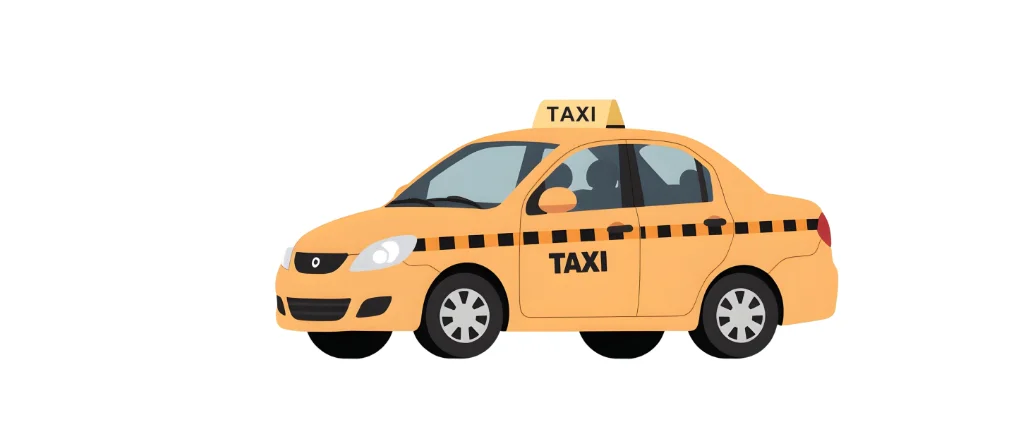
🚕 出租车
chūzūchē
taxi
出租车 means taxi.
In daily life, people often use the verb 打车, which means “to take a taxi” or “to call a ride.”
Examples:
我们打车去机场吧。
Let’s take a taxi to the airport.
这里不好打车。
It is hard to get a taxi here.

Useful word:
司机
driver
Example:
出租车司机很热情。
The taxi driver is very friendly.
📱🚗 网约车
wǎngyuēchē
ride-hailing car / app-based car service
网约车 means a car you book through an app.
For example, when you call a car with a ride-hailing app, you can call it 网约车.
Examples:
我叫了一辆网约车。
I ordered a ride-hailing car.
现在打网约车很方便。
It is very convenient to book a ride-hailing car now.

🚆 火车
huǒchē
train
火车 usually means a regular train.
It is a general word for train.
Examples:
我们坐火车去旅行。
We travel by train.
火车站离这里远吗?
Is the train station far from here?
Useful word:
火车站
train station
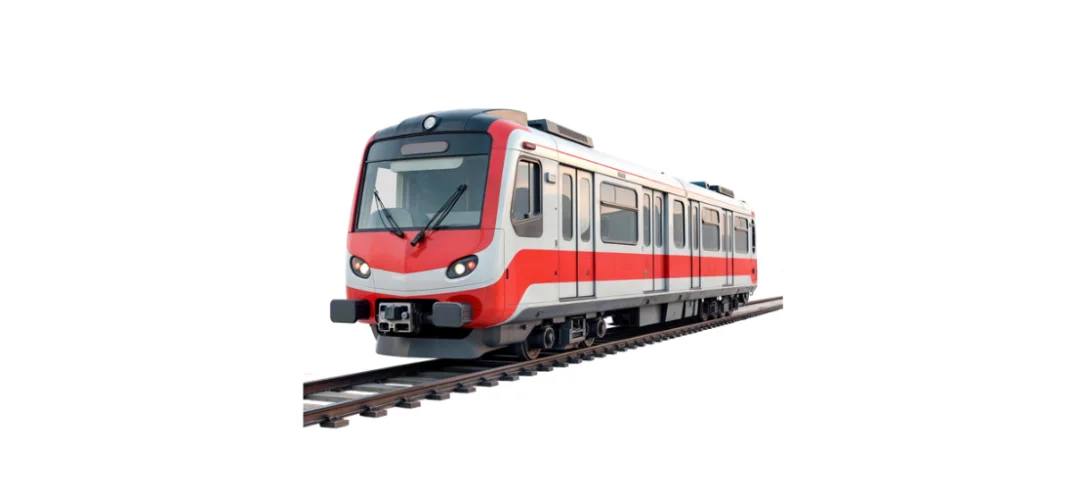
🚄 高铁
gāotiě
high-speed train
高铁 is short for 高速铁路.
In daily life, people usually say 高铁.
Examples:
我坐高铁去上海。
I take the high-speed train to Shanghai.
坐高铁很快,也很方便。
Taking the high-speed train is fast and convenient.
Useful word:
高铁票
high-speed train ticket
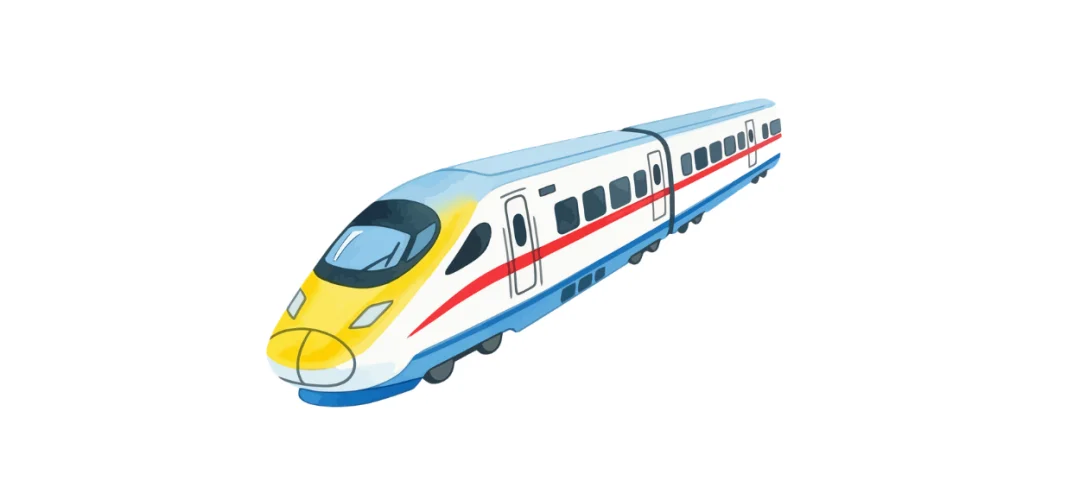
🚅 动车
dòngchē
bullet train / EMU train
动车 is another type of fast train.
For beginner learners, it is enough to first remember 高铁.
But if you travel in China, you may also see the word 动车 on tickets.
Examples:
我买了一张动车票。
I bought a bullet train ticket.
动车比普通火车快。
The bullet train is faster than a regular train.
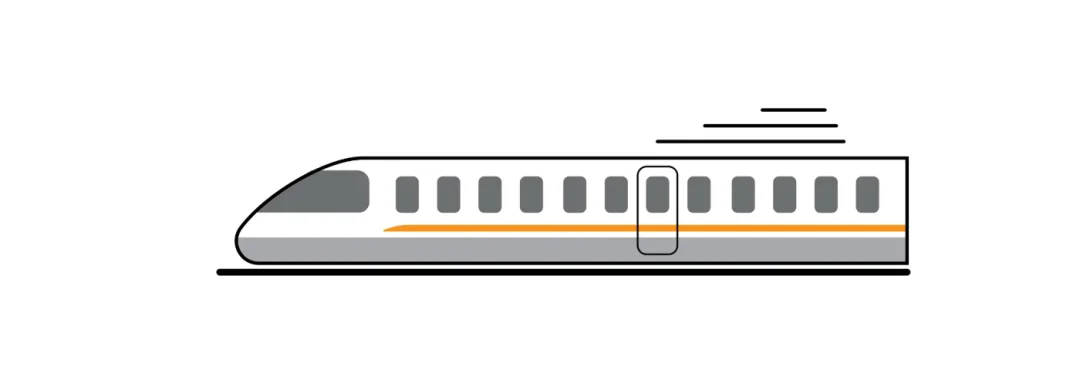
✈️ 飞机
fēijī
airplane / plane
For airplanes, we usually say 坐飞机.
Examples:
他坐飞机去中国。
He takes a plane to China.
坐飞机比坐火车快。
Taking a plane is faster than taking a train.
Useful word:
机场
airport
Example:
我们去机场接朋友。
We are going to the airport to pick up a friend.
🚢 船 / 轮船
chuán / lúnchuán
boat / ship
船 is the most common word. It can mean boat or ship.
轮船 usually means a larger ship and sounds a little more formal.
Examples:
我们坐船去那个岛。
We take a boat to that island.
他们坐轮船去旅行。
They travel by ship.

⛴️ 渡轮
dùlún
ferry
A 渡轮 is a ferry. It is used to carry people, cars, or goods across water.
Examples:
我们坐渡轮过河。
We take a ferry across the river.
这班渡轮几点出发?
What time does this ferry leave?

3. Other Useful Transportation Words
You may also see these words in daily Chinese:
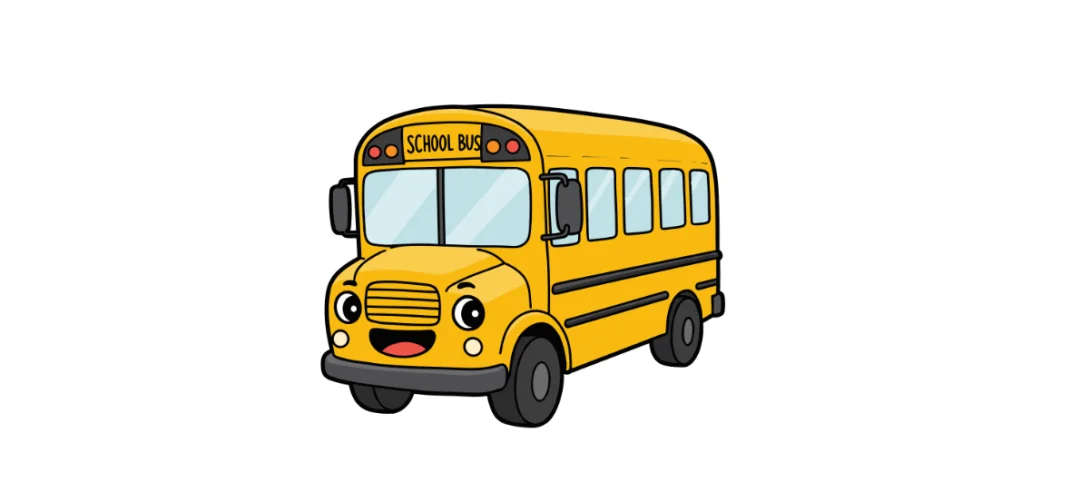
校车
xiàochē
school bus
孩子们坐校车去学校。
The children take the school bus to school.
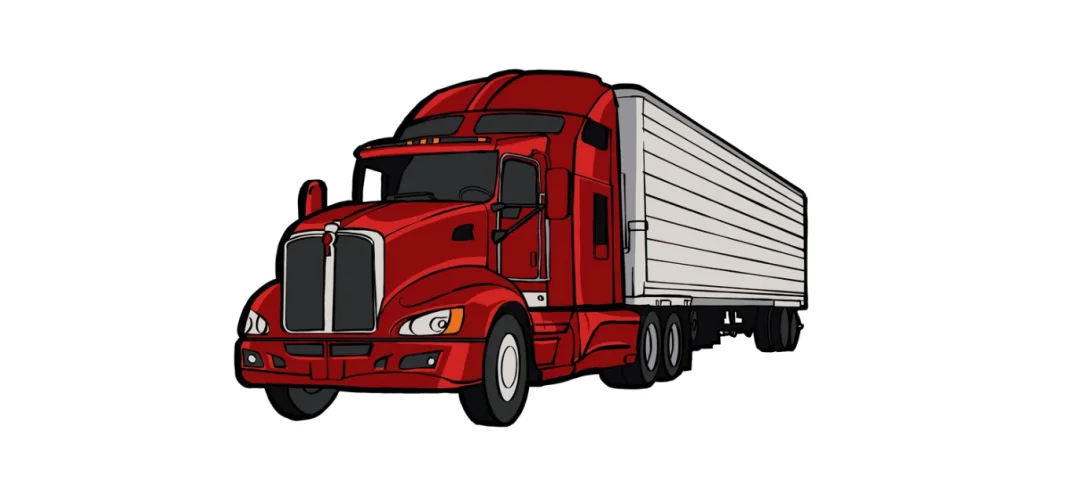
货车 / 卡车
huòchē / kǎchē
truck
货车 emphasizes carrying goods.
卡车 is also a common word for truck.
这辆货车很大。
This truck is very big.
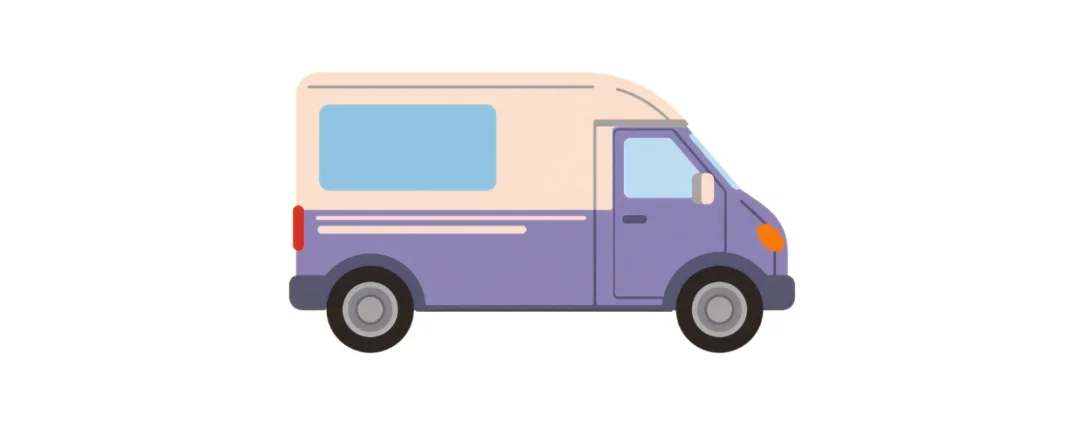
面包车
miànbāochē
van / minivan
这辆面包车可以坐很多人。
This van can carry many people.
救护车
jiùhùchē
ambulance
救护车来了。
The ambulance is here.
警车
jǐngchē
police car
路上有一辆警车。
There is a police car on the road.
消防车
xiāofángchē
fire truck
消防车开得很快。
The fire truck is driving very fast.
4. Important Differences Learners Should Know
公交车 vs. 公共汽车
Both mean “bus.”
公交车
more common in daily speech
公共汽车
more formal
For daily Chinese, learners can mainly use 公交车.
Example:
我坐公交车去学校。
I take the bus to school.
电动车 vs. 电动汽车
This is a common mistake.
电动车
usually means e-bike / electric scooter in daily Chinese
电动汽车
means electric car / EV
Examples:
我骑电动车去上班。
I ride an e-bike to work.
他开电动汽车去上班。
He drives an electric car to work.
火车 vs. 高铁
火车 is a general word for train.
高铁 means high-speed train.
Examples:
我坐火车去旅行。
I travel by train.
我坐高铁去上海。
I take the high-speed train to Shanghai.
船 vs. 轮船
船 is the common word for boat or ship.
轮船 usually refers to a larger ship and sounds more formal.
Examples:
我们坐船去岛上。
We take a boat to the island.
他们坐轮船旅行。
They travel by ship.
5. Useful Sentence Patterns
Pattern 1:
Subject + 坐 + transportation + 去 + place
This means:
Someone takes a type of transportation to a place.
Examples:
我坐地铁去学校。
I take the subway to school.
他坐飞机去北京。
He takes a plane to Beijing.
Pattern 2:
Subject + 骑 + transportation + 去 + place
This means:
Someone rides something to a place.
Examples:
她骑自行车去公园。
She rides a bicycle to the park.
我骑电动车去买菜。
I ride an e-bike to buy groceries.
Pattern 3:
Subject + 开车 + 去 + place
This means:
Someone drives to a place.
Examples:
爸爸开车去公司。
Dad drives to the company.
我们开车去超市。
We drive to the supermarket.
Pattern 4:
Subject + 打车 + 去 + place
This means:
Someone takes a taxi or calls a ride to a place.
Examples:
我们打车去机场吧。
Let’s take a taxi to the airport.
今天下雨,我想打车回家。
It’s raining today. I want to take a taxi home.
6. Useful Daily Questions
These questions are very practical:
你怎么去学校?
How do you go to school?
你怎么去上班?
How do you go to work?
你坐地铁还是坐公交车?
Do you take the subway or the bus?
这里可以打车吗?
Can I get a taxi here?
最近的地铁站在哪里?
Where is the nearest subway station?
去机场怎么走?
How do I get to the airport?
7. Mini Conversation
A:你怎么去上班?
How do you go to work?
B:我平时坐地铁,有时候骑电动车。
I usually take the subway. Sometimes I ride an e-bike.
A:地铁方便吗?
Is the subway convenient?
B:很方便,但是早上人很多。
Very convenient, but there are many people in the morning.
A:那下雨的时候呢?
What about when it rains?
B:下雨的时候,我一般打车。
When it rains, I usually take a taxi.
8. Quick Review
Here are the most useful transportation words:
地铁
subway / metro
公交车 / 公共汽车
bus
汽车 / 车
car / vehicle
油车
gasoline car / fuel car
电动汽车
electric car / EV
电动车 / 电瓶车
e-bike / electric scooter
电动自行车
electric bicycle / e-bike
自行车
bicycle
摩托车
motorcycle
三轮车
tricycle / three-wheeled vehicle
出租车
taxi
网约车
ride-hailing car
火车
train
高铁
high-speed train
动车
bullet train / EMU train
飞机
airplane / plane
船 / 轮船
boat / ship
渡轮
ferry
Final Practice
Try to answer these questions in Chinese:
你怎么去学校?
How do you go to school?
你喜欢坐地铁还是坐公交车?
Do you prefer taking the subway or the bus?
你会骑自行车吗?
Can you ride a bicycle?
你坐过高铁吗?
Have you ever taken the high-speed train?
Once you know these transportation words, you can talk about your daily life in Chinese much more naturally. 🚇🚲🚗