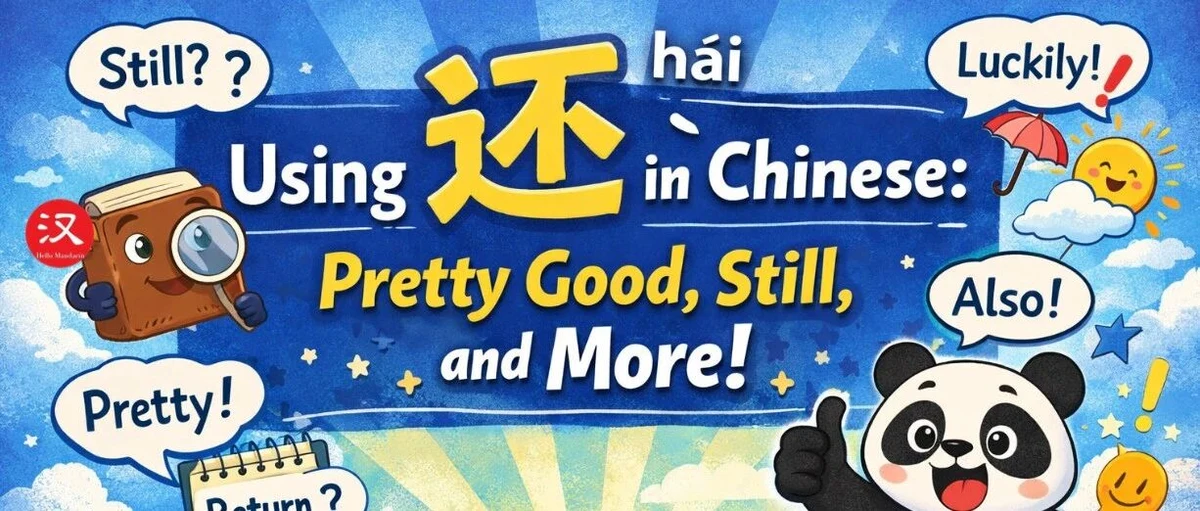
If you have been learning Chinese for a while, you have probably seen the character 还 many times. It is short, common, and extremely useful — but it can also be confusing because it has more than one meaning.
In everyday Chinese, 还 (hái) can be used to:
-
express a mild positive opinion
-
mean still or yet
-
mean also or in addition
-
appear in expressions like 还好
-
and in another pronunciation, 还 (huán) can mean to return something
In this article, we will start with one very common use: using 还 to make a positive adjective sound milder, more natural, and more conversational. Then we will look at its other important meanings as well. 😊
1. Using 还 to Give a Mild Positive Opinion
One of the most natural uses of 还 in spoken Chinese is to give a moderate positive evaluation.
Instead of sounding too strong or too enthusiastic, 还 helps the speaker sound more relaxed, modest, and natural.
Very often, it can be translated as:
fairly, pretty, quite, not bad, or okay
So rather than saying something is “excellent” or “amazing,” Chinese speakers often prefer a softer expression.

2. Basic Structure
The basic structure is:
Subject + 还 (hái) + Adjective / Evaluative Phrase
Common words used after 还 include:
好 (hǎo) — good / fine
不错 (bùcuò) — not bad / pretty good
可以 (kěyǐ) — okay / acceptable
行 (xíng) — fine / not bad
舒服 (shūfu) — comfortable
方便 (fāngbiàn) — convenient
有意思 (yǒuyìsi) — interesting
⚠️ A useful note: in this pattern, 还 does not simply mean “still.” Here, it works more like fairly / quite / rather / not bad, depending on the context.

3. Why Is This So Common in Chinese?
Chinese often prefers a more moderate and understated way of speaking.
For example, instead of saying:
这个饭店特别好!
This restaurant is excellent!
many native speakers may naturally say:
这个饭店还不错。
This restaurant is pretty good.
The second version sounds more conversational, more natural, and less exaggerated.
That is why Chinese learners often hear sentences like:
我还好。
I’m alright.
这家店还不错。
This shop is pretty good.
这本书还可以。
This book is quite okay.

These expressions do not usually mean something is amazing or outstanding. Instead, they show a mild, natural, and understated positive opinion, which is very common in everyday Chinese. 🌟
4. Common Example Sentences
我还好。
Wǒ hái hǎo.
I’m alright.
This is one of the most common responses to questions like 你怎么样? or 你最近好吗?
It sounds calm, natural, and modest.
这家饭店的菜还不错。
Zhè jiā fàndiàn de cài hái bùcuò.
The food at this restaurant is pretty good.
This is a natural way to give praise without sounding too dramatic.
这件衣服还行,不贵。
Zhè jiàn yīfu hái xíng, bù guì.
This piece of clothing is okay, and it’s not expensive.
还行 is very common in spoken Chinese. It often means “fine,” “acceptable,” or “not bad.”
我们老板还不错。
Wǒmen lǎobǎn hái bùcuò.
Our boss is pretty good.
This sentence gives a positive opinion, but in a soft and natural way.
这本书还可以。
Zhè běn shū hái kěyǐ.
This book is okay / pretty good.
还可以 is very common and often sounds slightly more neutral than 还不错.
你的汉语还不错。
Nǐ de Hànyǔ hái bùcuò.
Your Chinese is pretty good.
This is a friendly and encouraging compliment.
我觉得这本书还可以,没那么难。
Wǒ juéde zhè běn shū hái kěyǐ, méi nàme nán.
I think this book is quite okay; it’s not that difficult.
This sounds natural, encouraging, and conversational.
这儿的面包还可以,我喜欢。
Zhèr de miànbāo hái kěyǐ, wǒ xǐhuan.
The bread here is quite okay. I like it.
A simple and natural daily-life sentence.
今天的天气还不错。
Jīntiān de tiānqì hái bùcuò.
The weather is pretty good today.
This is another very common sentence in everyday Chinese.
这部电影还挺有意思。
Zhè bù diànyǐng hái tǐng yǒuyìsi.
This movie is quite interesting.

Here, 还 makes the tone sound natural and mildly positive.
5. 还不错 vs 还可以 vs 还行
These three are all common, but they are not exactly the same.
还不错
This is more clearly positive.
It usually means pretty good or not bad.
你的发音还不错。
Your pronunciation is pretty good.
还可以
This often means okay, acceptable, or fairly good.
It can sound a little more neutral.
这个方法还可以。
This method is okay.
还行
This is very common in spoken Chinese and sounds casual.
It often means it’s fine, not bad, or it works.
这个颜色还行。
This color is fine.
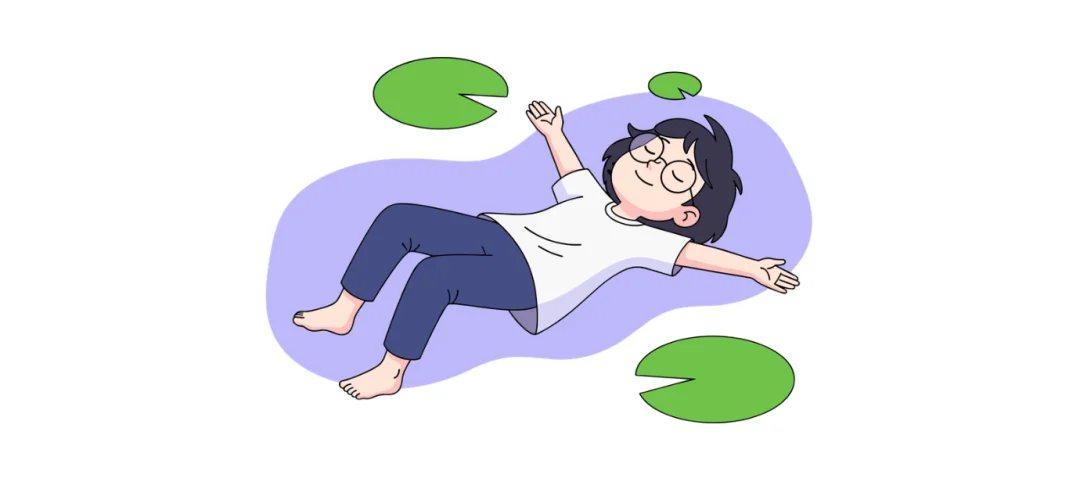
6. A Very Common Expression: 还好
One expression you will hear all the time is:
还好 (hái hǎo)
In casual conversation, it can mean:
not bad
okay
all right
Example:
A: 你最近怎么样?
How have you been recently?
B: 我还好。
I’m doing okay.

But be careful: 还好 can also have another meaning, which we will discuss below.
7. Other Common Meanings of 还
Although this article focuses first on 还 as a mild positive marker, learners should know that 还 has several other important meanings. This is exactly why this word can feel confusing at first.
Let’s look at the most useful ones one by one 👇
7.1 还 = still / yet
This is one of the most common meanings of 还.
It shows that a situation is continuing and has not changed yet.
我还在学习。
I am still studying.
他还没来。
He still hasn’t come.
这么晚了,你还不睡觉?
It’s so late. You’re still not going to sleep?
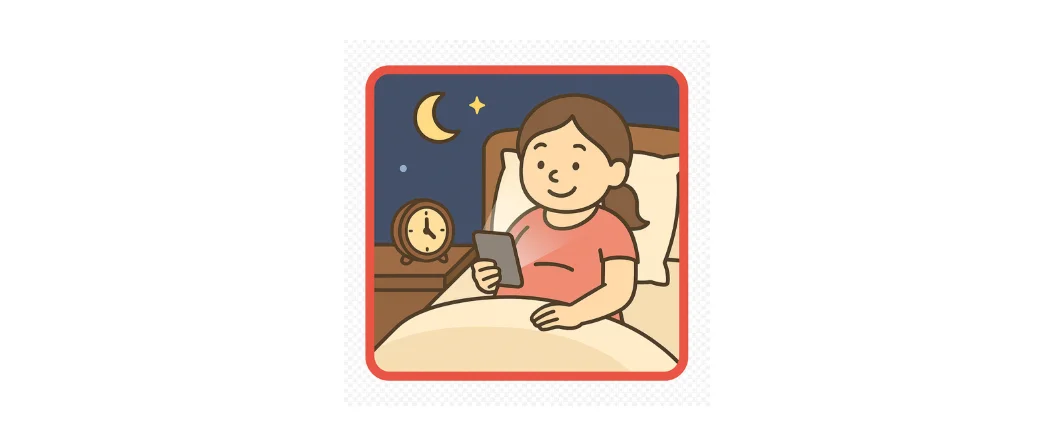
✅ In this usage, 还 means still or yet.
7.2 还 = also / in addition
Sometimes 还 adds extra information. In this case, it can mean also, as well, or in addition.
他会说英语,还会说汉语。
He can speak English, and he can also speak Chinese.
这个地方很安静,还很方便。
This place is very quiet, and it is also very convenient.
她不但会做饭,还会做甜点。
She can not only cook, but also make desserts.

✅ Here, 还 means also / as well / in addition.
7.3 还 = used for emphasis or slight surprise
Sometimes 还 adds a tone of emphasis, and sometimes it suggests that something is a little unexpected.
你还真有办法。
You really do have a way. / You actually are quite resourceful.
这道题还挺难的。
This question is actually quite difficult.
今天还真冷。
It really is cold today.
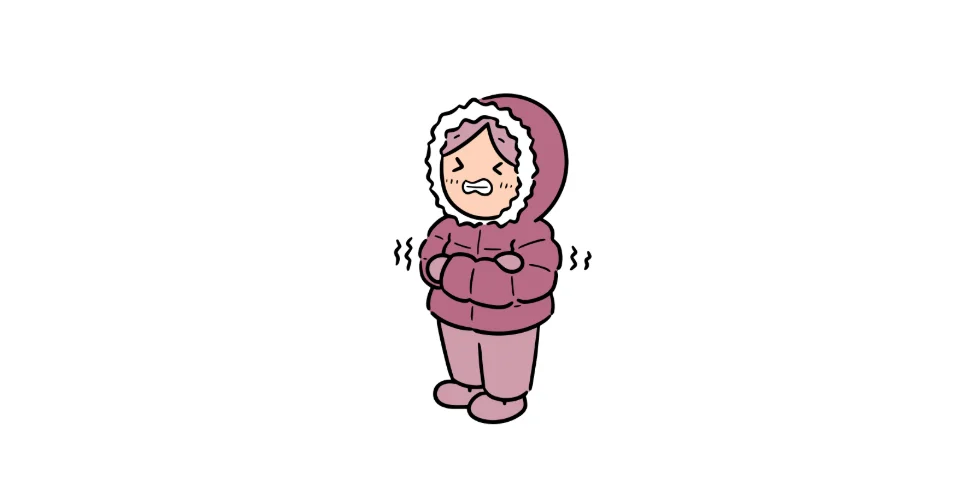
✅ In this usage, 还 can make the tone more vivid and expressive.
7.4 还好 = fortunately / luckily
This is a very important usage to learn.
Sometimes 还好 does not mean “I’m okay.”
Instead, it means fortunately or luckily.
还好我带了伞。
Luckily, I brought an umbrella.
还好你提醒我了。
Luckily, you reminded me.
还好今天不太忙。
Fortunately, today is not too busy.

So compare these two:
我还好。
I’m okay.
还好我没迟到。
Luckily, I wasn’t late.
✅ Same words, but different meanings in different contexts.
7.5 还 (huán) = to return / to give back
This is another very important point.
The character 还 is not always pronounced hái.
When it means to return something, it is pronounced huán.
我明天还你书。
I’ll return the book to you tomorrow.
他还了我五十块钱。
He paid me back fifty yuan.
✅ So remember:
还 (hái) = still / also / fairly / luckily
还 (huán) = return / give back
8. Common Mistakes Learners Make
1. Thinking 还 always means “still”
This is a very common mistake.
For example:
我还在学习。
I am still studying.
Here, 还 means still.
But in:
这家饭店还不错。
This restaurant is pretty good.
Here, 还 does not mean “still.”
It means something like pretty or fairly.
So you always need to understand 还 through context.
2. Thinking 还不错 is very strong praise
Not quite.
还不错 is definitely positive, but it is still milder than:
非常好
very good
特别棒
really excellent
太好了
great
So 还不错 sounds more natural, softer, and more moderate.

3. Forgetting the pronunciation huán
Many learners only remember hái, but not huán.
That is why it is important to remember:
还书
return a book
This is different from:
还不错
pretty good

9. Quick Summary of 还
To make it easier, you can remember 还 in these main ways:
还 (hái)
-
still / yet
-
also / in addition
-
fairly / pretty / not bad
-
part of 还好 = okay / fortunately
还 (huán)
- to return / to give back

10. Practical Tip for Learners
When you see 还, do not translate it too quickly.
Instead, ask yourself:
-
Does it mean still?
-
Does it mean also?
-
Does it mean pretty / fairly?
-
Is it part of 还好?
-
Or is it pronounced huán, meaning to return?
This habit will help you understand 还 much more accurately in real Chinese.
11. Final Thoughts
还 is a small word, but it is one of the most useful and versatile words in Chinese.
In daily conversation, it often helps speakers sound:
-
more natural
-
more moderate
-
less exaggerated
-
more conversational
If you want your Chinese to sound smoother and more native-like, learning how to use 还 well is definitely worth your time 💡
So next time, instead of always saying:
很好
very good
try using:
还不错
pretty good
还可以
quite okay
还行
not bad / fine
And when you see 还 in other contexts, remember that it may also mean:
still
also
luckily
or even return!
That is the beauty of Chinese — one small character can do a lot of work. 🚀

12. Quick Review
我还好。
I’m okay.
这家店还不错。
This shop is pretty good.
这本书还可以。
This book is quite okay.
我还在学习。
I am still studying.
他会说英语,还会说汉语。
He can speak English, and he can also speak Chinese.
还好我带了伞。
Luckily, I brought an umbrella.
我明天还你书。
I’ll return the book to you tomorrow.