
How do you say “I am eating” in Chinese?
You may hear all three of these sentences:
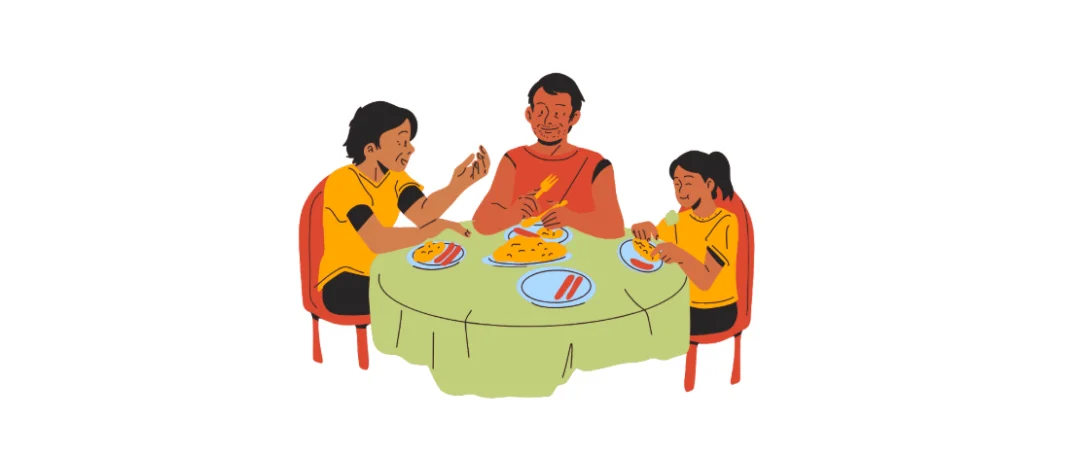
我在吃饭。
I’m eating.
我正在吃饭。
I’m in the middle of eating.
我正吃饭呢。
I’m eating right now.
All three sentences describe an action in progress, but they do not place the same emphasis on it.
Here is the quickest way to remember them:
-
在
: neutral and common
-
正在
: clearly in progress at a particular time
-
正
: happening right at that moment
Let’s look at them one by one. 👇
1. 在 (zài): The Most Neutral Choice
Structure
Subject + 在 + Verb Phrase +(呢)
在 is the most useful and neutral choice in everyday conversation. It simply tells us that an action is happening.
我在写作业。
I’m doing my homework.
他在做饭。
He’s cooking.
你在看什么呢?
What are you watching?
在 is also commonly used with words such as 还, 一直 and 又.
她还在睡觉。
She’s still sleeping.
我一直在等你。
I’ve been waiting for you.
你怎么又在玩手机?
Why are you on your phone again?
Compared with 正在, 在 can be used in a wider range of situations, including some repeated or habitual contexts.

2. 正在 (zhèngzài): Clearly in Progress
Structure
Subject + 正在 + Verb Phrase +(呢)
正在 makes the action feel more clearly in progress at the time you are talking about.
老师正在讲课,请保持安静。
The teacher is teaching, so please keep quiet.
会议正在进行。
The meeting is in progress.
我到家的时候,他正在做饭。
He was cooking when I got home.
Notice that 正在 does not only refer to the present moment.
In the last example, the action was in progress at a particular time in the past. What matters is the time you are talking about, not whether it is now or in the past.
3. 正 (zhèng): Right at That Moment
Structure
Subject + 正 + Verb Phrase +(呢)
正 highlights the exact moment when an action is happening. It is often used when another event happens at the same time.
我正吃饭呢。
I’m eating right now.
他正洗澡呢,不能接电话。
He’s taking a shower right now, so he can’t answer the phone.
我正准备出门,电话响了。
I was just getting ready to go out when the phone rang.
我们正讨论这个问题。
We’re discussing this issue right now.
Is 呢 Required?
No.
Both sentences are possible:
我正吃饭。
I’m eating right now.
我正吃饭呢。
I’m right in the middle of eating.
呢 makes the sentence sound more conversational and strengthens the feeling that the situation is continuing. It is common, but not compulsory.

4. A Special Use: 正要 and 正想
正要 + Verb
正要 means “to be just about to do something.”
The action has not started yet.
我正要出门,突然下雨了。
I was just about to go out when it suddenly started raining.
她正要给你打电话。
She is just about to call you.
Compare:
我正吃饭。
I’m eating now.
我正要吃饭。
I’m just about to eat.
One action has already started; the other has not.
正想 + Verb
正想 means that someone is thinking about or intending to do something at that moment.
我正想给你发消息,你就打来了。
I was just thinking of messaging you when you called.
Here, the thought already exists, but the following action—sending the message—may not have started.

5. Don’t Confuse 正在 with 正 + 在
Look carefully at these two sentences:
他正在学习。
He is studying.
他正在学校呢。
He is at school right now.
In the first sentence, 正在 is a progressive expression.
In the second sentence, the structure is:
正 + 在学校
-
正
means “right now.”
-
在学校
means “at school.”
Chinese characters are written without spaces, so the sentence structure must be understood from the words that follow.

6. What About 着 (zhe)?
Do not decide whether to use 着 by counting the number of syllables in a verb.
着 can show that an action or state is continuing. Its use depends on meaning, not on whether the verb has one or two syllables.
外面正下着雨呢。
It’s raining outside right now.
门正开着呢。
The door is open right now.
他正忙着准备考试。
He is busy preparing for the exam.
For beginners, remember this:
正、在 and 正在 come before the main verb. 着 usually comes after a verb.

7. Can They Always Be Interchanged?
In many simple sentences, all three forms are possible:
我在吃饭。
I’m eating.
我正在吃饭。
I’m in the middle of eating.
我正吃饭呢。
I’m eating right at this moment.
The basic situation is the same, but the emphasis changes:
-
在
gives neutral information.
-
正在
emphasizes an action in progress.
-
正
highlights the particular moment.
They are similar, but they are not always interchangeable.
8. Two Common Mistakes
Mistake 1: Using Them Before Basic State Verbs
These progressive forms are normally used with actions or temporary situations, not with basic state verbs such as 是, 有 and 知道.
❌ 我正在是老师。
✅ 我是老师。
Wǒ shì lǎoshī.
I’m a teacher.
❌ 我在知道答案。
✅ 我知道答案。
Wǒ zhīdào dá’àn.
I know the answer.
Mistake 2: Using 正在 for a General Habit
❌ 我每天正在学习汉语。
For a regular habit, say:
✅ 我每天都学习汉语。
I study Chinese every day.
You can also say:
✅ 我每天晚上都在学习汉语。
I spend every evening studying Chinese.
正在 normally focuses on an action happening at a particular time, while 每天 usually introduces a repeated habit.
Quick Review
Choose 在 when you simply want to say that an action is happening.
Choose 正在 when you want to make the ongoing action more obvious.
Choose 正 when you want to emphasize “right at that moment.”
The easiest memory trick is:
在 = happening
正在 = clearly in progress
正 = right at that moment
So, what are you doing now?
你现在在做什么呢?
What are you doing now? 😊