
Have you ever said something in Chinese that everyone understood, but it still sounded a little… translated? 😄
The vocabulary was Chinese.
The pronunciation was Chinese.
But underneath, the sentence was still following English grammar.
That’s what we’ll jokingly call “美式汉语” (Měishì Hànyǔ) in this article.
It is not a formal linguistic term, and it is not only about American learners. It simply describes Chinese that is built too closely around English sentence patterns.
Here are 7 common examples.
01 “I am tired.” → Don’t Automatically Add 是 (shì)
English needs am:
I am tired.
So it is tempting to translate every part:
⚠️ 我是很累。
Wǒ shì hěn lèi.
For a simple, neutral statement, Chinese normally says:
✅ 我很累。
I’m very tired.
✅ 我今天很忙。
I’m very busy today.
Remember:
English: be + adjective
does NOT normally become:
是 + adjective
Instead:
Subject + 很 + Adjective
💡 But 我是很累,但是…… is possible when 是 adds emphasis or contrast.
So 我是很累 is not always grammatically impossible — it is simply not the normal way to say “I’m tired.”

02 “He is at home.” → Here, “is” Becomes 在 (zài)
Here is another problem with English be.
English says:
He is at home.
But Chinese does not normally use 是 (shì) to show location.
⚠️ 他是在家。
Tā shì zài jiā.
For a normal statement, say:
✅ 他在家。
He is at home.
✅ 老师在办公室。
The teacher is in the office.
So English be does not have one single Chinese translation.
Compare:
He is a teacher.
他是老师。
Tā shì lǎoshī.
He is busy.
他很忙。
Tā hěn máng.
He is at home.
他在家。
Tā zài jiā.
🔑 One English word. Three different Chinese structures.

03 You Don’t Need to Repeat 我 (wǒ) Again and Again
English often repeats the subject:
I get up, I eat breakfast, and then I go to work.
Learners sometimes copy this rhythm into Chinese:
⚠️ 我早上起床,我吃早饭,然后我去上班。
Wǒ zǎoshang qǐchuáng, wǒ chī zǎofàn, ránhòu wǒ qù shàngbān.
This is understandable, but the repeated 我 sounds heavy.
When the subject is already clear, Chinese often leaves it out:
✅ 我早上起床,吃早饭,然后去上班。
I get up in the morning, eat breakfast, and then go to work.
Chinese often avoids repeating information that everyone already understands.
Your sentence can become shorter and more natural at the same time.

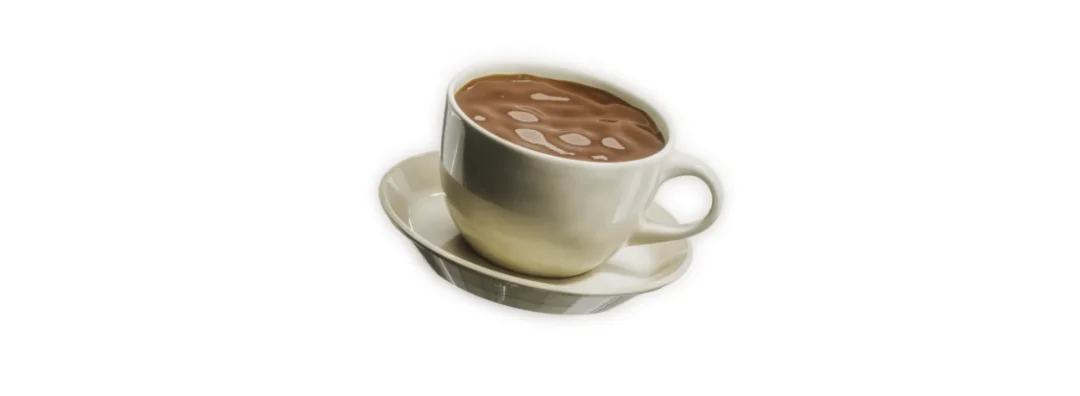
04 “Can I Have a Coffee?” ≠ 我可以有一杯咖啡吗?
Imagine you are ordering at a café.
In English:
Can I have a coffee?
A word-for-word translation might become:
⚠️ 我可以有一杯咖啡吗?
Wǒ kěyǐ yǒu yì bēi kāfēi ma?
That does not sound like a normal Chinese order.
Instead, say:
✅ 我想要一杯咖啡。
I’d like a cup of coffee.
Or:
✅ 麻烦给我一杯咖啡。
Could I get a cup of coffee, please?
Why?
Because 有 (yǒu) usually expresses having, possessing, or the existence of something.
When ordering, Chinese normally expresses what you want or asks someone to give you something.
🔑 Don’t translate Can I have…? word by word.
Translate the situation.
05 English Likes Time at the End. Chinese Often Doesn’t.
English:
I went to Beijing last year.
A learner may keep the English word order:
⚠️ 我去了北京去年。
Wǒ qù le Běijīng qùnián.
But Chinese time expressions normally come before the verb:
✅ 我去年去了北京。
I went to Beijing last year.
Another example:
⚠️ 我吃晚饭六点。
Wǒ chī wǎnfàn liù diǎn.
✅ 我六点吃晚饭。
I eat dinner at six.
Easy pattern:
Subject + Time + Verb
我 + 六点 + 吃晚饭
我 + 去年 + 去北京
⏰ In Chinese, tell us when before telling us what happened.
06 English “and” Is Not Always 和 (hé)
You learn:
and = 和 (hé)
Then you try:
I went to the store and bought milk.
⚠️ 我去了商店和我买了牛奶。
Wǒ qù le shāngdiàn hé wǒ mǎi le niúnǎi.
This sounds like English grammar wearing Chinese vocabulary.
和 commonly connects nouns or noun phrases:
✅ 我和朋友
my friend and I
✅ 咖啡和茶
coffee and tea
But for two actions in a sequence, Chinese usually does not need 和:
✅ 我去了商店,买了牛奶。
I went to the store and bought some milk.
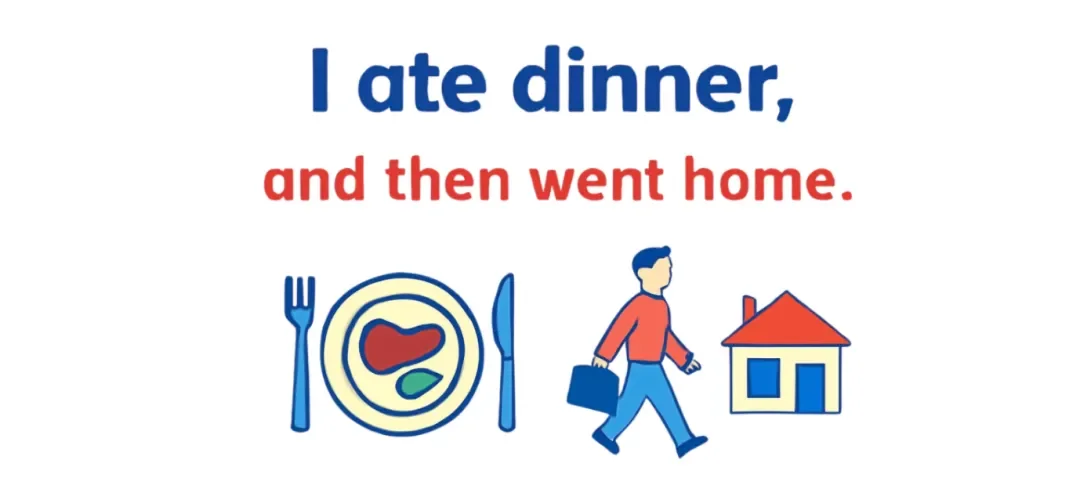
You can also use 然后 (ránhòu) when the sequence is important:
✅ 我吃了晚饭,然后回家了。
I had dinner and then went home.
💡 和 can connect some verbs or activities in certain structures, but don’t use it automatically every time you see English and.
07 “Have a Good Day!” Is Not 有一个好的一天
English says:
Have a good day!
So word-for-word thinking may produce:
⚠️ 有一个好的一天!
Yǒu yí ge hǎo de yì tiān!
Every word looks reasonable.
The whole sentence does not. 😄
Chinese expresses the wish, rather than translating the verb have:
✅ 祝你今天过得开心!
Have a good day!
This is one of the most important habits to develop:
Translate the meaning, not every word.

What Is “美式汉语” (Měishì Hànyǔ), Then?
It is Chinese built like this:
English sentence
↓
Translate each word
↓
Chinese words + English structure
The result may be understandable, but it can sound translated.
Natural Chinese works differently:
Understand the meaning
↓
Choose the Chinese structure
↓
Say it the Chinese way
That is the real change from translating Chinese to speaking Chinese.
Quick Check 🔍
Which version sounds more natural?
1
⚠️ 我是很累。
✅ 我很累。
2
⚠️ 他是在家。
✅ 他在家。
3
⚠️ 我可以有一杯咖啡吗?
✅ 我想要一杯咖啡。
4
⚠️ 我去了北京去年。
✅ 我去年去了北京。
5
⚠️ 我去了商店和我买了牛奶。
✅ 我去了商店,买了牛奶。
6
⚠️ 有一个好的一天!
✅ 祝你今天过得开心!

One Rule to Remember 🧠
When you want to say something in Chinese, don’t always ask:
“How do I translate this English sentence?”
Try asking:
“How would someone naturally say this in Chinese?”
That one question can change your Chinese a lot.
The goal is not to make every sentence longer or more advanced.
Very often, natural Chinese is actually simpler:
我很累。
他在家。
我去年去了北京。
我想要一杯咖啡。
Simple Chinese can be very good Chinese. 😊
So…
这是你的“美式汉语”吗?
Zhè shì nǐ de “Měishì Hànyǔ” ma?
Maybe you found one of your habits today.