16 Essential Chinese Adverbs Every Beginner Should Know(HSK 1–2 常用副词 Chángyòng Fùcí)
初学者常用的十六个汉语副词
Learn sixteen common adverbs, where they belong in a sentence, and how they change the meaning of everyday Chinese.
Published
Explore vocabulary, grammar, everyday Chinese and practical study tips.
HSK levels are shown only when supported by a syllabus reference. Articles without a verified level remain unassigned.
85 articles
Made for real understanding.初学者常用的十六个汉语副词
Learn sixteen common adverbs, where they belong in a sentence, and how they change the meaning of everyday Chinese.
Published
二十个常用手部动作词
Learn Chinese verbs for pressing, twisting, grabbing, stirring and other hand movements, with useful phrases and examples.
Published
“很好”以外的自然表达
Choose more specific Chinese expressions for praise, agreement, encouragement and descriptions of how things are going.
Published
把与被:动作的不同焦点
Compare 把 and 被 constructions to see how the same event can focus on an affected object or what happens to a person or thing.
Published
白:徒劳与免费
Learn how 白 before a verb can express wasted effort or getting something for free, and distinguish these uses in context.
Published
保存与保留
Compare keeping something safe or storing it with retaining something instead of removing or changing it.
Published
包含与包括
Compare 包含 for what something contains with 包括 for members of a group, and recognize contexts where both work.
Published
本来与原来
Compare an original plan or situation with a newly discovered fact, and learn where 本来 and 原来 overlap.
Published
并且与并
Learn how 并且 and 并 link information, why they do not replace every English and, and how 并 works in negative sentences.
Published
不怎么与不怎么样
Distinguish 不怎么 before a verb or adjective from 不怎么样 as an evaluation meaning not very good.
Published
不好意思、不客气与没关系
Choose polite Chinese responses according to the situation instead of translating sorry, thanks and you're welcome word for word.
Published
不见得与不一定
Compare 不见得 and 不一定 for uncertainty and disagreement, including differences in emphasis and tone.
Published
朝、向与往
Compare 朝、向 and 往 for direction and movement, and learn why they are not interchangeable in every context.
Published
超过与超越
Compare exceeding a number, limit or person with going beyond an achievement, restriction or established boundary.
Published
汉语基本语序
Build basic Chinese sentences with subjects, verbs and objects, then add time, location and destinations in natural order.
Published
汉语关联词与复句
Connect ideas with common Chinese conjunctions for addition, contrast, cause, conditions and concession.
Published
动词重叠:看看、想想与试试
Use verb reduplication for brief, light or tentative actions, and learn when 看看 and 看一看 are natural.
Published
汉语语序:时间与地点
Practice placing time and location before the action in Chinese, while distinguishing an action's location from its destination.
Published
重新与再
Distinguish doing something again from doing it afresh, with examples for requests, revised plans and repeated actions.
Published
怎样选择适合自己的HSK备考资料
Choose HSK preparation materials that match your test version, target level and learning needs, and build a balanced study plan.
Published
创立、创办与创建
Choose natural Chinese verbs for founding an organization, starting an institution or creating a project and structure.
Published
单独与独自
Compare doing something separately or alone with doing it by oneself, and avoid assuming either word always implies loneliness.
Published
倒:表达转折与意外
Use the adverb 倒 for unexpected contrasts, corrections and concessions, and distinguish it from other readings of 倒.
Published
得了与不了:动作能否实现
Learn how 得了 and 不了 express whether an action is manageable, and compare them with other potential complements.
Published
得:表达必须与需要
Learn the děi reading of 得 for necessity, its common spoken uses, and how to choose a natural negative form.
Published
等与等等:怎样列举未尽事项
Use 等 and 等等 after examples, distinguish open lists from complete lists, and avoid common word-order mistakes.
Published
丢与扔:遗失还是扔掉
Distinguish losing something from throwing it away, and compare the overlapping uses of 丢 and 扔.
Published
多与少:动作数量的增减
Use 多 and 少 before verbs to suggest doing more or less, with examples such as 多喝水 and 少吃糖.
Published
让表达更自然的八个语气词
Explore eight small words that shape the tone of Chinese conversation, with examples of how context changes their effect.
Published
英语习惯对汉语表达的影响
Recognize seven English habits that can make Chinese sound unnatural, and practice more natural alternatives.
Published
经历助词“过”
Learn how 过 describes past experience, how to ask experience questions, and how it differs from 了.
Published
方式与方法
Distinguish a manner or mode of doing something from a method used to solve a problem or reach a goal.
Published
到:地点、时间与结果
Explore 到 for destinations, time limits and achieved results, with clear distinctions between common sentence patterns.
Published
来的五种日常用法
Explore 来 beyond physical movement, including offers, requests and useful patterns in everyday conversation.
Published
没事的五种日常用法
Use 没事 to reassure someone, respond to an apology, describe being fine or say that you have nothing to do.
Published
随便:选择、许可与态度
Understand 随便 in offers, permission, careless actions and firm restrictions instead of translating every use as whatever.
Published
干脆与直接
Distinguish a decisive choice from acting without an intermediate step when choosing between 干脆 and 直接.
Published
刚、刚刚与刚才
Compare 刚、刚刚 and 刚才 for recent events, and learn which can act as a time expression on its own.
Published
高兴、开心、快乐与幸福
Choose words for a happy reaction, enjoyment, general happiness or a fulfilling life according to the situation.
Published
规则与规矩
Compare formal rules with expected conduct and customs, and learn how 规矩 can also describe behavior.
Published
好吗、可以吗、怎么样与行吗
Compare four common ways to ask for agreement, permission or an opinion in everyday Chinese conversations.
Published
差不多的常见用法
Use 差不多 for similarity, approximate amounts and near completion, with examples showing how the meanings connect.
Published
干脆:索性与爽快
Learn how 干脆 introduces a decisive choice, how it describes directness, and why it does not always mean simply or directly.
Published
怪不得:发现原因后的恍然大悟
Use 怪不得 when a newly discovered reason explains something you noticed, and compare it with 难怪.
Published
蛮:口语中的“挺”与“很”
Use 蛮 to express a conversational degree such as pretty or quite, and recognize common regional and stylistic differences.
Published
全:整体与全部
Learn how 全 expresses the whole of something or all members of a group, and compare its placement with 都.
Published
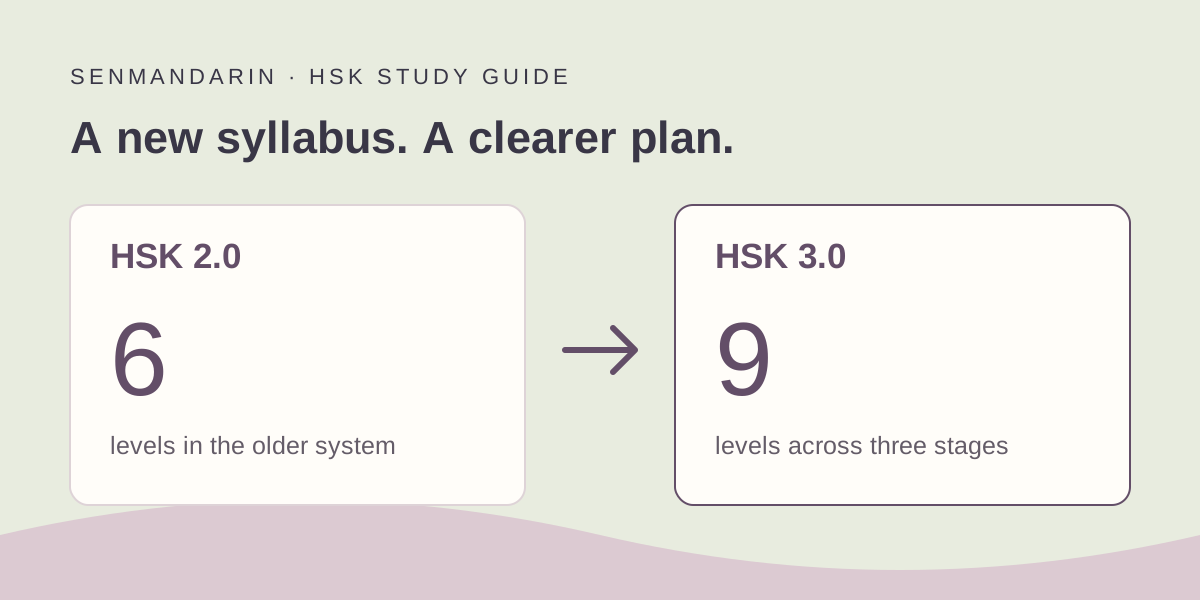
新版与旧版 HSK:考试变化与备考安排
Compare old and new HSK vocabulary, levels, handwriting and speaking. Understand the 2026 transition and choose materials for your actual test.
Published
坏了、死了与极了:程度补语
Compare strong degree expressions with 坏了、死了 and 极了, including their tone, restrictions and literal meanings.
Published
计划与打算
Compare a structured plan with a personal intention, and practice the noun and verb uses of 计划 and 打算.
Published
进来与进去:以谁为参照
Use 来 and 去 to describe direction relative to a reference point, including movement and bringing objects somewhere.
Published
继续、连续与持续
Compare continuing an action, doing things consecutively and a situation lasting over time.
Published
看、看见与看到
Distinguish looking from successfully seeing, and compare the overlapping result expressions 看见 and 看到.
Published
靠与凭
Compare relying on support with acting on a basis such as evidence or qualifications, and learn the physical uses of 靠.
Published
恐怕与害怕
Separate expressing fear with 害怕 from making a cautious prediction or delivering unwelcome news with 恐怕.
Published
了解与理解
Compare knowing facts about someone or something with understanding meaning, reasons and feelings.
Published
能……吗:真正的提问与反问
Distinguish genuine questions from rhetorical uses of 能……吗 and 能不……吗 through context and everyday examples.
Published
点餐时常见的中文问答
Prepare for questions about portions, spice, dining in and taking food away when ordering in Chinese.
Published
确定与决定
Distinguish being sure or confirming a fact from making a decision about what to do.
Published
缺乏与缺少
Compare 缺乏 and 缺少 for lack or shortage, with examples showing their common objects and sentence patterns.
Published
什么的:口语中的举例表达
Learn how 什么的 follows examples to mean things like that, and why it is different from a question with 什么.
Published
是、有与在
Choose 是 for identification, 有 for possession or existence, and 在 for location, with their natural negative forms.
Published
收拾、整理与打扫
Choose between putting things away, organizing them and cleaning a space with 收拾、整理 and 打扫.
Published
睡眠、睡觉与睡着
Compare sleep as a noun, sleeping as an activity and falling asleep as a result, with common patterns and pronunciation.
Published
了:完成、变化与当前情况
Understand 了 through completed events and changed situations instead of treating it as a simple past-tense marker.
Published
语气词“嘛”的用法
Explore how 嘛 presents a reason as obvious, softens persuasion or emphasizes an attitude in everyday conversation.
Published
哦:语调如何改变意思
Explore how 哦 signals understanding, surprise or a reminder, and why its conversational meaning depends on intonation.
Published
应该:建议与推测
Distinguish 应该 for advice or obligation from 应该 for an expectation or reasonable guess.
Published
为了:表达目的
Learn where 为了 belongs in a sentence, what can follow it, and how it differs from explaining a cause.
Published
差不多:相近、大约与快要
Understand the different everyday meanings of 差不多 through context, examples and common misunderstandings.
Published
慢走:告别时的客气话
Learn when 慢走 is a polite farewell, when it literally means to walk slowly, and how to respond naturally.
Published
啥:口语中的“什么”
Recognize 啥 in casual questions and expressions, and learn when 什么 is a better choice for the situation.
Published
我们与咱们
Learn how 咱们 usually includes the listener and how the meaning of 我们 depends on who is speaking to whom.
Published
想念与怀念
Compare missing a person or place with remembering the past with affection or nostalgia.
Published
要与想:愿望、决定与需要
Compare 想 for wishes and intentions with 要 for a decision, need or request, while paying attention to context.
Published
要不是:反事实假设
Use 要不是 to imagine how things would be different without an actual circumstance, and compare it with 如果不是.
Published
一……就……:紧接与条件关系
Learn how 一……就…… connects closely following actions or regular reactions, with past, future and habitual examples.
Published
以后、然后与后来
Use 以后 for a later time, 然后 for the next step and 后来 for a later development in a past story.
Published
应该、得、必须与要
Compare advice, practical necessity, firm requirements and contextual obligation with 应该、得、必须 and 要.
Published
找不到与找不着
Compare two everyday ways to say that you cannot find something, with attention to result complements and pronunciation.
Published
正在、正与在
Compare three ways to describe an action in progress, including their emphasis, combinations and restrictions.
Published
珍惜与爱惜
Choose between valuing a precious opportunity or relationship and taking good care of something you value.
Published
左右与大约:怎样表达概数
Compare 左右 and 大约 for approximate numbers, times and quantities, and learn where each expression belongs.
Published
“送”“寄”“发”的用法比较
Compare 送, 寄 and 发 for gifts, postal delivery and messages. Learn common patterns through Chinese examples, pinyin and English.
Published
中文日常问候:不只用“你好吗”
Learn when 你好, 最近怎么样 and 你还好吗 fit a conversation, with Chinese examples, pinyin and natural English translations.
Published
“一下”的用法与发音
See how 一下 makes actions brief and requests softer. Compare it with 一会儿 and verb reduplication, with Chinese examples and pinyin.
Published
Try a different keyword or category, or reset your filters.
Personalized online lessons, built around you.