
Tea or coffee? ☕🍵
Today or tomorrow? 📅
In English, we use “or” in both questions and statements. But in Chinese, there are two common words for “or”: 还是 (háishi) and 或者 (huòzhě).
They may look similar, but there’s an important difference!
Let’s see how they work in everyday Chinese.
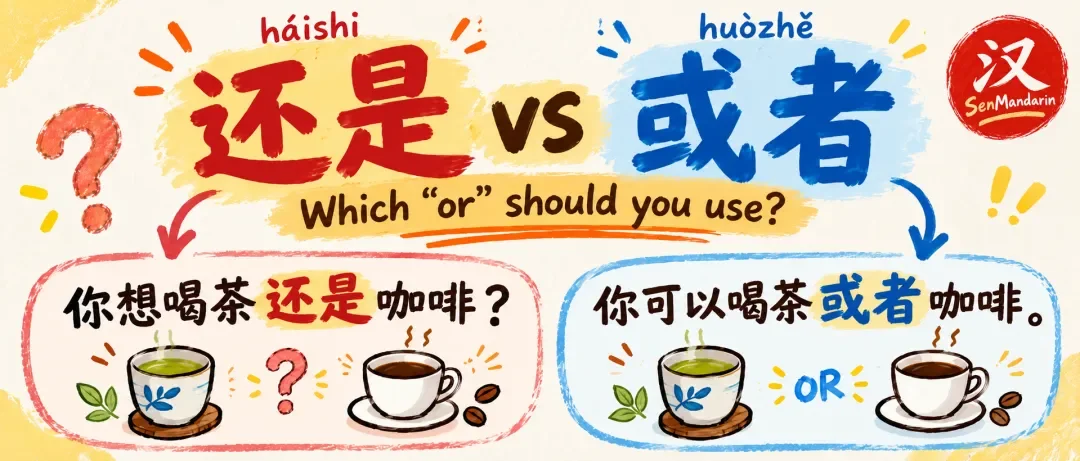
① 还是 (háishi) — Asking Someone to Choose ❓
Use 还是 when you ask someone to choose between two or more options.
Structure:
Option A + 还是 + Option B + ?
Example 1
你想吃米饭还是面条?
Would you like rice or noodles?
Example 2
你今天去还是明天去?
Are you going today or tomorrow?
Example 3
你喜欢猫还是狗?
Do you like cats or dogs?
💡 Quick Tip
A choice question with 还是 doesn’t normally need 吗 (ma) at the end.
❌ 你想吃米饭还是面条吗?
✅ 你想吃米饭还是面条?
The question already asks the listener to choose.

② 或者 (huòzhě) — Giving Options ✅
Use 或者 when you mention alternatives in a statement.
You’re not asking someone to pick one. You’re simply saying that different options are possible.
Structure:
Option A + 或者 + Option B
Example 1
我们可以坐地铁或者打车。
We can take the subway or get a taxi.
Example 2
今天晚上我们可以看电影或者听音乐。
We can watch a movie or listen to music tonight.
Example 3
周末我想在家做饭或者出去吃。
This weekend, I’d like to cook at home or eat out.
💡 Quick Tip
Think of 或者 as a way to give options without asking someone to choose immediately.

③ Same Situation, Different Words ☕
Imagine you’re ordering a drink with a friend.
👤 A: 你想喝茶还是咖啡?
Would you like tea or coffee?
👤 B: 茶或者咖啡都可以。
Either tea or coffee is fine.
Notice the difference?
-
还是 — A is asking B to choose.
-
或者 — B is saying either option is fine.
One short conversation, two different uses of “or”!

④ Can 还是 Appear in a Statement? 🤔
Yes!
Sometimes 还是 appears inside a sentence that isn’t a direct question.
This happens when someone is unsure about a choice.
Example 1
我不知道他想坐地铁还是打车。
I don’t know whether he wants to take the subway or get a taxi.
Example 2
我还没决定今天去还是明天去。
I haven’t decided whether to go today or tomorrow.
These sentences aren’t direct questions, but they still contain an unanswered choice.
That’s why we use 还是.
Remember: It’s not just about whether there’s a question mark. It’s about the meaning of the choice.

⑤ Can 或者 Appear in a Question? 💡
Yes, sometimes!
或者 can also appear in a yes-or-no question.
Compare these two sentences:
① 你周六或者周日有空吗?
Are you free on Saturday or Sunday?
👉 You’re asking whether the person is free on at least one of those days.
② 你周六有空还是周日有空?
Which day are you free, Saturday or Sunday?
👉 You’re asking the person to tell you which day they’re free.
The key difference:
-
或者 + 吗 can ask whether one of the options applies.
-
还是 asks the listener to choose or identify an option.
For beginners, the easiest starting point is still:
还是 → Choice questions
或者 → Statements with alternatives
Just remember that this is a useful starting rule, not an absolute one.
⑥ One More Meaning of 还是
Be careful! 还是 doesn’t always mean “or.”
It can also mean “still.”
Example
他还是很忙。
He’s still very busy.
Here, 还是 describes a situation that hasn’t changed. No choice is involved.
⑦ Quick Practice! 📝
Choose 还是 or 或者.
1. 你要喝水 ______ 果汁?
Nǐ yào hē shuǐ ______ guǒzhī?
Would you like water or juice?
2. 我们可以坐公交车 ______ 坐地铁。
Wǒmen kěyǐ zuò gōngjiāochē ______ zuò dìtiě.
We can take the bus or the subway.
3. 我不知道他是老师 ______ 学生。
Wǒ bù zhīdào tā shì lǎoshī ______ xuésheng.
I don’t know whether he’s a teacher or a student.

✅ Answers
1. 还是 — Asking someone to choose.
2. 或者 — Giving possible options.
3. 还是 — An indirect choice question.
How many did you get right? 🎉
🎯 Final Takeaway
Both 还是 (háishi) and 或者 (huòzhě) can mean “or,” but their most common uses are different.
❓ 还是 — Asking for a choice
你想喝茶还是咖啡?
Would you like tea or coffee?
✅ 或者 — Giving options
你可以喝茶或者咖啡。
You can have tea or coffee.
An easy way to remember:
👉 还是 = Which one?
👉 或者 = One option or the other is possible.
Once you understand this difference, using “or” in Chinese becomes much easier!
💬 Your Turn!
你喜欢喝茶还是咖啡?
Do you prefer tea or coffee?
Try answering in Chinese! 😊