
Have you ever wondered why Chinese speakers say 一定要 (yídìng yào) in some situations but 千万要 (qiānwàn yào) in others?
Both can emphasize that something is important, but they express different feelings.
The key difference?
-
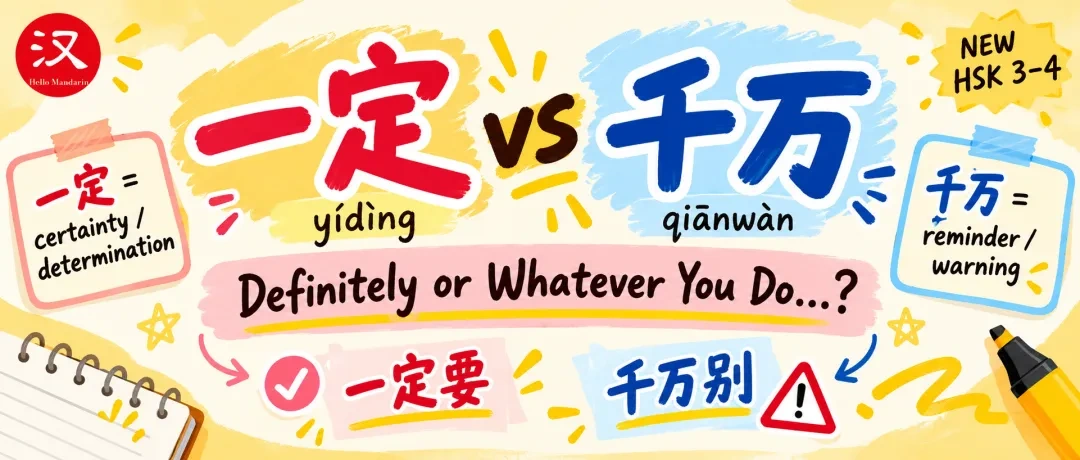
一定 (yídìng) → Certainty, determination, or strong advice.
-
千万 (qiānwàn) → Important reminders, strong advice, or warnings.
Let’s look at how to use them naturally! 👇
1. 一定 (yídìng) — Definitely / Certainly / Be Sure To
一定 is commonly used when you’re confident about something, making a firm promise, or emphasizing what someone should do.
✅ Usage 1: Express Certainty or Determination
Structure: Subject + 一定 + Predicate
① 我周末一定去。
I’ll definitely go this weekend.
② 他一定在家。
He must be at home.
③ 她一定会喜欢这个礼物。
She’ll definitely like this gift.
Here, 一定 expresses confidence, certainty, or a firm intention.
✅ Usage 2: Give Strong Advice or Instructions
Structure: 一定 + 要 + Verb Phrase
④ 你一定要好好休息。
You really need to get some proper rest.
⑤ 明天一定要早点来。
Make sure you come early tomorrow.
💡 Remember:
一定会 often expresses confidence about what will happen.
一定要 emphasizes something you should or must do.

2. 千万 (qiānwàn) — Whatever You Do / Make Sure To
千万 is often used to give someone an important reminder, strong advice, or a warning.
It can express concern, urgency, or a sincere request.
You’ll hear it especially often when someone wants to make sure you don’t make a mistake!
✅ Usage 1: Give Strong Warnings
Structure: 千万 + 别 / 不要 / 不能 + Verb Phrase
① 出门前,千万别忘了带钥匙。
Whatever you do, don’t forget your keys when you leave.
② 开车的时候,千万不要看手机。
Never look at your phone while driving.
③ 这件事千万不能告诉别人。
You absolutely must not tell anyone about this.
In these examples, 千万 makes the warning stronger and shows how important it is to avoid something.

✅ Usage 2: Give Important Reminders
Structure: 千万 + 要 + Verb Phrase
④ 路上千万要小心。
Please be extra careful on your way.
⑤ 你千万要记得带护照。
Please make absolutely sure you remember your passport.
💡 Remember:
千万 is especially common in negative warnings with 别, 不要, and 不能.
However, it can also be used in positive reminders with 要.
It often shows that the speaker is particularly concerned about something.

3. 一定 vs 千万: What’s the Difference? 🔍
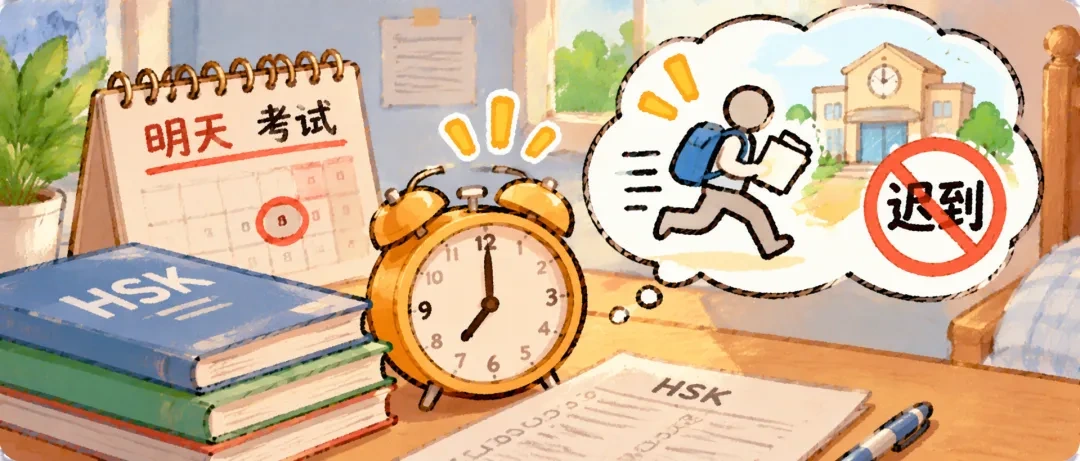
Imagine your friend has an important exam tomorrow.
You could say:
① 明天考试,你一定要早点到。
You have an exam tomorrow. Make sure you arrive early.
② 明天考试,你千万别迟到。
You’ve got an exam tomorrow. Whatever you do, don’t be late!
Both sentences emphasize the importance of arriving on time.
But notice the difference:
一定要 focuses on what someone needs to do.
千万别 emphasizes something the speaker really doesn’t want to happen.
⭐ Can Both Be Used in Positive and Negative Sentences?
Yes!
You can say:
一定要 / 一定不要
千万要 / 千万不要
The difference isn’t simply positive versus negative.
一定 emphasizes certainty, determination, or a firm requirement.
千万 often adds a stronger sense of concern, urgency, or a heartfelt reminder.
4. Common Mistakes to Avoid ❌
Mistake 1: Using 千万 to Make a Promise
❌ 我明天千万会来。
✅ 我明天一定会来。
I’ll definitely come tomorrow.
Why?
Because you’re making a promise about what you’ll do.
千万 isn’t used to express certainty about a future event in this way.
Mistake 2: Confusing 不一定 with 一定不
These two expressions have different meanings!
① 他不一定来。
It’s not certain that he’ll come.
② 他一定不会来。
He definitely won’t come.
Notice the difference:
不一定 = not necessarily / not certain
一定不 / 一定不会 = definitely not / definitely won’t
The position of 不 changes the meaning!
5. Quick Practice! ✏️
Choose 一定, 千万, or 不一定 to complete each sentence.
① 别担心,我 ______ 会帮你。
② 这张照片 ______ 别发给别人。
③ 他 ______ 来,我们先走吧。
Think you’ve got them? Check your answers below!

✅ Answers
1. 一定
别担心,我一定会帮你。
Don’t worry. I’ll definitely help you.
2. 千万
这张照片千万别发给别人。
Whatever you do, don’t send this photo to anyone else.
3. 不一定
他不一定来,我们先走吧。
We’re not sure he’s coming, so let’s go ahead.
How many did you get right? 🎉
🌟 Final Takeaway
Here’s the easiest way to remember the difference:
一定 (yídìng)
→ “I’ll definitely do it!”
→ “Make sure you do it!”
千万 (qiānwàn)
→ “Whatever you do, don’t forget!”
→ “Please be extra careful!”
一定 focuses on certainty, determination, or a firm requirement.
千万 often makes a reminder, request, or warning feel especially important.
The next time you make a promise, try 一定.
And when you want to give someone an important reminder, try 千万!